
HMPE Slings for Heavy Lifting
KEY FEATURES
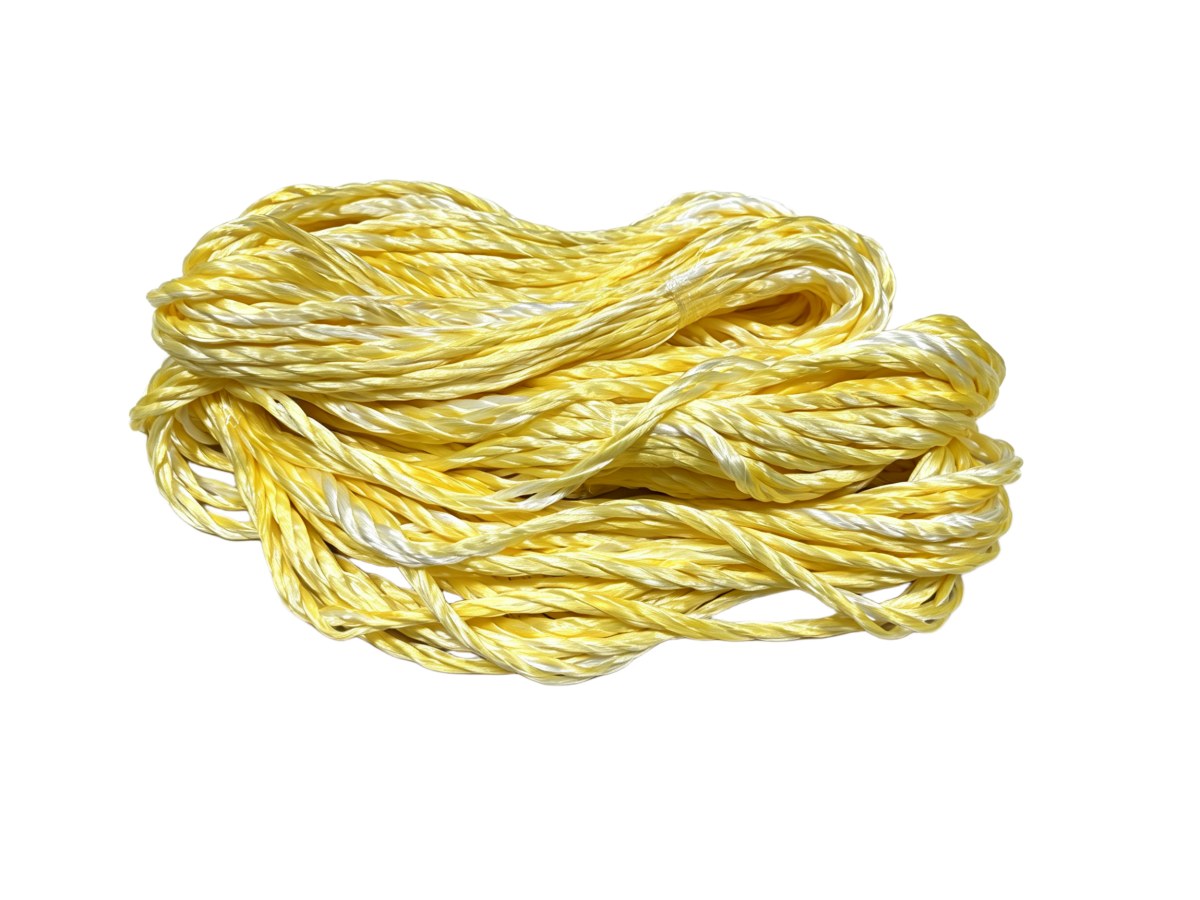
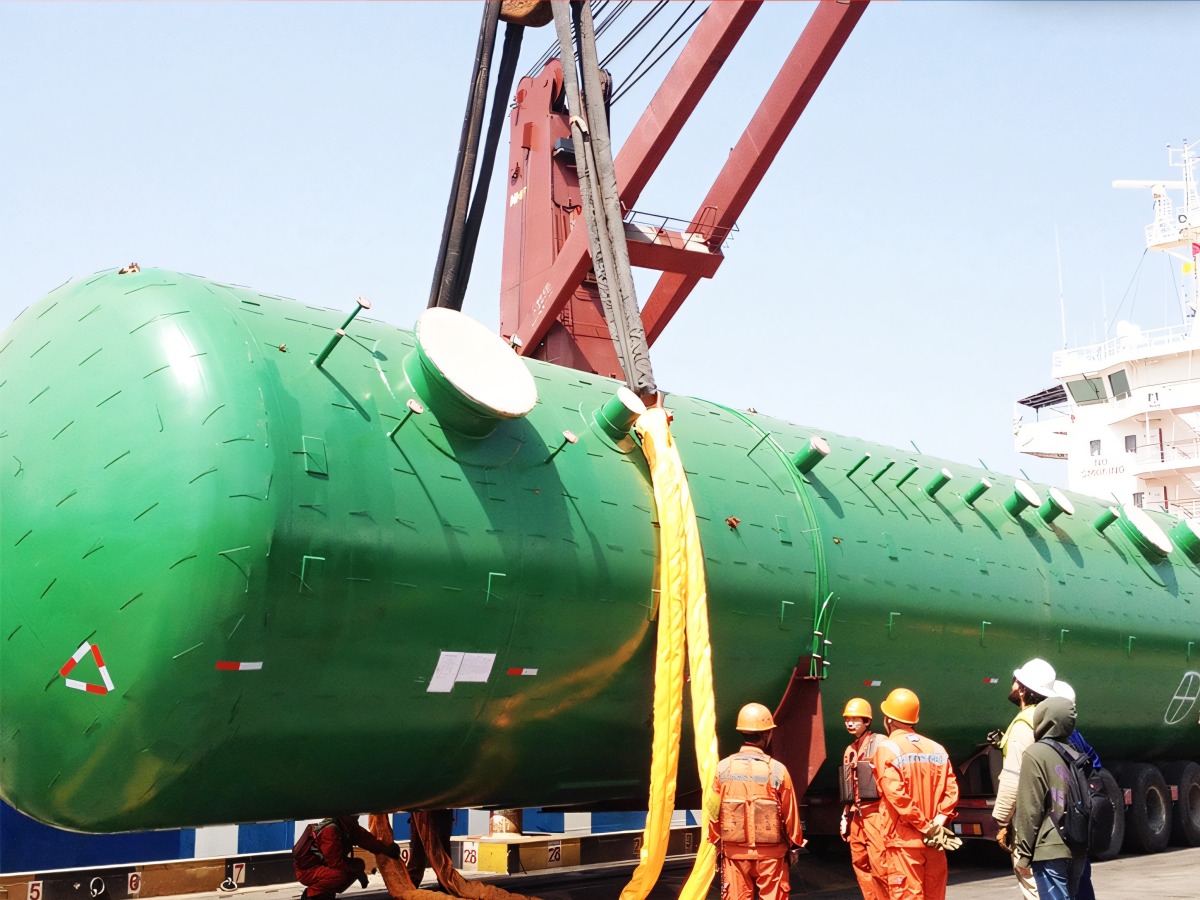
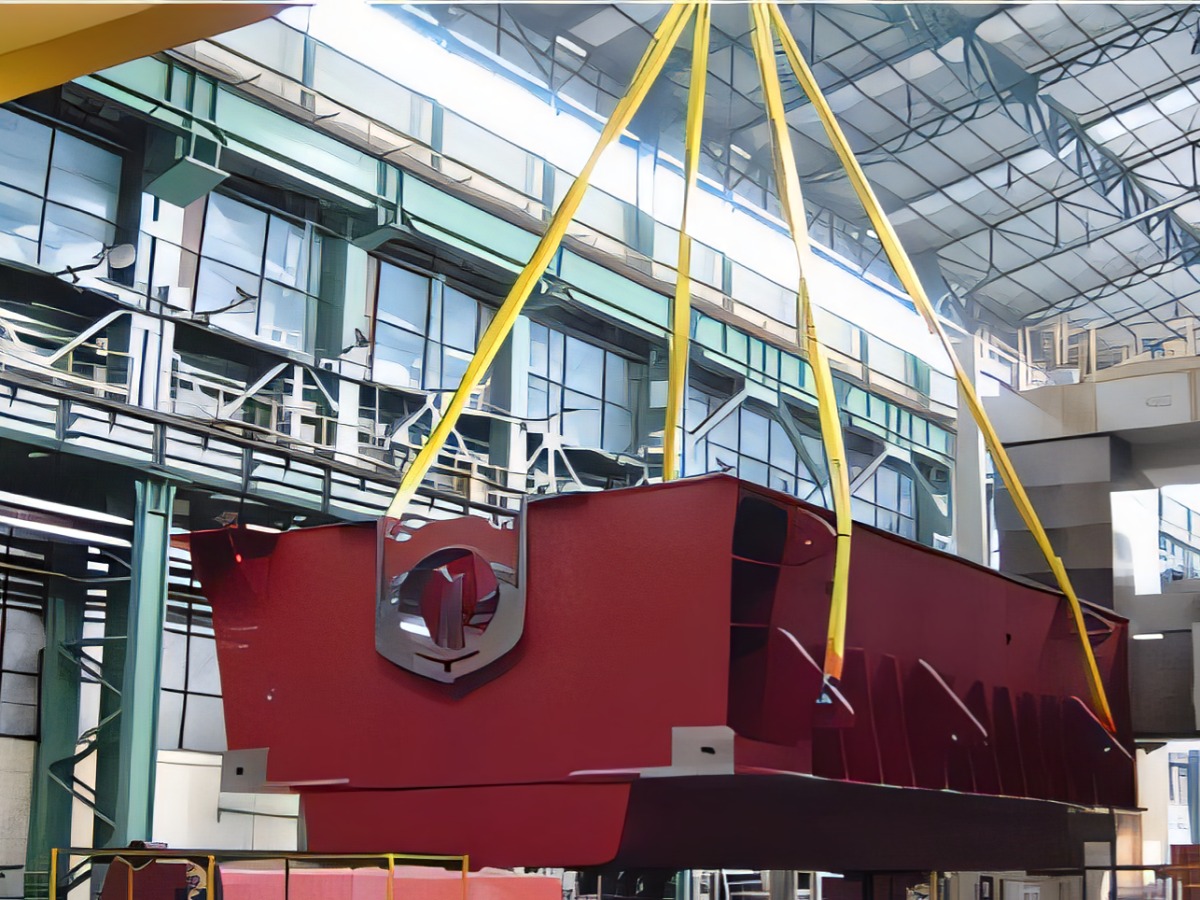
HMPE slings built on UHMWPE fiber for weight-critical heavy lifts — offshore, wind energy and engineered lifting where sling weight, elongation and corrosion resistance are selection criteria.
● High Specific Strength
UHMWPE has one of the highest strength-to-weight ratios of any lifting fiber. At equal breaking strength an HMPE round sling weighs about 1/8 of a steel wire rope sling — less weight to handle and more hook capacity.
● Corrosion-Resistant and Buoyant
UHMWPE density is about 0.97 g/cm³ — so an HMPE sling floats if dropped and is easier to recover. The fiber is hydrophobic and resists seawater and most industrial chemicals, suiting marine, offshore and corrosive-plant duty.
● Low Elongation for Precise Positioning
Typically <1% elongation at WLL. HMPE holds the load steady through repeated cycles and supports precise positioning on blade lifts, tower sections, modular installs and precision equipment placement.
● Soft on Loads, No Wire-Break Hazard
The textile body is soft against finished and coated surfaces, limiting scratching and marking versus metallic gear. Unlike steel wire rope, HMPE does not form sharp broken-wire protrusions (fishhooks) that can injure handlers or snag equipment.
● 1,200+ t/y · OEM / ODM · Standard sizes 3–7 days · Sample orders welcome
SELECTION GUIDE
Which Sling Material Fits Your Lift?
| Your Situation | Best Choice | Why & What to Specify |
|---|---|---|
| Offshore & marine duty — splash zone, overboard risk, salt air | HMPE sling | Floats if dropped overboard and stays on the surface for recovery; resists corrosion in salt-water and chemical service — suited to splash zones, overboard risk and offshore duty. |
| Crane capacity limited — lifts near the rated hook load | HMPE sling | At equal breaking strength HMPE weighs about 1/8 of a steel wire rope sling and roughly half to one-third of a polyester sling of the same rating — freeing hook capacity and easing rigging at height. |
| Corrosive or chemically aggressive plant | HMPE or polyester | Both resist rust and most industrial chemicals. Choose HMPE when weight or WLL decides, polyester when budget leads — not steel rope. |
| General lifting on a budget | Polyester sling | Lowest acquisition cost and proven for routine loads. Step up to HMPE only when weight, buoyancy or corrosion drives the spec. |
| Sustained heat above +70 °C, or heavy abrasion | Polyester or steel wire rope | HMPE is rated −40 °C to +70 °C; polyester and steel rope cover hotter or more abrasive duty. |
STANDARD SIZES
| Color | Vertical (kg) (kg) | Choker (kg) (kg) | Vertical Basket (kg) (kg) | Width (mm) | Thickness (mm) | Min Length (m) | Weight (kg/m) |
|---|---|---|---|---|---|---|---|
| 1,000 | 800 | 2,000 | 12 | 12 | 1.5 | 0.2 | |
| 2,000 | 1,600 | 4,000 | 22 | 12 | 1.5 | 0.32 | |
| 3,000 | 2,400 | 6,000 | 23 | 18 | 1.5 | 0.42 | |
| 4,000 | 3,200 | 8,000 | 25 | 18 | 1.5 | 0.48 | |
| 5,000 | 4,000 | 10,000 | 34 | 20 | 1.5 | 0.57 | |
| 6,000 | 4,800 | 12,000 | 35 | 22 | 2.0 | 0.66 | |
| 8,000 | 6,400 | 16,000 | 45 | 25 | 2.0 | 0.84 | |
| 10,000 | 8,000 | 20,000 | 50 | 30 | 3.0 | 1.03 | |
| 12,000 | 9,600 | 24,000 | 55 | 32 | 3.0 | 1.21 | |
| 15,000 | 12,000 | 30,000 | 65 | 35 | 4.0 | 1.49 | |
| 20,000 | 16,000 | 40,000 | 70 | 38 | 4.0 | 1.94 | |
| 25,000 | 20,000 | 50,000 | 75 | 40 | 4.0 | 2.4 | |
| 30,000 | 24,000 | 60,000 | 80 | 45 | 6.0 | 2.86 | |
| 40,000 | 32,000 | 80,000 | 95 | 45 | 6.0 | 3.78 | |
| 50,000 | 40,000 | 100,000 | 110 | 48 | 8.0 | 4.7 | |
| 60,000 | 48,000 | 120,000 | 125 | 60 | 8.0 | 5.62 | |
| 80,000 | 64,000 | 160,000 | 130 | 65 | 10.0 | 7.45 | |
| 100,000 | 80,000 | 200,000 | 150 | 72 | 15.0 | 9.29 | |
| 200,000 | 160,000 | 400,000 | 220 | 109 | 20.0 | 18.47 | |
| 300,000 | 240,000 | 600,000 | 250 | 151 | 25.0 | 27.65 | |
| 400,000 | 320,000 | 800,000 | 320 | 186 | 25.0 | 36.83 | |
| 500,000 | 400,000 | 1,000,000 | 380 | 203 | 30.0 | 46 | |
| 600,000 | 480,000 | 1,200,000 | 410 | 222 | 35.0 | 55.19 | |
| 700,000 | 560,000 | 1,400,000 | 440 | 238 | 35.0 | 64.36 | |
| 800,000 | 640,000 | 1,600,000 | 460 | 260 | 40.0 | 73.54 | |
| 900,000 | 720,000 | 1,800,000 | 490 | 280 | 45.0 | 82.72 | |
| 1,000,000 | 800,000 | 2,000,000 | 520 | 300 | 50.0 | 91.9 | |
| 2,000,000 | 1,600,000 | 4,000,000 | 710 | 470 | 50.0 | 183 |
| Color | Vertical(kg) | Choker(kg) | Vertical Basket(kg) | Width (mm) | Thickness (mm) | Min Length (m) | Weight (kg/m) |
|---|---|---|---|---|---|---|---|
| 1,000 | 800 | 2,000 | 24 | 12 | 1.5 | 0.13 | |
| 2,000 | 1,600 | 4,000 | 26 | 18 | 1.5 | 0.21 | |
| 3,000 | 2,400 | 6,000 | 35 | 22 | 1.5 | 0.25 | |
| 4,000 | 3,200 | 8,000 | 45 | 25 | 1.5 | 0.27 | |
| 5,000 | 4,000 | 10,000 | 50 | 30 | 1.5 | 0.29 | |
| 6,000 | 4,800 | 12,000 | 55 | 32 | 2.0 | 0.33 | |
| 8,000 | 6,400 | 16,000 | 65 | 35 | 2.0 | 0.53 | |
| 10,000 | 8,000 | 20,000 | 70 | 38 | 3.0 | 0.74 | |
| 12,000 | 9,600 | 24,000 | 75 | 40 | 3.0 | 0.97 | |
| 15,000 | 12,000 | 30,000 | 80 | 45 | 4.0 | 1.27 | |
| 20,000 | 16,000 | 40,000 | 95 | 45 | 4.0 | 1.73 | |
| 25,000 | 20,000 | 50,000 | 110 | 48 | 4.0 | 2.17 | |
| 30,000 | 24,000 | 60,000 | 125 | 60 | 6.0 | 2.6 | |
| 40,000 | 32,000 | 80,000 | 130 | 65 | 6.0 | 3.47 | |
| 50,000 | 40,000 | 100,000 | 140 | 70 | 8.0 | 4.3 | |
| 60,000 | 48,000 | 120,000 | 150 | 72 | 8.0 | 5.2 | |
| 80,000 | 64,000 | 160,000 | 155 | 75 | 10.0 | 6.93 | |
| 100,000 | 80,000 | 200,000 | 160 | 80 | 15.0 | 8.3 |
1. Sizes above 100 t are engineered to order.
2. Use the kg / lb toggle above the table to switch units.
CUSTOM SIZING & OPTIONS
| Parameter | Custom Range |
|---|---|
| UHMWPE Fiber | Fiber performance grade as specified in the customer's lift plan, or customer-nominated brand |
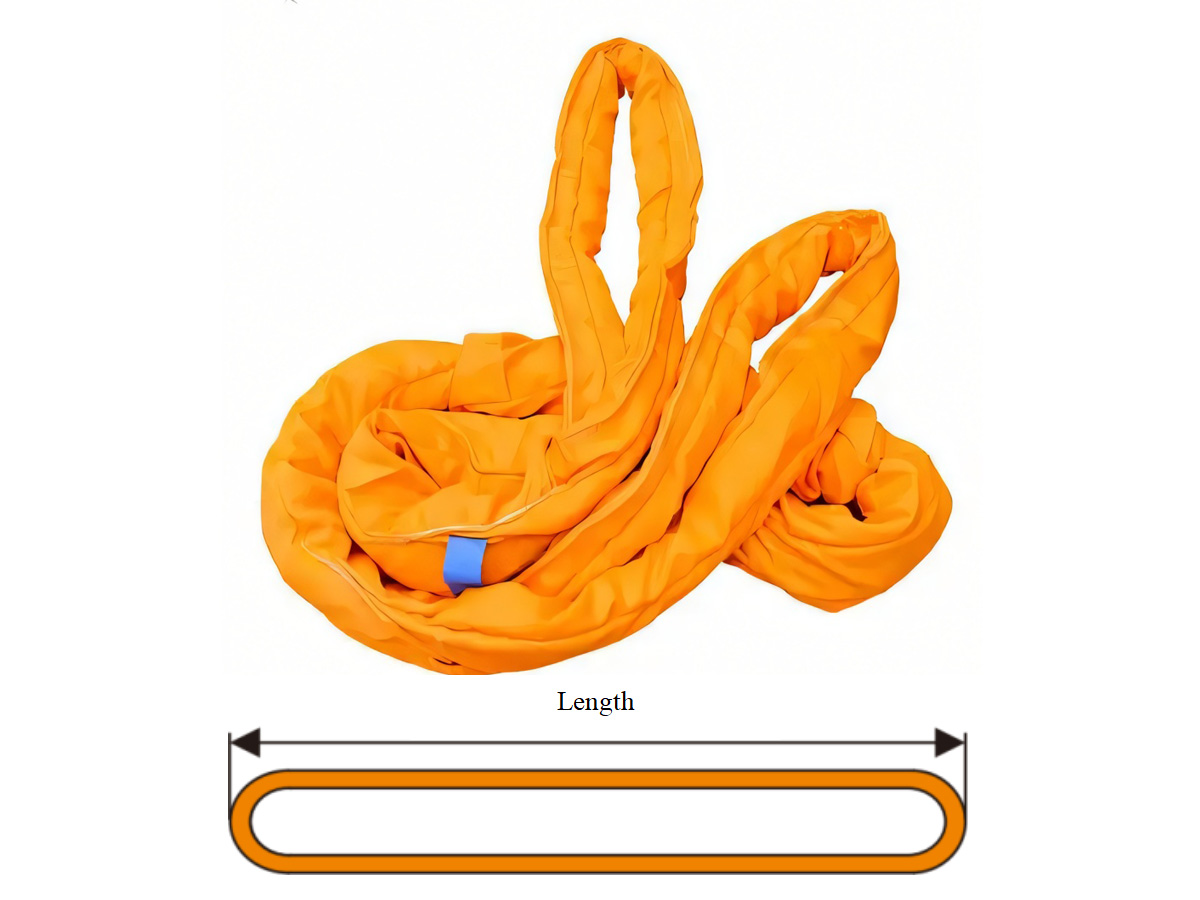
| Length (EWL) | Customized EWL up to 200 m, measured bearing point to bearing point |
| WLL Range | 1 t – 2,000 t; engineered per lift plan |
| Design Factor | 7:1 · 6:1 · 5:1 engineered to order |
| Protection | Movable 1-m Tubular Jacket recommended for frequent-abrasion zones; Double Tubular Sleeve for enhanced protection; eye protection and customized jacket length available on request |
| Design & Compliance Basis | EN 1492-2 except material; ISO 18264:2022 for general-purpose configurations. Australian supply is referenced to AS 4497:2018 (round slings — synthetic fibre), which also covers HMPE |
| Identification & Traceability | Durable tags with batch tracing; private labeling available |
| Documentation & Marking | CE marked to Directive 2006/42/EC by manufacturer's declaration (Annex VIII). Each sling proof-load tested with its own test certificate; batch MTC and DoC supplied with each shipment. |
| Packaging | Each sling folded and packed in a PE bag, then carton-boxed and palletized; wooden cases for heavy or multi-leg sets; custom packaging and OEM labeling on request |
FAQ
Frequently Asked Questions
Questions about samples, MOQ, or shipping? Ask us directly →
EN 1492-2:2000+A1:2008 rates polyester and polyamide round slings from −40 °C to +100 °C, but does not list HMPE as a material. HMPE slings are typically rated for use and storage from −40 °C to +70 °C. The fiber softens above this range, so keep slings clear of hot pipes, welding arcs, and steam lines. Temperature is one of the principal limits we cover in The Limitations of HMPE Slings.
No. HMPE is hydrophobic and resists seawater and most industrial chemicals — it does not rust like steel. Avoid strong oxidizers and prolonged exposure to concentrated acids. The cover shields the load-bearing core from UV, so keep the cover intact. That combination is why HMPE is so widely used offshore — see HMPE Slings in Offshore Wind and Marine Engineering.
The D/d ratio is the relationship between two diameters: D, the diameter around which the sling is bent, and d, the sling's own diameter. ISO 18264 says keep D/d ≥ 8 to avoid bending derating — smaller D/d ratios increase point loading, which leads to faster wear, strength loss and potential failure. D/d is one of the parameters worth fixing in the enquiry itself.
HMPE has clear advantages where light weight, corrosion-free, frequent lifting, and floating matter, but in sustained full-load, high-temperature, or unprotected sharp-edge conditions it must be managed per the standard — it is not a universal replacement. If extreme abrasion or very high temperatures are unavoidable, steel wire rope is still the better choice. For a full side-by-side comparison, see HMPE Slings vs Steel Wire Rope vs Polyester Slings: How to Choose for Offshore Lifting.
The fiber itself costs more, and the splicing and cover construction are more labor-intensive. But at equal breaking strength a finished sling typically weighs only about 1/8 of steel wire rope — the savings in auxiliary lifting machinery, manual rigging, anti-corrosion maintenance, frequent replacement, and transport are often more significant. In long-term offshore storage and frequent lifting scenarios, whole-life cost is often better than steel wire rope. This is the same total-cost case behind why owners increasingly specify HMPE in lifting plans.
HMPE creeps slowly under sustained load — the higher the load and temperature, the faster. For long-term or critical loads, specify a low-creep grade and an appropriate design factor, and monitor temperature. Creep behavior differs significantly between HMPE grades, so the grade should be selected with the manufacturer; HMPE slings should not be used as permanent load-supporting members unless the application has been specifically engineered and approved.
Retire immediately on cover damage exposing the core, fiber fuzzing, stitching cracks or eye deformation, severe cuts/burns/corrosion, chemical or high-temperature damage, irreversible elongation (creep), or overload shock. In short, retire at the first sign of obvious damage; when in doubt, retire — the load is worth more than the sling. A step-by-step routine is set out in HMPE Sling Receiving & In-Service Inspection Checklist.
No. Never use HMPE slings to lift or support personnel — personnel lifting requires dedicated equipment designed and certified for that purpose. HMPE slings are for general-purpose material lifting only.
SAFETY
HMPE Slings - Safety & Usage Guidelines
01
Inspect for Hidden Damage
Check for fiber fuzzing, sheath slippage or reduction in sling diameter, and inspect the full length — including the section resting against the load — before every lift.
02
Retire at First Sign of Damage
Even minor cover damage can expose the core and cause major strength loss. Retire on cuts, core exposure, chemical or heat damage, or elongation.
03
Never Exceed the WLL
Never exceed the WLL marked on the identification tag; apply the correct hitch factor and recalculate the effective capacity for the actual configuration.
04
Protect Against Abrasion & UV
Always fit sleeves on sharp or rough loads, and store slings away from direct sunlight — UV degrades both the cover and the core over time.
05
Never Tie Knots
Never tie knots — they crush the load-bearing core, severely derate HMPE, and cause unpredictable failure.
06
Mind the Temperature Range
Typical operating and storage temperature: −40 °C to +70 °C. Outside this range: engineering review required. Keep slings clear of hot pipes, welding arcs and steam lines.
07
Respect D/d ≥ 8
Bend the sling around hardware at least 8× the sling diameter. Smaller D/d ratios concentrate point loading — ask us for the derated capacity below D/d 8.
08
Watch the Choke Angle
Keep choke angles above 120°; tighter chokes concentrate stress and reduce capacity. Pad the bend and request the derated figure for tight chokes.
RELATED PRODUCTS
Explore More Solutions
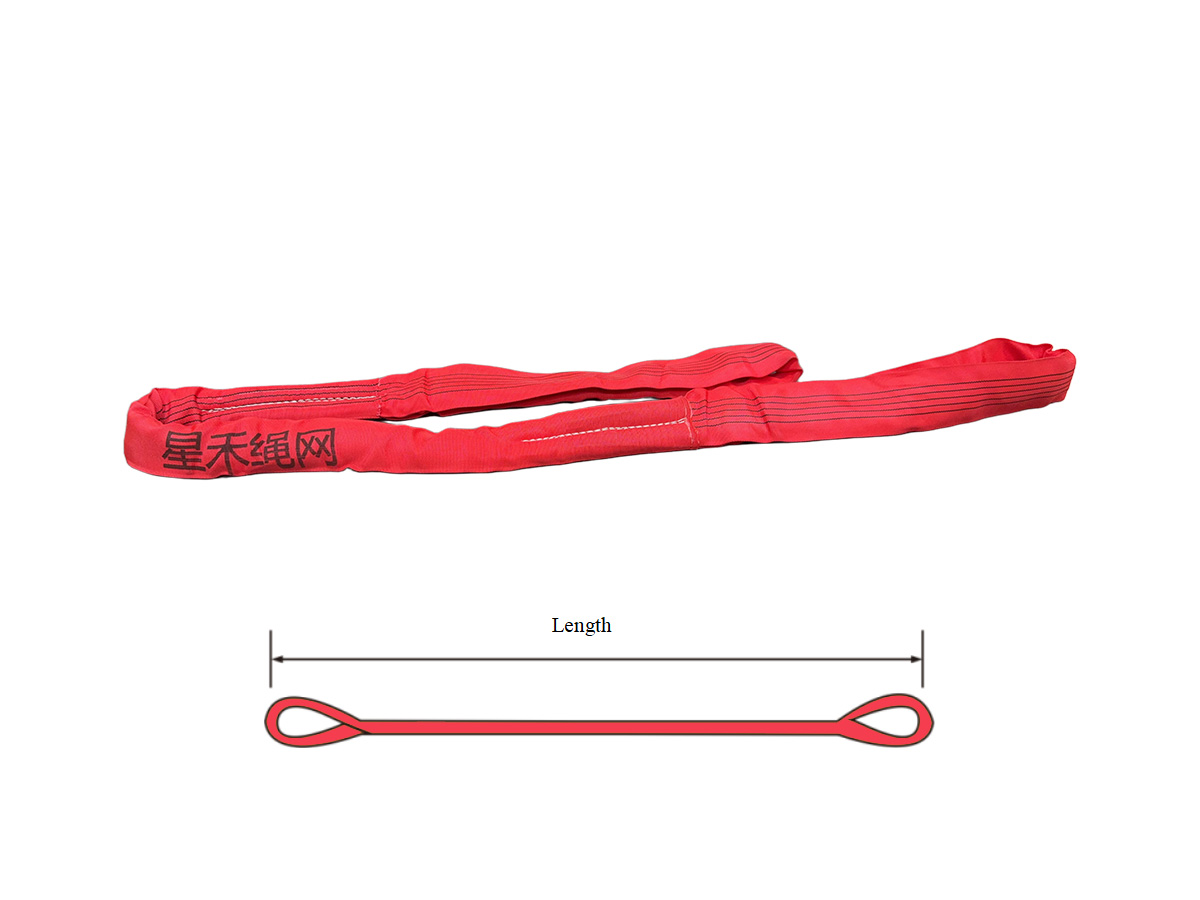
Eye-and-Eye Round Slings
Eye-and-Eye round sling with a soft polyester round body and reinforced flat eyes for direct connection to hooks, shackles and other approved lifting hardware.
View product →
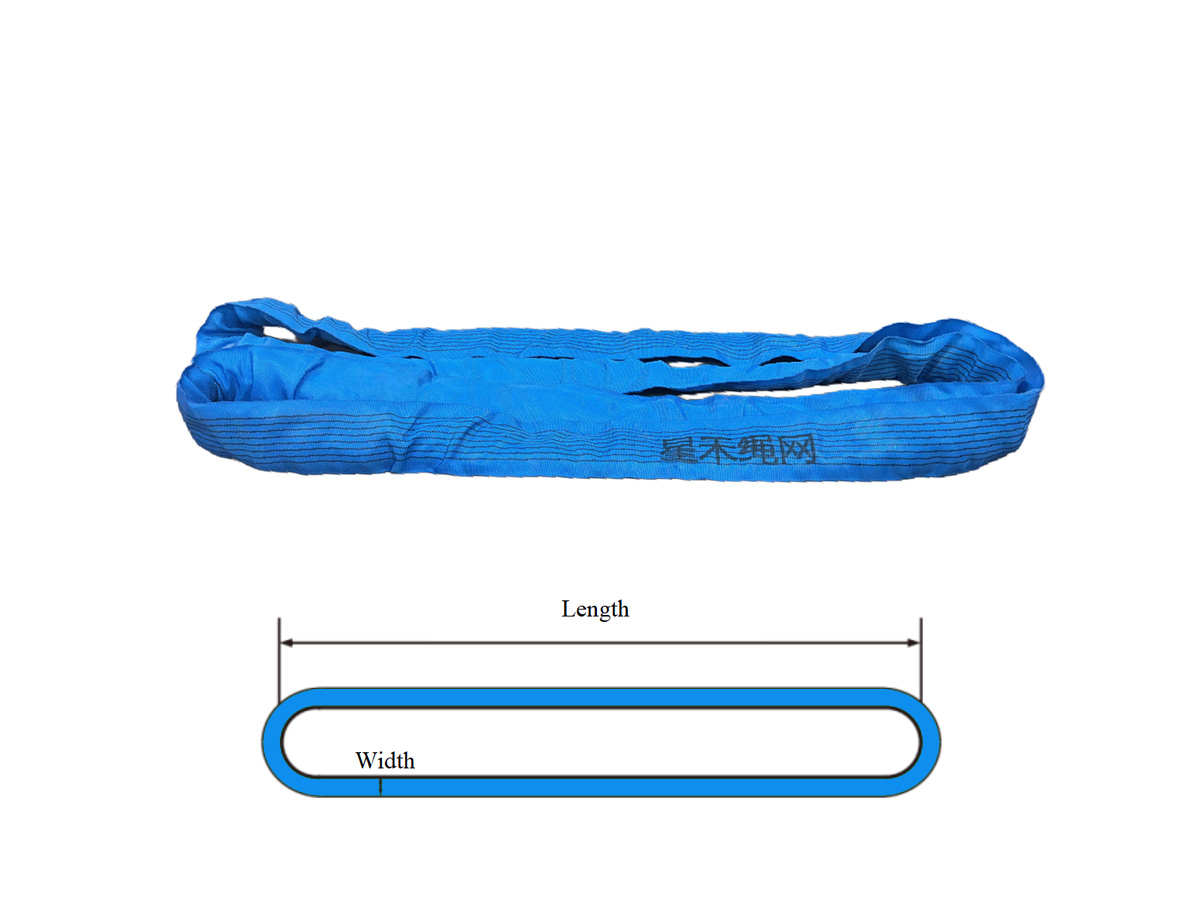
Endless Round Slings
Flexible endless round sling with a continuous-loop polyester body — wear can be rotated around the loop in repetitive basket and choker work.
View product →
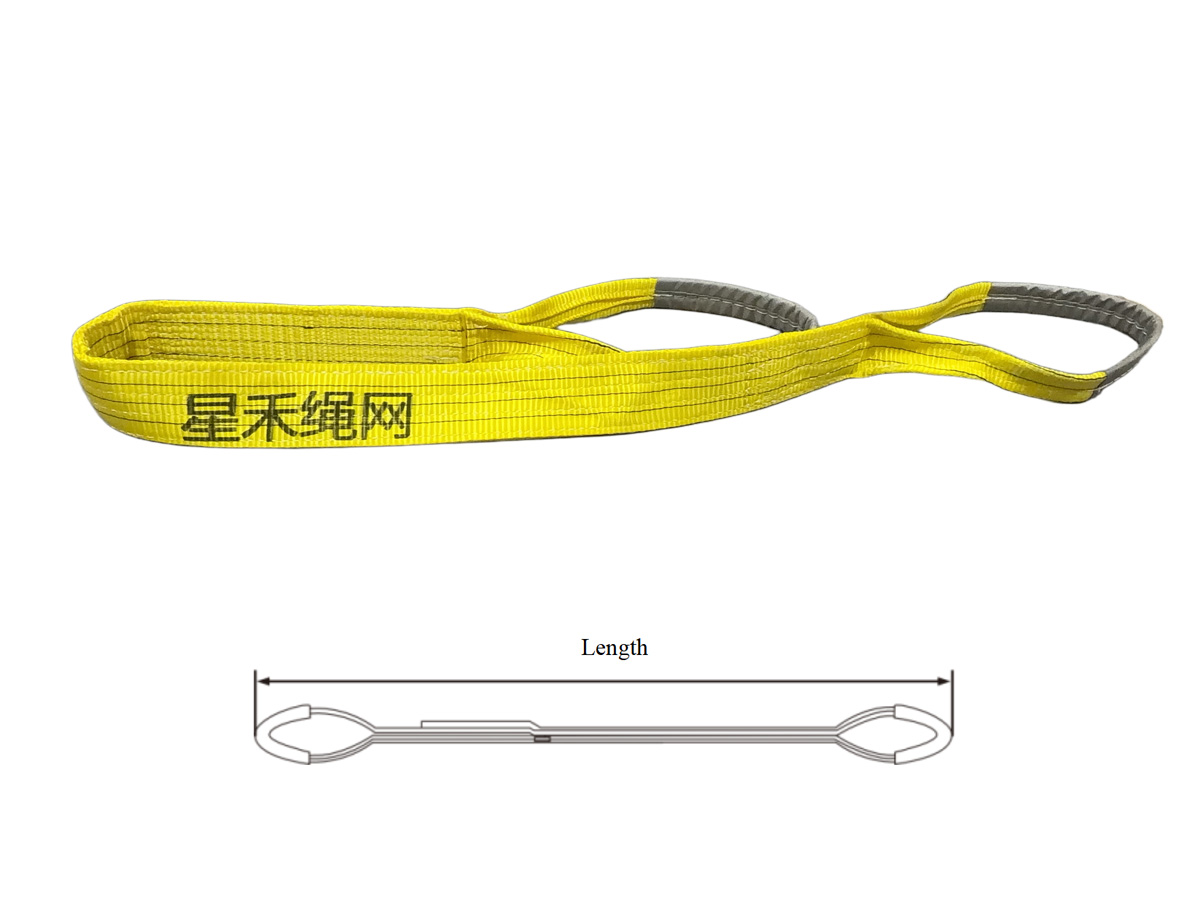
Eye-and-Eye Webbing Slings
Reinforced Eye-and-Eye webbing sling with high-tenacity polyester construction and color-coded WLL identification.
View product →
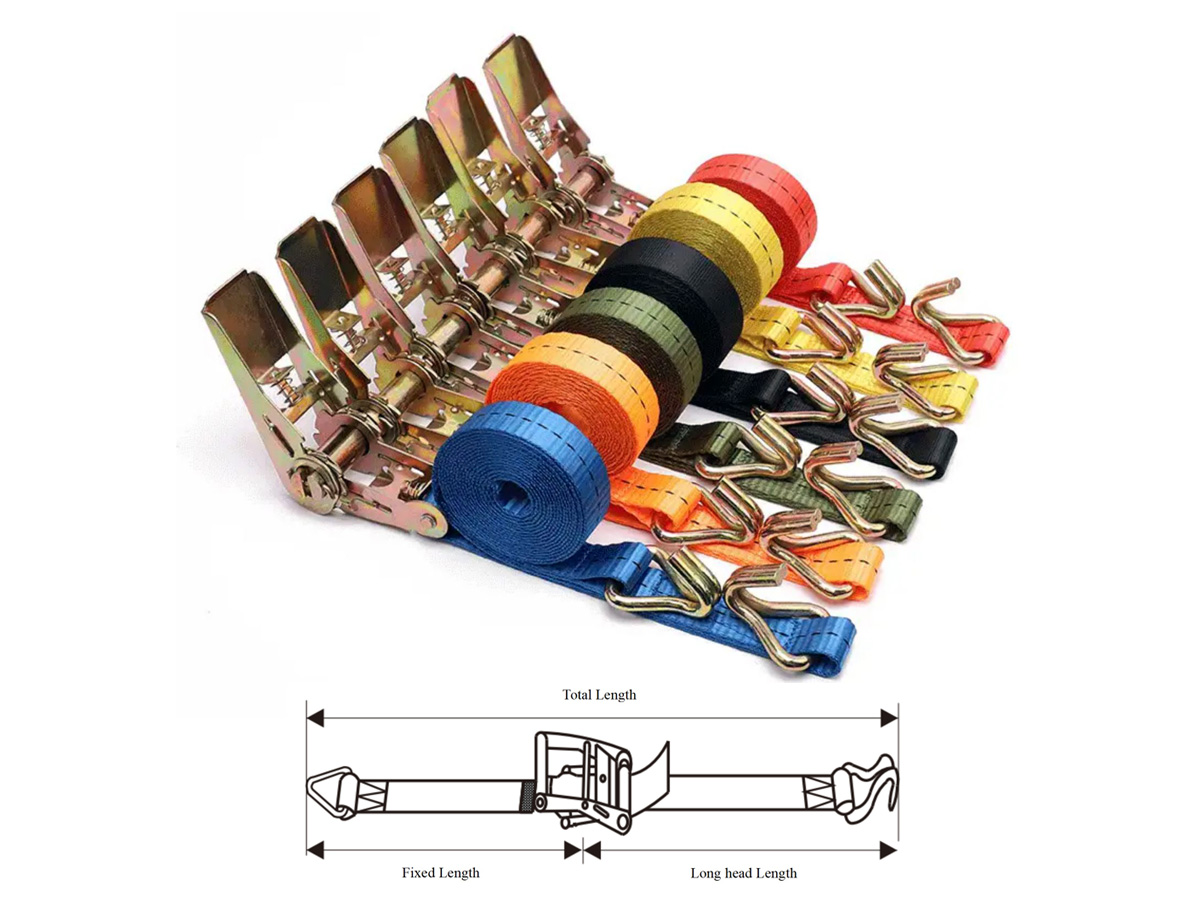
Ratchet Straps
Type-tested ratchet lashing assemblies — one lashing system for every transport mode. Cargo lashing and tie-down use only — NOT FOR LIFTING.
View product →