Lifting Solutions
Round slings, webbing slings, HMPE slings and lifting nets — matched to delicate surfaces, irregular loads and heavy lifts.
liftrue manufactures round slings, webbing slings, HMPE slings and single-use lifting slings plus engineered lifting nets. Reusable slings are type-tested per EN 1492-1 / EN 1492-2; single-use slings are manufactured per DIN 60005:2018-07; lifting nets are engineered and load-tested to each lift plan. ISO 9001 traceability throughout.
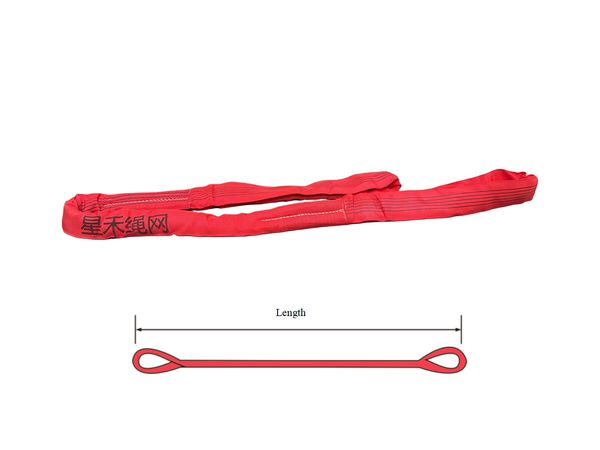
Eye-and-Eye Round Slings
Eye-and-Eye round sling with a soft polyester round body and reinforced flat eyes for direct connection to hooks, shackles and other approved lifting hardware.
View product →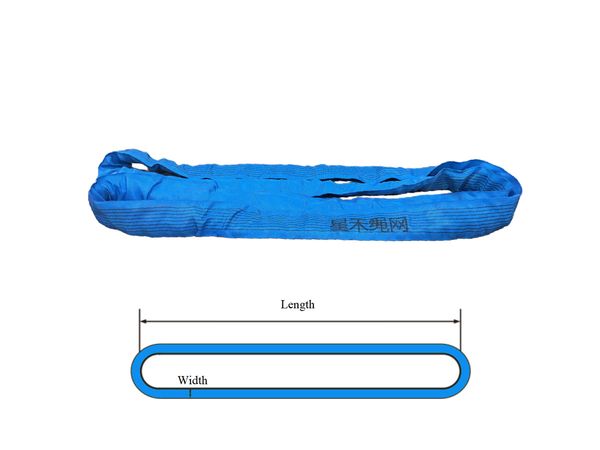
Endless Round Slings
Flexible endless round sling with a continuous-loop polyester body — wear can be rotated around the loop in repetitive basket and choker work.
View product →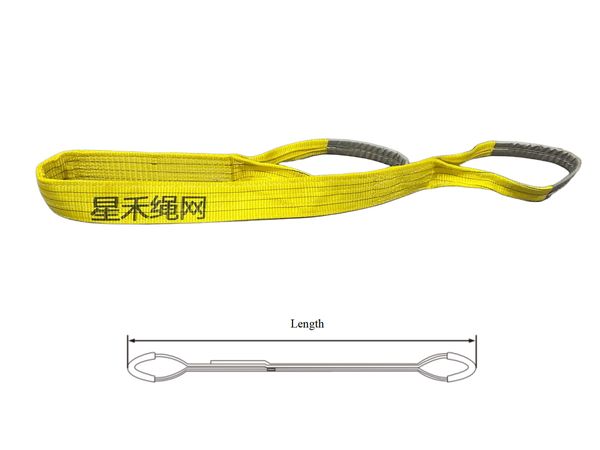
Eye-and-Eye Webbing Slings
Reinforced Eye-and-Eye webbing sling with high-tenacity polyester construction and color-coded WLL identification.
View product →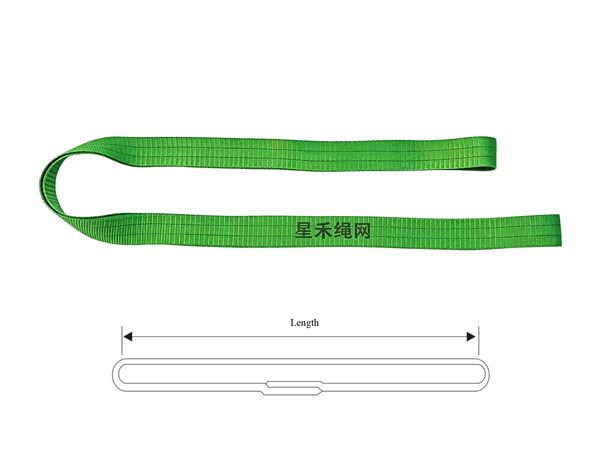
Endless Webbing Slings
Rotatable endless webbing sling for even wear distribution in repetitive basket and choker lifts.
View product →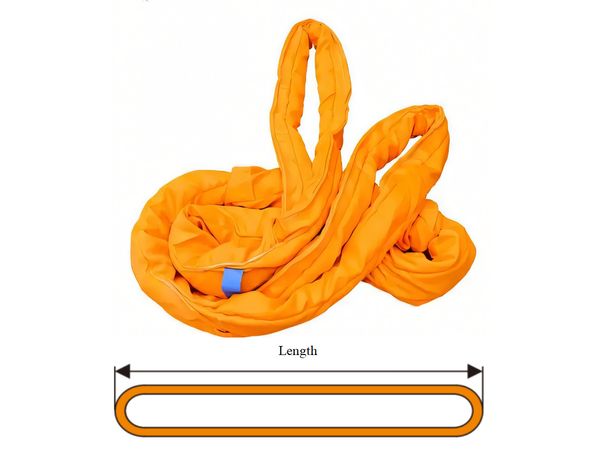
HMPE Slings
HMPE slings built on UHMWPE fiber for weight-critical heavy lifts — offshore, wind energy and engineered lifting where sling weight, elongation and corrosion resistance are selection criteria.
View product →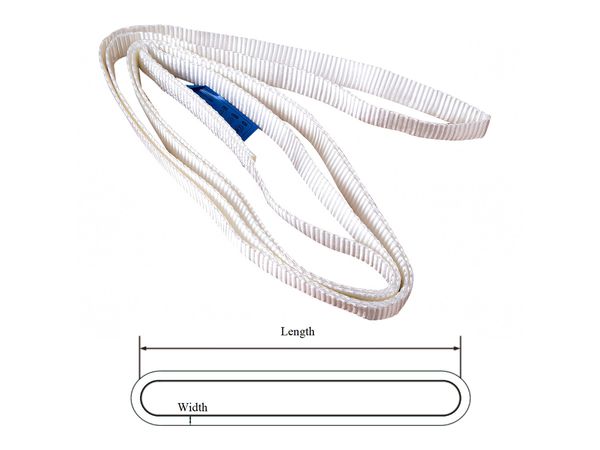
Single-Use Lifting Slings
One-way endless loop flat webbing sling designed for a single lifting operation — ultra-lightweight, compact, and eliminates return logistics.
View product →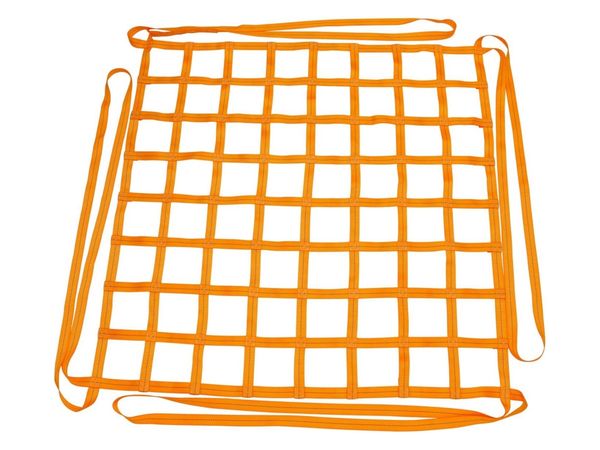
Webbing Lifting Nets
One-piece woven polyester lifting net for bulk, irregular and multi-item loads — mesh, size and lifting configuration made to your cargo.
View product →Effective capacity depends on the hitch — the same sling carries 2.0 × its rated WLL in a straight basket hitch, but a two-leg hitch at 45–60° gives the arrangement only 1.0 × rated WLL (0.5 × per sling). All figures below are for the complete arrangement; the per-sling share is half in two-leg and a quarter in four-leg hitches.
| Rated capacity | Single sling working load (max, kg) | Two slings working load (max, kg) | 3–4 leg bridle working load(max, kg) | ||||||||||
|---|---|---|---|---|---|---|---|---|---|---|---|---|---|
| Webbing Slings Round Slings Sling Assemblies |  | ||||||||||||
| Mode coefficient | Vertical×1 | Choker×0.8 | Basket×2 | 2-Leg×1.4 | 2-Leg×1 | 2-Leg Choked×0.7 | 2-Leg Choked×0.5 | 2 Slings×1.4 | 2 Slings×1.12 | 2 Slings×1 | 2 Slings×0.8 | 3 / 4-Leg×2.1 | 3 / 4-Leg×1.5 |
| 1,000 kg | 1,000 | 800 | 2,000 | 1,400 | 1,000 | 700 | 500 | 1,400 | 1,120 | 1,000 | 800 | 2,100 | 1,500 |
| 2,000 kg | 2,000 | 1,600 | 4,000 | 2,800 | 2,000 | 1,400 | 1,000 | 2,800 | 2,240 | 2,000 | 1,600 | 4,200 | 3,000 |
| 3,000 kg | 3,000 | 2,400 | 6,000 | 4,200 | 3,000 | 2,100 | 1,500 | 4,200 | 3,360 | 3,000 | 2,400 | 6,300 | 4,500 |
| 4,000 kg | 4,000 | 3,200 | 8,000 | 5,600 | 4,000 | 2,800 | 2,000 | 5,600 | 4,480 | 4,000 | 3,200 | 8,400 | 6,000 |
| 5,000 kg | 5,000 | 4,000 | 10,000 | 7,000 | 5,000 | 3,500 | 2,500 | 7,000 | 5,600 | 5,000 | 4,000 | 10,500 | 7,500 |
| 6,000 kg | 6,000 | 4,800 | 12,000 | 8,400 | 6,000 | 4,200 | 3,000 | 8,400 | 6,720 | 6,000 | 4,800 | 12,600 | 9,000 |
| 8,000 kg | 8,000 | 6,400 | 16,000 | 11,200 | 8,000 | 5,600 | 4,000 | 11,200 | 8,960 | 8,000 | 6,400 | 16,800 | 12,000 |
| 10,000 kg | 10,000 | 8,000 | 20,000 | 14,000 | 10,000 | 7,000 | 5,000 | 14,000 | 11,200 | 10,000 | 8,000 | 21,000 | 15,000 |
| 12,000 kg | 12,000 | 9,600 | 24,000 | 16,800 | 12,000 | 8,400 | 6,000 | 16,800 | 13,440 | 12,000 | 9,600 | 25,200 | 18,000 |
| 15,000 kg | 15,000 | 12,000 | 30,000 | 21,000 | 15,000 | 10,500 | 7,500 | 21,000 | 16,800 | 15,000 | 12,000 | 31,500 | 22,500 |
| 20,000 kg | 20,000 | 16,000 | 40,000 | 28,000 | 20,000 | 14,000 | 10,000 | 28,000 | 22,400 | 20,000 | 16,000 | 42,000 | 30,000 |
| 25,000 kg | 25,000 | 20,000 | 50,000 | 35,000 | 25,000 | 17,500 | 12,500 | 35,000 | 28,000 | 25,000 | 20,000 | 52,500 | 37,500 |
| 30,000 kg | 30,000 | 24,000 | 60,000 | 42,000 | 30,000 | 21,000 | 15,000 | 42,000 | 33,600 | 30,000 | 24,000 | 63,000 | 45,000 |
| 40,000 kg | 40,000 | 32,000 | 80,000 | 56,000 | 40,000 | 28,000 | 20,000 | 56,000 | 44,800 | 40,000 | 32,000 | — | — |
| 50,000 kg | 50,000 | 40,000 | 100,000 | 70,000 | 50,000 | 35,000 | 25,000 | 70,000 | 56,000 | 50,000 | 40,000 | — | — |
| 60,000 kg | 60,000 | 48,000 | 120,000 | 84,000 | 60,000 | 42,000 | 30,000 | 84,000 | 67,200 | 60,000 | 48,000 | — | — |
| 80,000 kg | 80,000 | 64,000 | 160,000 | 112,000 | 80,000 | 56,000 | 40,000 | 112,000 | 89,600 | 80,000 | 64,000 | — | — |
| 100,000 kg | 100,000 | 80,000 | 200,000 | 140,000 | 100,000 | 70,000 | 50,000 | 140,000 | 112,000 | 100,000 | 80,000 | — | — |
| 200,000 kg | 200,000 | 160,000 | 400,000 | 280,000 | 200,000 | 140,000 | 100,000 | 280,000 | 224,000 | 200,000 | 160,000 | — | — |
| 300,000 kg | 300,000 | 240,000 | 600,000 | 420,000 | 300,000 | 210,000 | 150,000 | 420,000 | 336,000 | 300,000 | 240,000 | — | — |
| 400,000 kg | 400,000 | 320,000 | 800,000 | 560,000 | 400,000 | 280,000 | 200,000 | 560,000 | 448,000 | 400,000 | 320,000 | — | — |
| 500,000 kg | 500,000 | 400,000 | 1,000,000 | 700,000 | 500,000 | 350,000 | 250,000 | 700,000 | 560,000 | 500,000 | 400,000 | — | — |
| 600,000 kg | 600,000 | 480,000 | 1,200,000 | 840,000 | 600,000 | 420,000 | 300,000 | 840,000 | 672,000 | 600,000 | 480,000 | — | — |
| 700,000 kg | 700,000 | 560,000 | 1,400,000 | 980,000 | 700,000 | 490,000 | 350,000 | 980,000 | 784,000 | 700,000 | 560,000 | — | — |
| 800,000 kg | 800,000 | 640,000 | 1,600,000 | 1,120,000 | 800,000 | 560,000 | 400,000 | 1,120,000 | 896,000 | 800,000 | 640,000 | — | — |
| 900,000 kg | 900,000 | 720,000 | 1,800,000 | 1,260,000 | 900,000 | 630,000 | 450,000 | 1,260,000 | 1,008,000 | 900,000 | 720,000 | — | — |
| 1,000,000 kg | 1,000,000 | 800,000 | 2,000,000 | 1,400,000 | 1,000,000 | 700,000 | 500,000 | 1,400,000 | 1,120,000 | 1,000,000 | 800,000 | — | — |
1. Mode coefficient = factor applied to the rated capacity for each hoisting method (β = vertical leg angle). Values are the maximum working load in kg. Capacity rows follow the EN 1492 color coding.
2. The diagrams in the header show each hitch schematically. Always verify against the identification tag and apply the derating for your actual rigging angle.
3. 2-Leg Choked columns are two-leg arrangements with each leg choked around the load. In the Two slings group, read each column together with the hitch diagram above it. 3–4 leg bridle figures are shown to 30,000 kg rated capacity; larger capacities are engineered to enquiry.
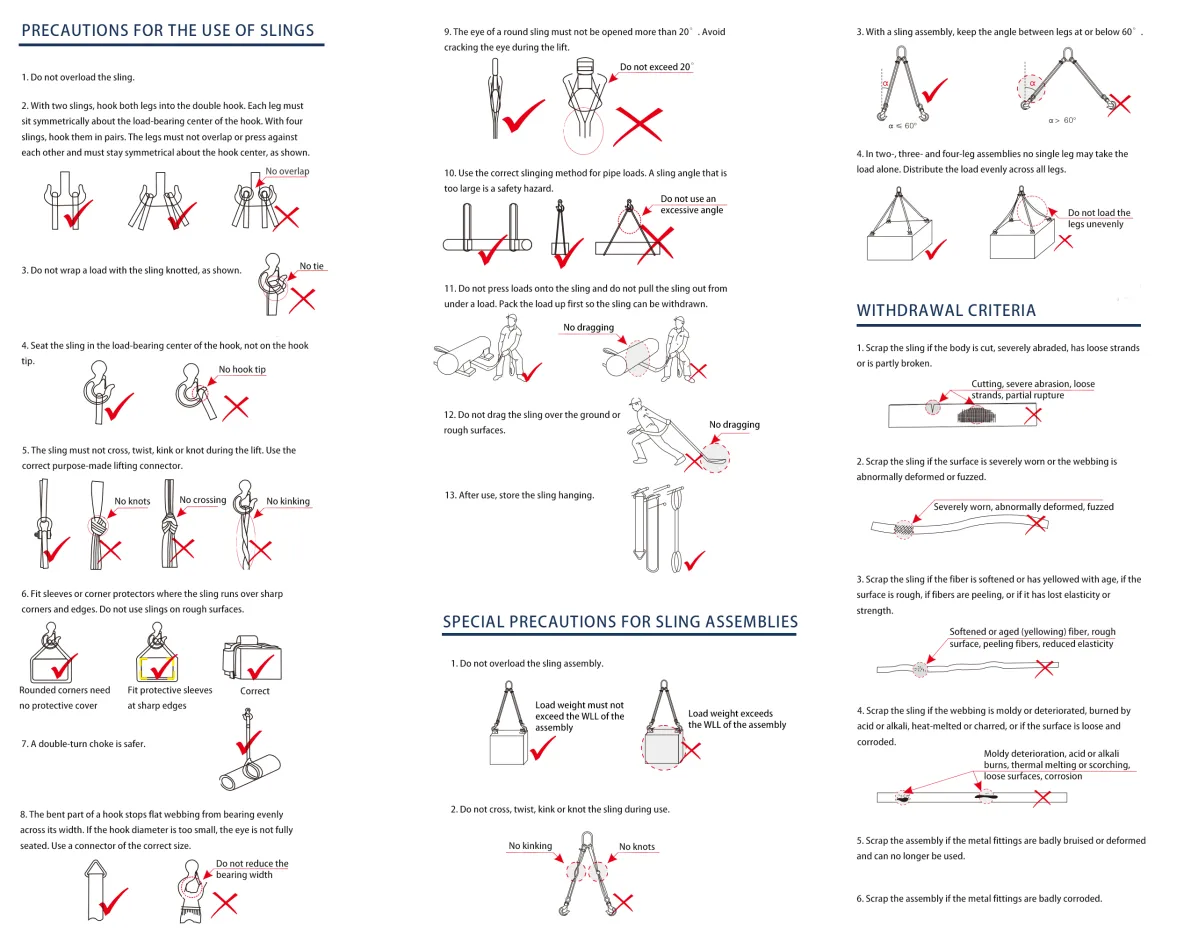
The figure below is in three parts: precautions for the use of slings, special precautions for sling assemblies, and withdrawal criteria. Together they cover how to use a sling safely, the extra rules for multi-leg assemblies, and when a sling must be retired.