
Ratchet Straps for Cargo Securing
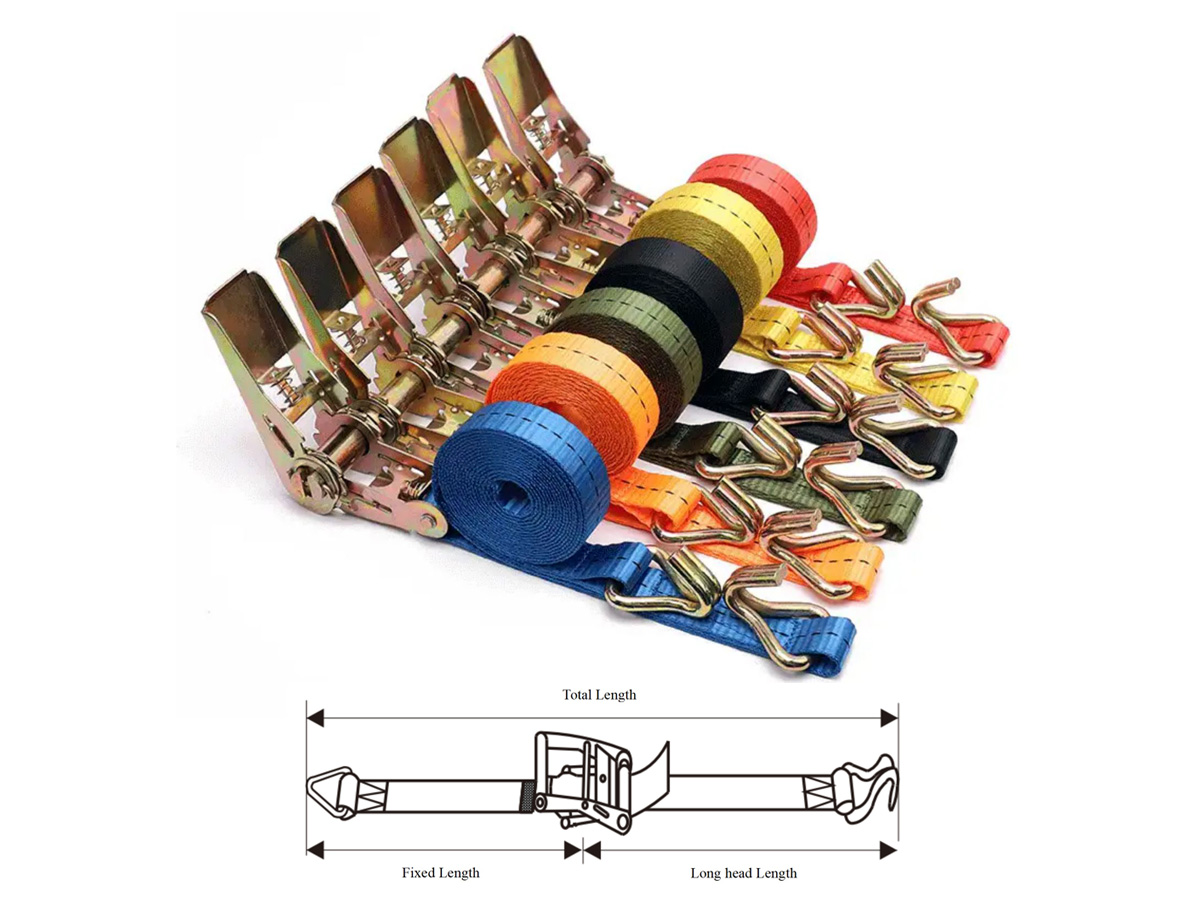
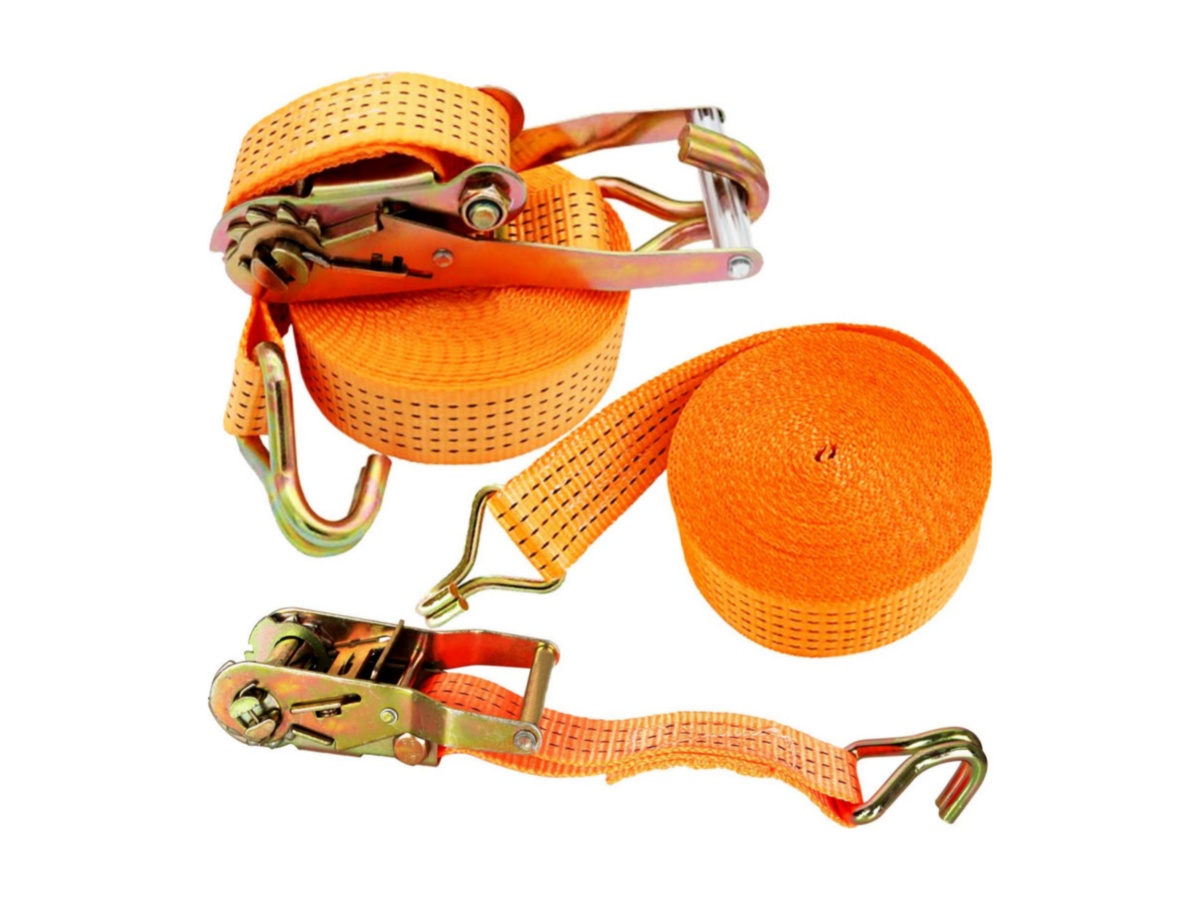
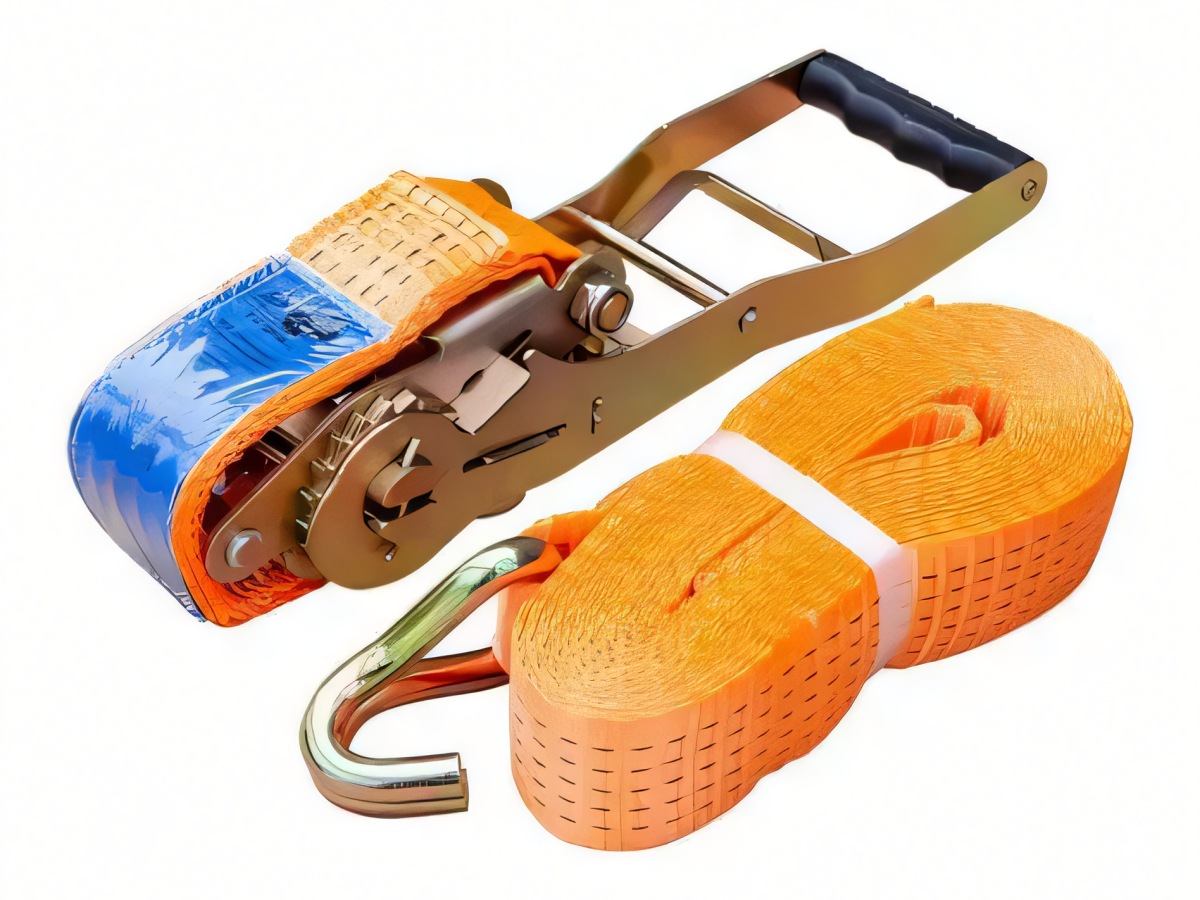
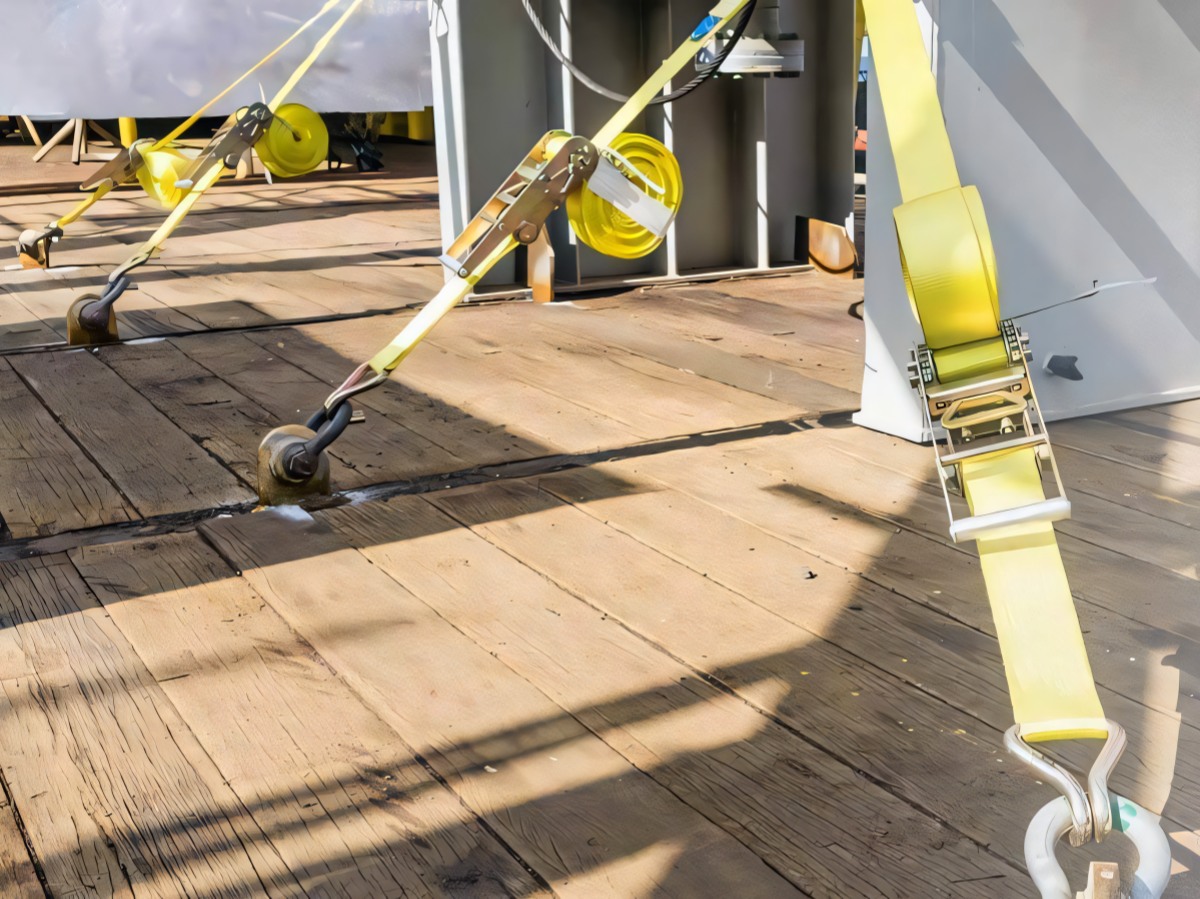
KEY FEATURES
Type-tested ratchet lashing assemblies — one lashing system for every transport mode. Cargo lashing and tie-down use only — NOT FOR LIFTING.
● One Type-Tested System, Every Transport Mode
Every size is type-tested as a complete assembly — webbing, ratchet and end fittings — for road and rail transport and containerised cargo. The wide-handle ratchet tensions in a few strokes and stays locked in transit.
● High-Tenacity Polyester Webbing
High-tenacity polyester webbing with low moisture uptake — wet and dry performance stay close, and the webbing resists UV, oil and most common chemicals for repetitive outdoor transport duty.
● One Lashing Logic for Every Anchor
Every lashing runs as a two-branch assembly — the ratchet rides on the shorter branch — and every end fitting attaches to trailers, rails and anchor hardware the same way. The End Hook Selection table matches each anchor point to the right fitting.
● Reinforced Eyelet Protectors
Extra webbing layers at the eyelets shield the highest-wear point and extend strap service life in daily tie-down work.
● 1,200+ t/y · OEM / ODM · Standard sizes 3–7 days · Sample orders welcome
SELECTION GUIDE
Which Lashing Gear Fits Your Load?
| Your Situation | Best Choice | Why & What to Specify |
|---|---|---|
| Securing general cargo on trucks, trailers or containers | Ratchet strap | Adjustable tension with quick ratchet take-up for mixed loads. |
| Containment of loose or irregular loads | Cargo net | Mesh spreads restraint across the whole load face. |
| Sharp edges or abrasive surfaces | Edge-protected strap or lashing chain | Steel chain resists cutting; always fit corner protectors on webbing. |
| Emergency vehicle recovery (stuck or immobilised vehicle) | Dedicated kinetic recovery strap | Ratchet straps are for cargo securing only and must not pull a stuck vehicle free — they are not built for kinetic shock loads. For recovery, use a dedicated stretch recovery strap sized to the vehicle’s GVWR; keep ratchet straps for securing cargo on the trailer. |
STANDARD SIZES
| Lashing Capacity(daN) | Webbing Width(mm) | Breaking Force(daN) | Length Fixed End(m) | Length Loose End(m) |
|---|---|---|---|---|
| 400 | 25 | 800 | 0.3 | 6.0-12.0 |
| 500 | 25 | 1,000 | 0.3 | 6.0-12.0 |
| 750 | 35 | 1,500 | 0.5 | 6.0-12.0 |
| 1,000 | 35 | 2,000 | 0.5 | 6.0-12.0 |
| 1,500 | 35 | 3,000 | 0.5 | 6.0-12.0 |
| 2,000 | 50 | 4,000 | 0.5 | 6.0-12.0 |
| 2,500 | 50 | 5,000 | 0.5 | 6.0-12.0 |
| 3,500 | 75 | 7,000 | 0.7 | 6.0-12.0 |
| 5,000 | 75 | 10,000 | 0.7 | 6.0-12.0 |
| 10,000 | 100 | 20,000 | 0.7 | 6.0-12.0 |
LC (lashing capacity) is the working rating, quoted in daN per EN 12195-2 — 1 daN ≈ 1.02 kgf. BF (breaking force) is the minimum breaking force of the complete assembly; every row above holds BF ≥ 2 × LC. Fixed-end and loose-end lengths are quoted as LG (one-piece length) = fixed end + loose end.
End Hook Selection
| Hook Type | Photo | Application Scenario | Anchor / Connection |
|---|---|---|---|
| Swan Hook | 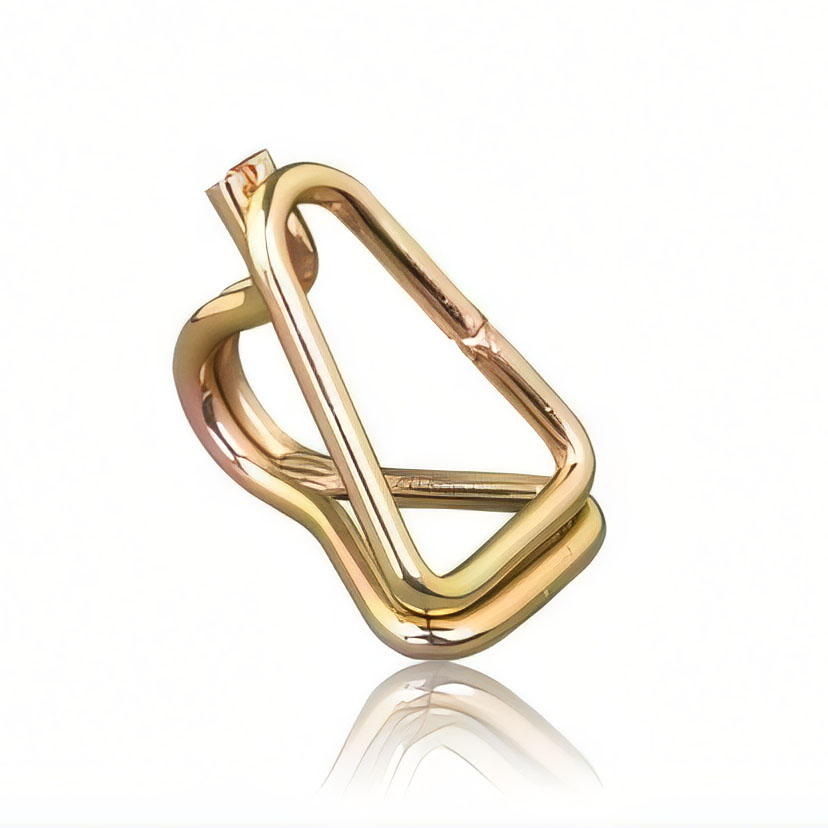 | High-security transport where accidental disengagement must be prevented | Wide flat anchor rails, trailer side rails & stake pockets |
| Flat Hook | 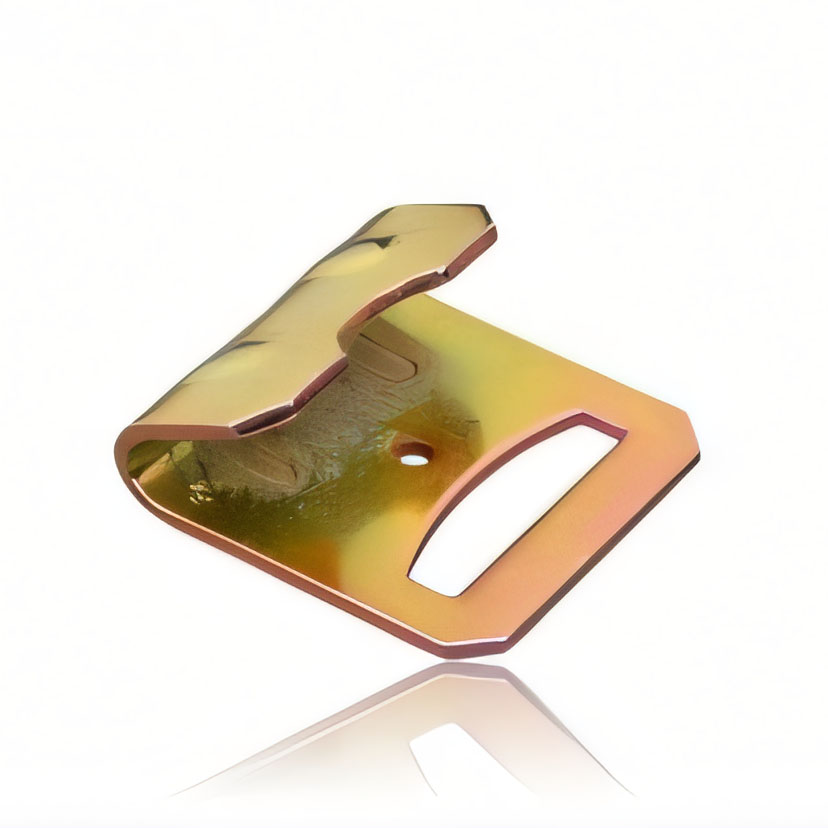 | General cargo securing on flatbed trailers and trucks | Flat anchor points on E-track, trailer rub rails & flatbeds |
| S Hook | 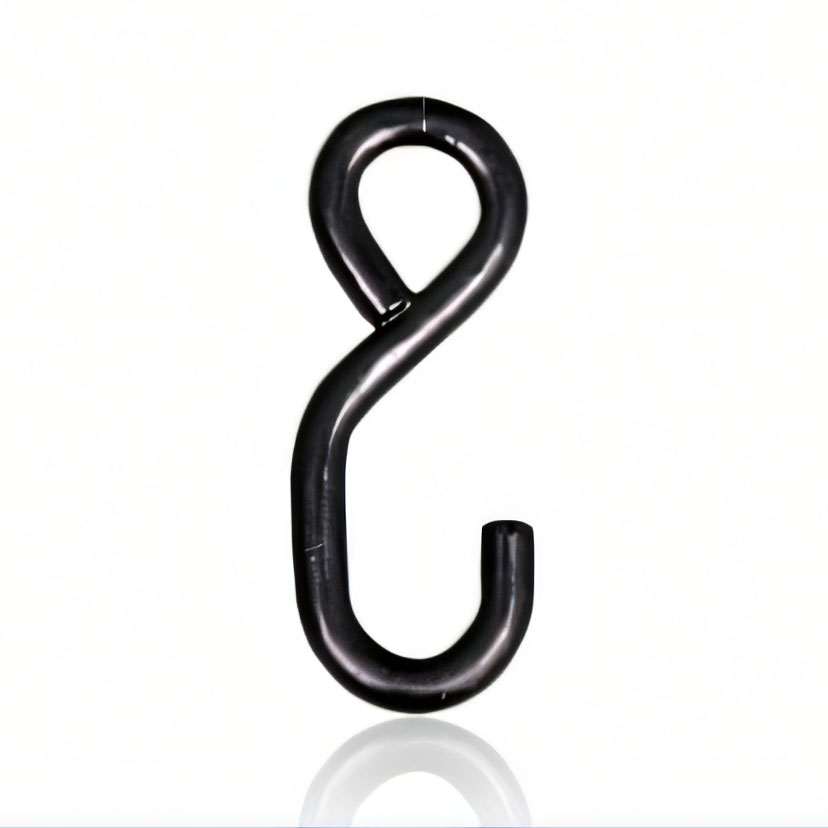 | Light-duty tie-downs and general securing on fixed anchors | Fixed anchor points, beams & light-duty tie-downs |
| Closed Double J Hook | 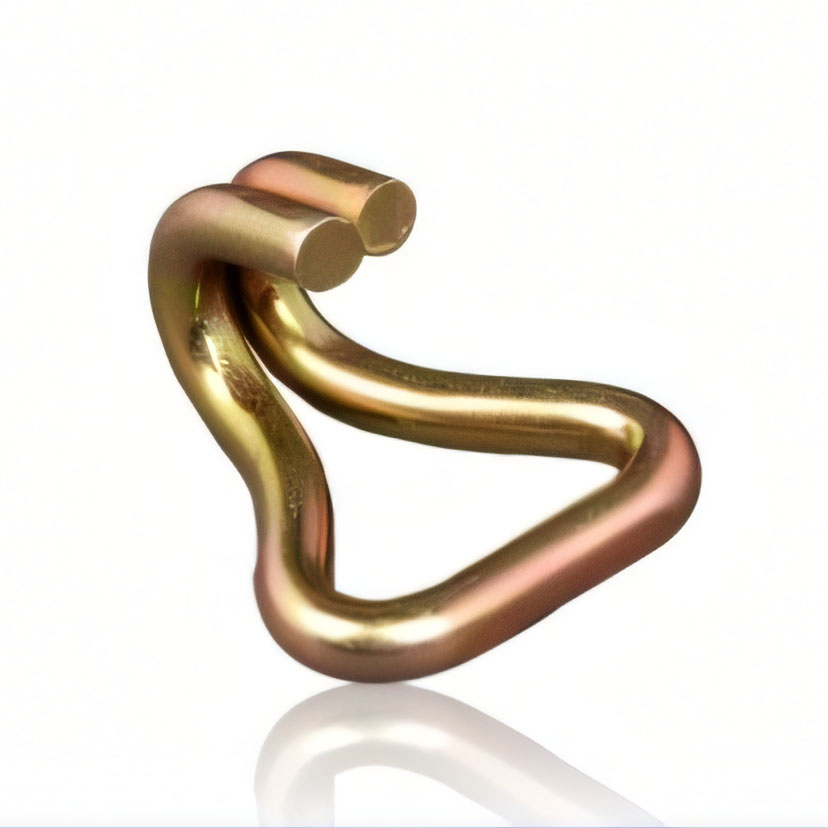 | Secure hook-on to D-rings and anchor lugs where the fitting must not release | Secure hook-on to D-rings, anchor lugs & chains |
| Open Double J Hook | 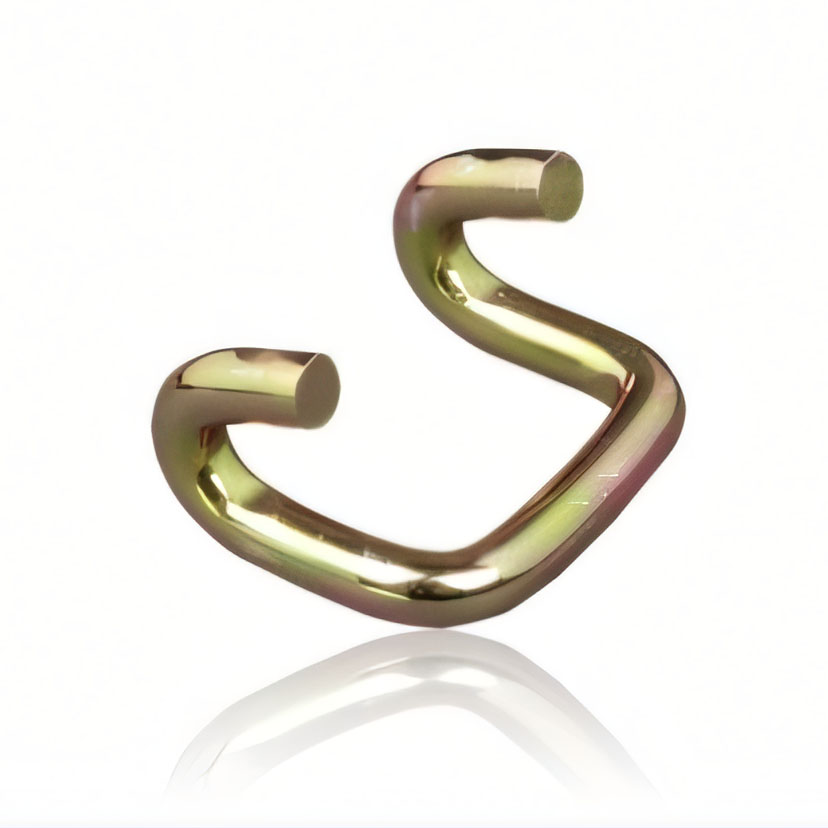 | Heavy and large loads requiring flexible attachment to different anchor points | Quick hook-on to rails, rings & open anchor points |
| Single J Hook | 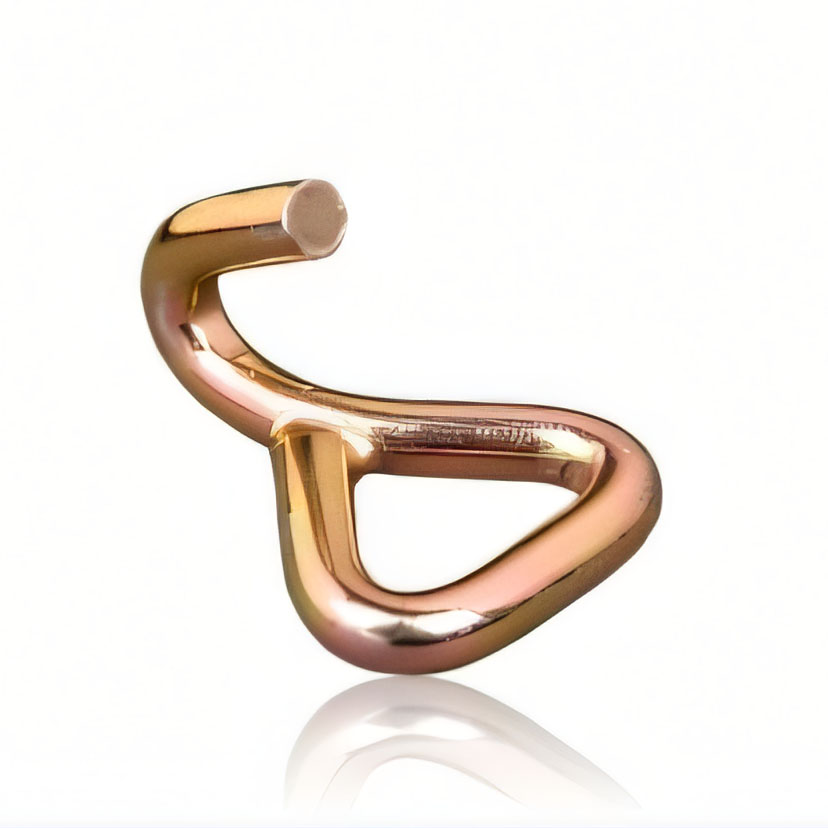 | Various cargo types with simple and effective attachment points | General-purpose hook-on to lashing rings & anchor points |
| Triangle Ring | 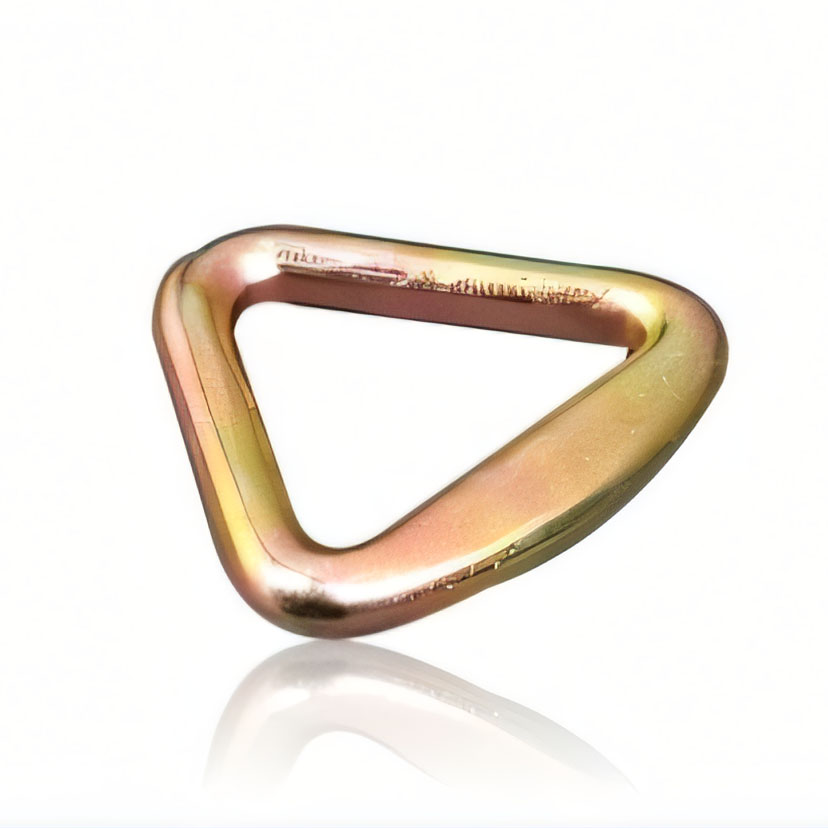 | Versatile transportation and heavy-duty load securing applications | Direct connection to hooks, shackles & anchor lugs |
| Eye Hook | 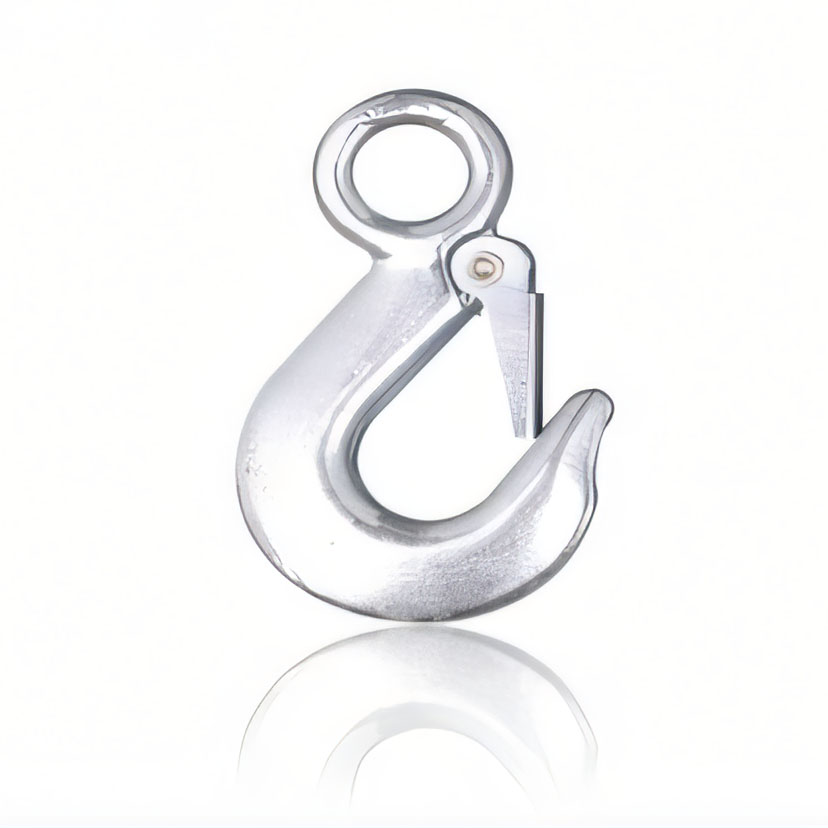 | High-tension applications where a hard-point or shackle connection suits the load | Sleeved over hooks, or shackled to anchor hardware |
| Flat Safety Hook | 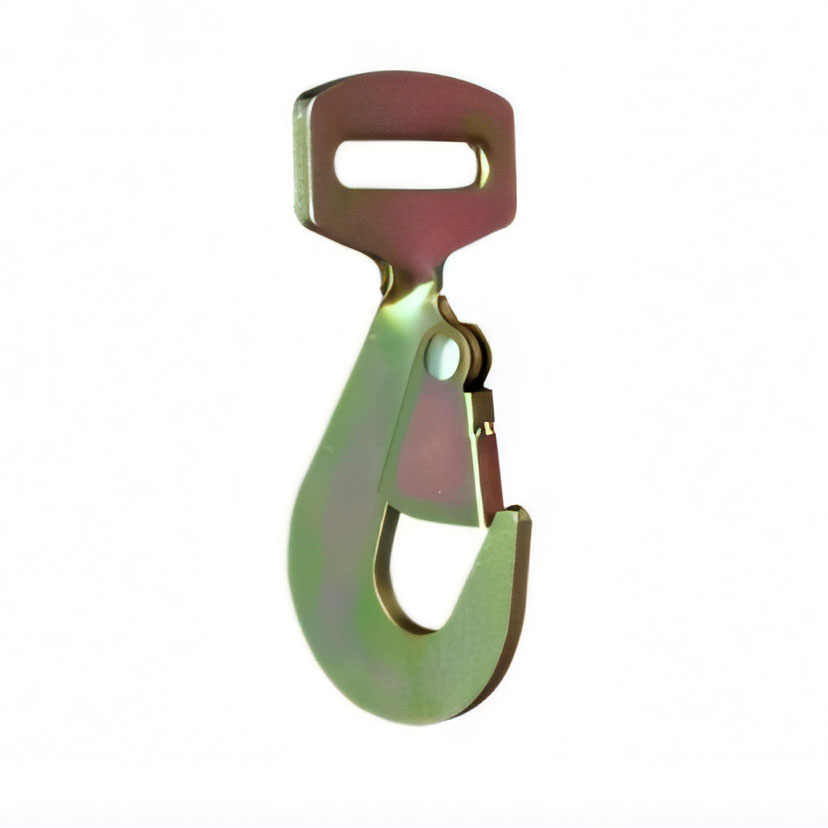 | Trucks, trailers and vehicle transport requiring secure and stable cargo fastening | Spring-guarded hook-on where vibration or movement occurs |
CUSTOM SIZING & OPTIONS
| Parameter | Custom Range |
|---|---|
| Webbing Material | 100% high tenacity polyester |
| Webbing Width | 25 / 35 / 50 / 75 mm standard; 100 mm made to order |
| Length | Customizable |
| End Fittings | Nine end-fitting types — swan, flat, S, closed double-J, open double-J, single-J, triangle ring, eye and flat safety hook; see End Hook Selection |
| Color & Branding | Custom colors and branded labels on request |
| Identification & Traceability | Durable tags with LC, STF, SHF, maximum elongation, Length, serial number, manufacture date, prominent "NOT FOR LIFTING" marking; traceability code and private labeling available |
| Design & Compliance Basis | EN 12195-2 (EU); WSTDA-T-1:2022 (North America) per market. |
| Documentation & Marking | Batch test reports supplied with each shipment. |
| Packaging | Shrink-wrap, blister, box or bag packing as specified; custom packaging and OEM labeling on request |
FAQ
Frequently Asked Questions
Questions about samples, MOQ, or shipping? Ask us directly →
A ratchet strap uses a mechanical ratchet buckle to tension and lock the webbing, making it ideal for heavy or high-vibration cargo securing. A vehicle recovery strap is designed for towing and roadside recovery, with reinforced eyes and materials chosen for dynamic shock loading.
No. Ratchet straps are designed for cargo securing only. They must never be used for lifting, hoisting, or personnel support. For lifting operations, use certified lifting slings with the correct design factor and markings.
A higher LC does not by itself give a correspondingly higher level of restraint: in a frictional lashing what stops the load moving is the friction between cargo and loading surface, not the rating printed on the strap. The number and lashing capacity of straps follow from the cargo securing calculation per EN 12195-1: cargo mass, the friction coefficient between cargo and loading surface, the lashing angle, and the direction-specific acceleration coefficients (forward, sideways, rearward). Friction dominates — the same load may need twice as many lashings on a smooth steel deck as on a grooved one. Send us your cargo, weight and deck type and we help size the lashing plan.
Lashing straps are not lifting accessories: EN 12195-2 sits outside the machinery legislation that CE marking is tied to, so a compliant ratchet strap carries no CE mark. Compliance is evidenced instead by a Declaration of Conformity to EN 12195-2, a type-test report from a recognised laboratory, and batch testing with a traceability code on every label. We manufacture under an ISO 9001 quality system and run webbing tensile tests, ratchet and end-fitting load tests, and pre-shipment inspection on each batch.
Inspect the webbing for cuts, fraying, UV damage, or chemical contamination. Check that the ratchet mechanism locks and releases correctly and that hooks are not bent or cracked. Remove damaged straps from service.
Typical service temperature for the polyester webbing is −40 °C to +100 °C; the practical limit for a complete assembly can be lower, with hardware coating, thread and label the first to constrain use. Tell us your route climate — desert heat, Nordic winter, reefer containers — and we confirm the assembly limits.
LC (lashing capacity) is the force the assembly may exert on the load — the working rating, quoted in daN. BF (breaking force) is the minimum breaking force of the complete lashing assembly, type-tested per EN 12195-2 with a safety factor of 2 relative to LC. LC is determined by the weakest component of the assembly: webbing, tensioner and end fittings are type-tested together, so the rated capacity reflects the complete assembly, not the webbing alone.
STF (standard tension force) is the clamping force a ratchet assembly transfers to the load, marked per EN 12195-2 with the ratchet handle in the specified closing position. It is what activates friction in a cargo securing calculation per EN 12195-1 — and it varies with the ratchet mechanism, handle length and webbing thickness, so two assemblies with the same LC can clamp differently. The marked STF value for each assembly is confirmed by type testing; ask for it when specifying.
No — webbing lashings are replaced, not repaired. There is no field repair method that restores the rated lashing capacity, so a strap showing cuts, nicks, torn stitching or abrasion goes out of service for assessment and is replaced (see the care points above).
CE marking applies to machinery under Directive 2006/42/EC. Load restraint assemblies are not lifting accessories — the latest draft of EN 1492-4 explicitly excludes cargo securing and lashing from its scope. Our straps are rated and tested to EN 12195-2, with batch test reports supplied.
SHF (standard hand force) is the hand force EN 12195-2 assumes when a person tensions the strap by hand — 50 daN (about 50 kgf, roughly 500 N) for a hand-operated tensioner. It is not a rating of our straps; it is the input the standard fixes so that a published STF value is reproducible, and it is why STF is quoted against a defined handle position. SHF does not add to LC: LC is the force the assembly may exert on the load, while STF is the clamping force actually achieved under that standard hand force. Two assemblies can share an LC and still clamp differently, because STF depends on the ratchet mechanism, handle length and webbing thickness. Improving the mechanical advantage of the tensioner raises STF — not LC.
SAFETY
Ratchet Straps - Safety & Usage Guidelines
01
Cargo Securing Only
CRITICAL: ratchet straps are for cargo securing ONLY — never use them for lifting, hoisting, or personnel support.
02
Check the LC Label
Check the lashing capacity (LC) label before each use; never exceed it, and derate for any non-straight or angled pull.
03
Inspect Before Use
Inspect the webbing for cuts, abrasion, UV brittleness, or chemical damage; any visible cut, nick, torn stitch or abraded fold takes the strap out of service for assessment — do not attempt field repairs.
04
Operate the Ratchet
Operate the ratchet correctly: open fully, thread the webbing without twist, and tension with 2–3 strokes. Overtensioning damages webbing and shifts the load.
05
Confirm Full Closure
Confirm the ratchet is fully closed and locked before moving; a partially closed mechanism can release under vibration. Re-check tension on long trips.
06
Use Approved Anchors
Engage hooks fully on approved anchors (track fitting, lashing ring, welded D-ring); never hook onto edges, suspension, brakes, or fuel lines.
07
Pad Sharp Corners
Fit edge protectors on sharp cargo corners to extend webbing life and prevent sudden cut failures under transport shock.
08
Comply with Regulations
Comply with local transport rules: EN 12195-1/-2 (EU), and applicable federal/state/provincial cargo securement regulations plus WSTDA T-1 recommendations (North America).
09
Retire on Damage
Replace immediately if the webbing is frayed, hooks are bent or corroded, or the ratchet slips, jams, or fails to lock.
10
Store Correctly
Store clean, dry, and out of direct sunlight, chemicals, and heat — UV exposure in storage degrades webbing strength.
RELATED PRODUCTS
Explore More Solutions
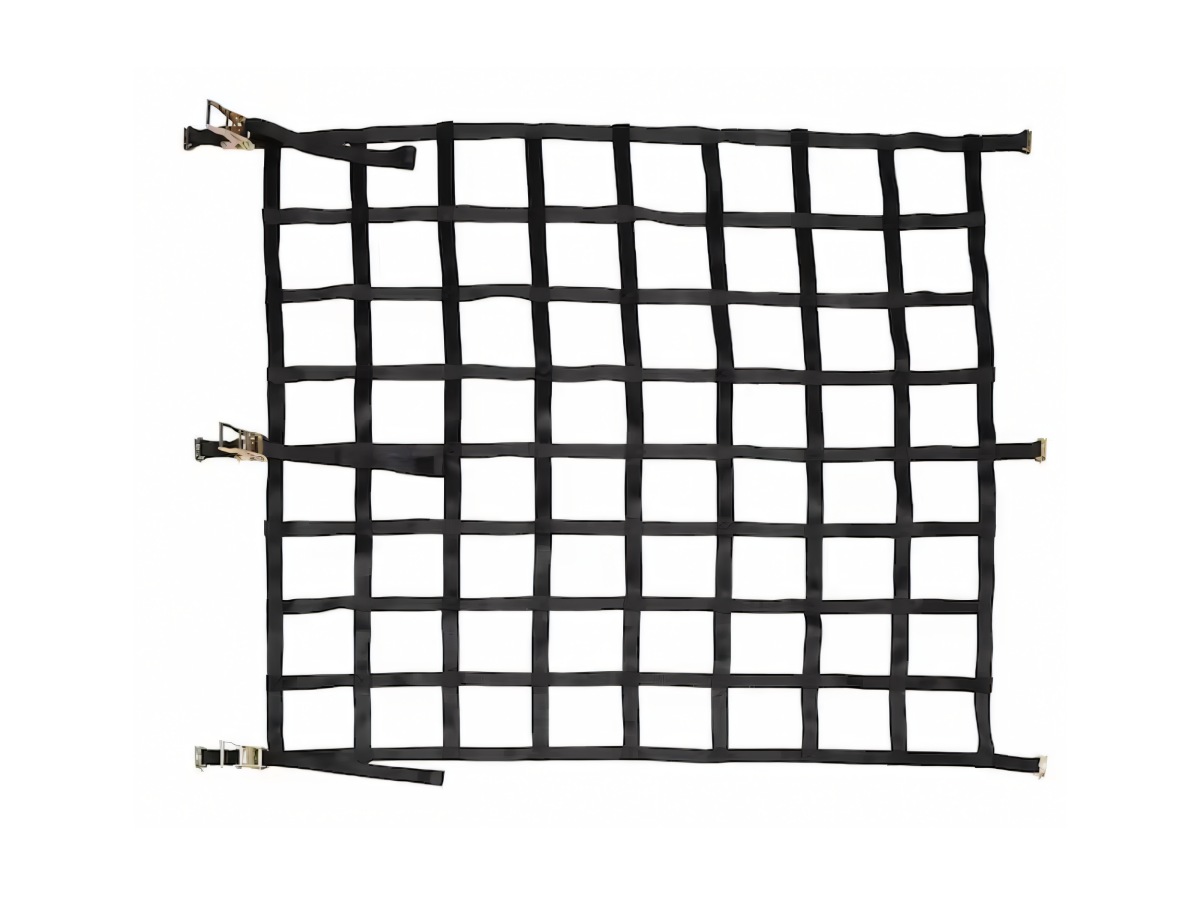
Cargo Nets
Quick-deploy UV-stabilized cargo nets for truck and container load containment — NOT FOR LIFTING.
View product →
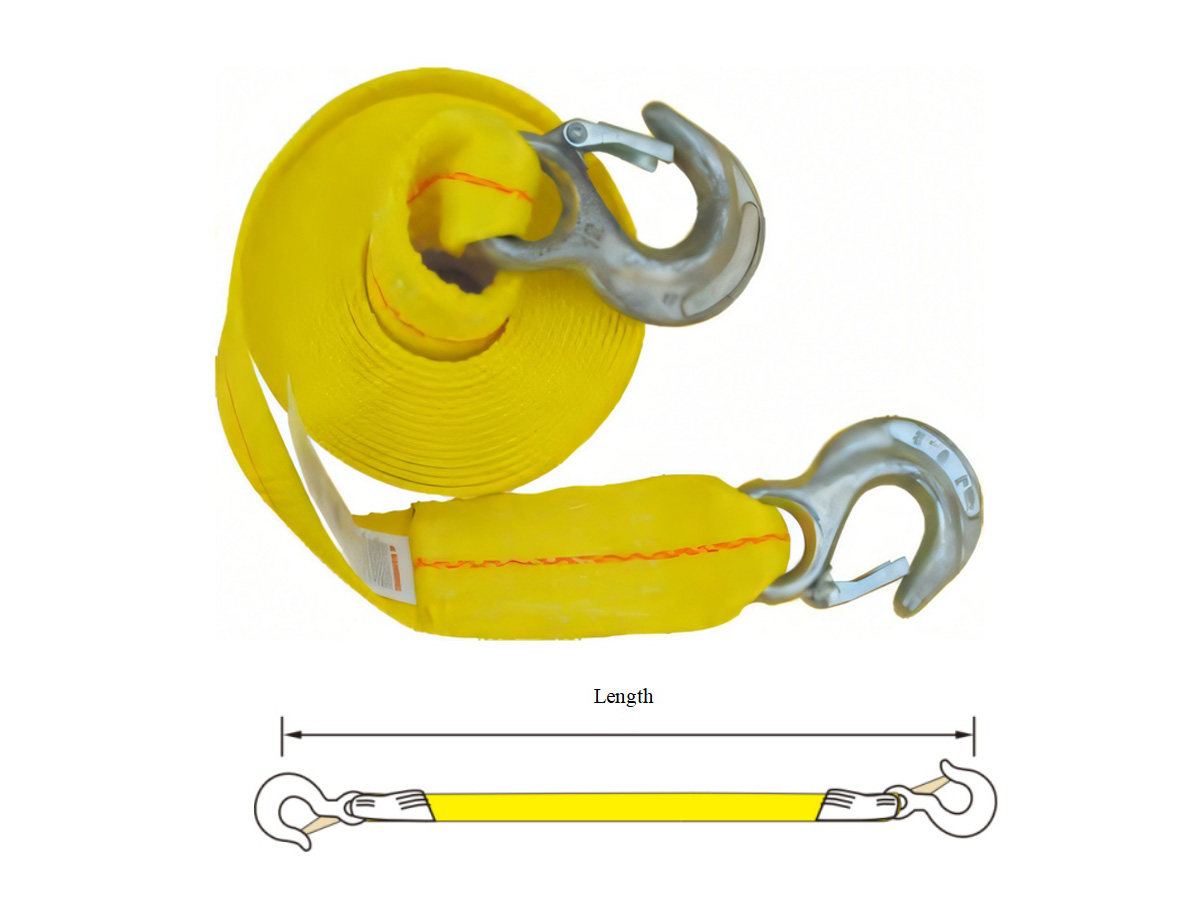
Vehicle Towing Straps
Low-stretch polyester towing straps with forged steel hooks or reinforced eyes, built for controlled, low-speed towing of disabled or broken-down vehicles — not for kinetic recovery or lifting.
View product →
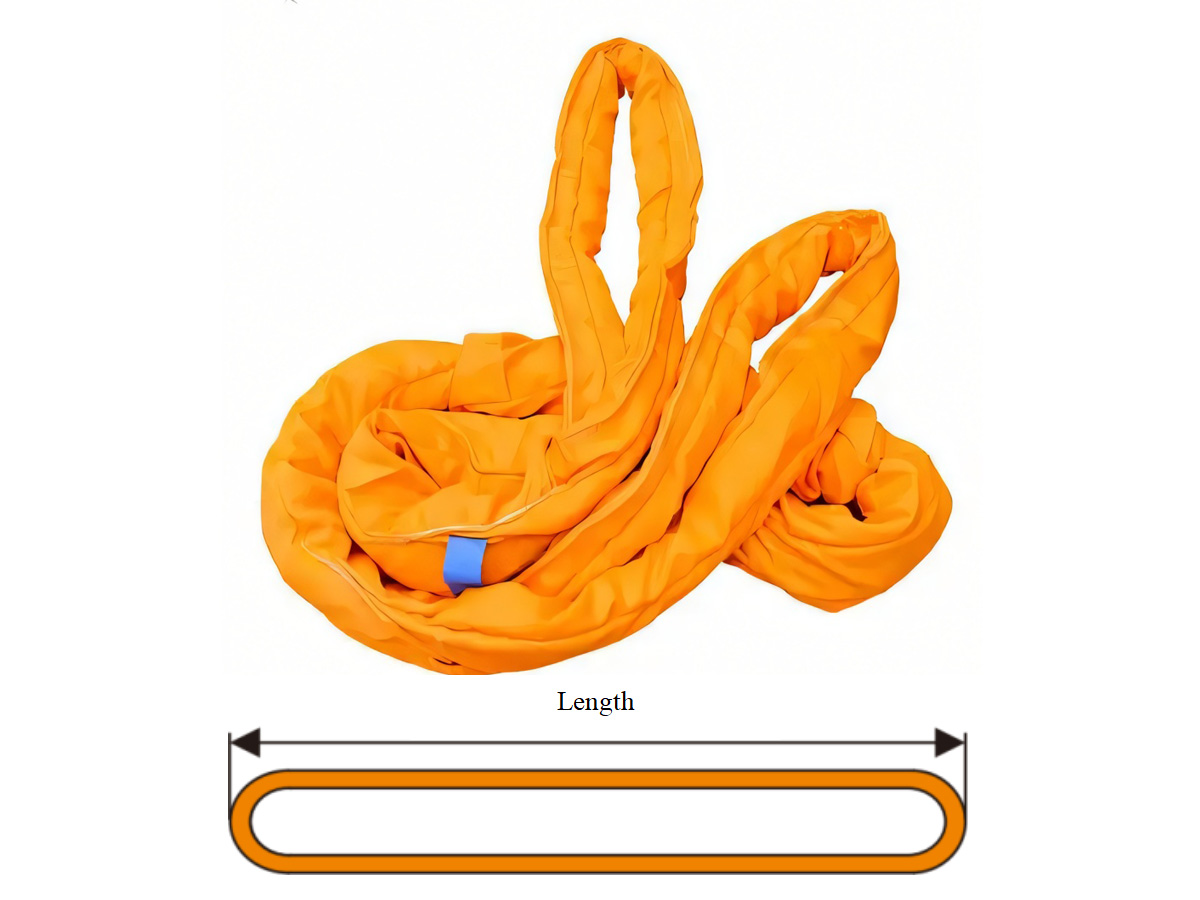
HMPE Slings
HMPE slings built on UHMWPE fiber for weight-critical heavy lifts — offshore, wind energy and engineered lifting where sling weight, elongation and corrosion resistance are selection criteria.
View product →
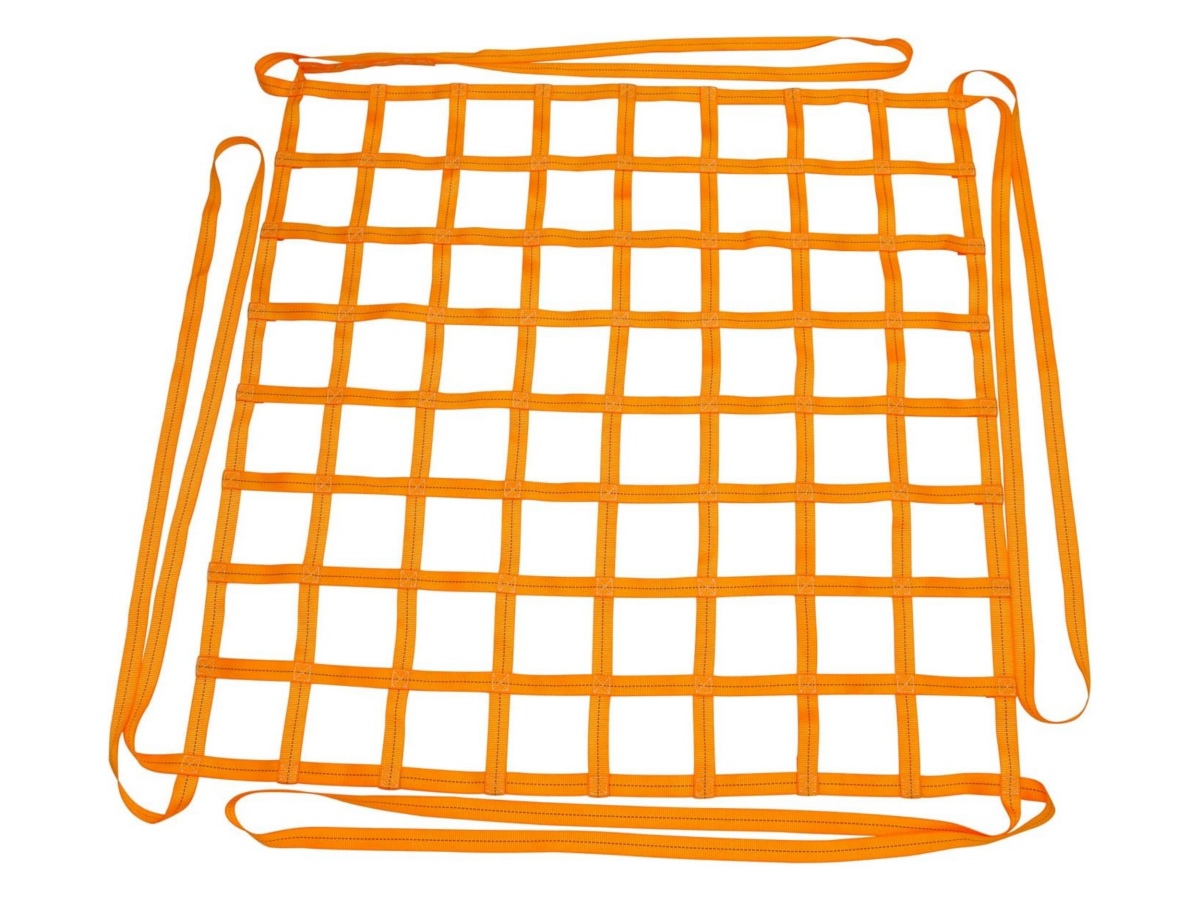
Webbing Lifting Nets
One-piece woven polyester lifting net for bulk, irregular and multi-item loads — mesh, size and lifting configuration made to your cargo.
View product →