
Eye-and-Eye Round Slings for Heavy Lifting
KEY FEATURES
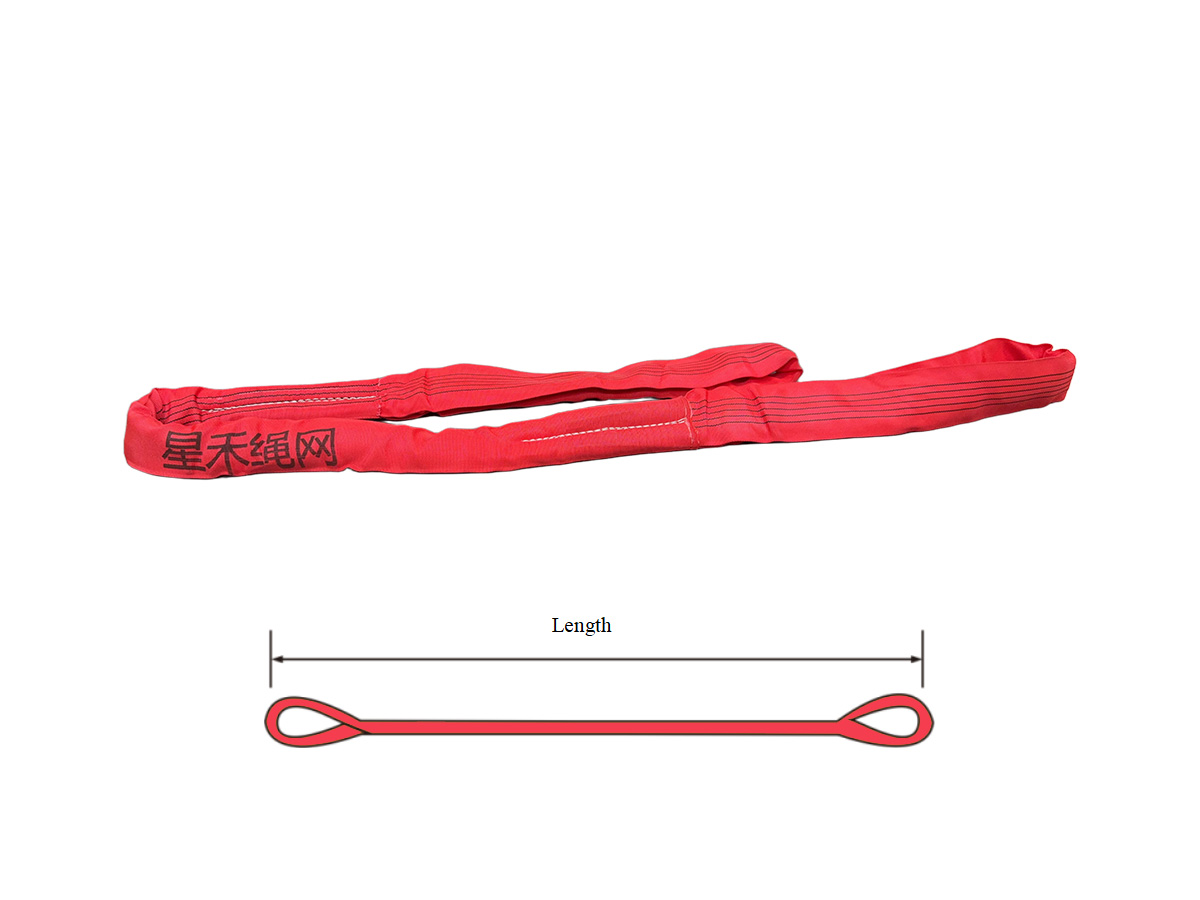
Eye-and-Eye round sling with a soft polyester round body and reinforced flat eyes for direct connection to hooks, shackles and other approved lifting hardware.
● Reinforced Flat Eyes
Reinforced eyes spread stress at the eye-to-body junction for dependable, repeatable lifting with hooks and shackles.
● Flexible Round Body
The soft round construction conforms closely to curved and irregular load surfaces and spreads contact pressure, with no stitch-line pressure points to mark finished surfaces.
● High Strength-to-Weight Ratio
High-tenacity polyester provides high strength with low sling weight, supporting easier handling and lower transport weight than comparable steel or chain solutions. The controlled elongation holds the load steady and absorbs shock from dynamic lifts, reducing peak forces on the sling and the load.
● Corrosion & Weather Resistance
Polyester does not rust or corrode, and it resists UV and moisture better than wire-based rigging. This makes it a practical choice for outdoor, marine and washdown duty.
● 1,200+ t/y · OEM / ODM · Standard sizes 3–7 days · Sample orders welcome
SELECTION GUIDE
Which Sling Fits Your Lift?
| Your Situation | Best Choice | Why & What to Specify |
|---|---|---|
| Step 1 - Material | ||
| General-duty lifting between -40 °C and +100 °C - factory, warehouse, precast yard | Polyester sling | Will not rust, and protects finished surfaces. The default choice for most industrial lifts. |
| Sustained heat above +100 °C, or sharp edges that cannot be padded | Steel wire rope sling | Polyester is rated -40 °C to +100 °C and cuts far more easily than steel. Above that range, or where edges stay sharp, specify wire rope. |
| Weight-critical or offshore lifts where rigger handling dominates | HMPE sling | About 1/8 the weight of a steel wire rope sling at equal breaking strength - see our HMPE slings for offshore and wind work. |
| Step 2 - Sling Type | ||
| Delicate, polished or irregular loads - castings, mouldings, finished assemblies | Round sling | The round body spreads contact pressure and conforms to shape, with no stitch-line pressure points to mark the load. |
| Flat, angular or uniform loads - steel plate, pipe bundles, precast units | Webbing sling | The flat face seats squarely and resists rolling, and damage is visible on both faces at inspection. |
| Tight clearance between the load and the hook | Webbing sling | Flat webbing needs less vertical space than a round sling body of the same capacity. |
| Step 3 - Construction | ||
| Direct connection to hooks, shackles or master links | Eye-and-eye | Reinforced eyes attach straight to hardware with no extra fittings - the usual choice for planned, repeatable lifts. |
| Basket or choker hitches repeated on the same load type | Endless | Rotate the loop between lifts to spread wear around the full circumference; one sling covers vertical, basket and choker hitches. |
STANDARD SIZES
| Color | Vertical (kg) (kg) | Choker (kg) (kg) | Vertical Basket (kg) (kg) | Approx. Width(mm) | Approx. Thickness(mm) | Min Length(m) | Weight (7:1)(kg/m) |
|---|---|---|---|---|---|---|---|
| 1,000 | 800 | 2,000 | 50 | 11 | 1.0 | 0.34 | |
| 2,000 | 1,600 | 4,000 | 60 | 12 | 1.5 | 0.48 | |
| 3,000 | 2,400 | 6,000 | 70 | 14 | 1.5 | 0.74 | |
| 4,000 | 3,200 | 8,000 | 80 | 15 | 1.5 | 0.93 | |
| 5,000 | 4,000 | 10,000 | 90 | 23 | 1.5 | 1.12 | |
| 6,000 | 4,800 | 12,000 | 90 | 25 | 2.0 | 1.31 | |
| 8,000 | 6,400 | 16,000 | 100 | 26 | 3.0 | 1.69 | |
| 10,000 | 8,000 | 20,000 | 110 | 27 | 3.0 | 2.22 | |
| 12,000 | 9,600 | 24,000 | 125 | 28 | 3.0 | 2.75 | |
| 15,000 | 12,000 | 30,000 | 150 | 29 | 3.0 | 3.34 | |
| 20,000 | 16,000 | 40,000 | 180 | 31 | 3.0 | 5.25 | |
| 25,000 | 20,000 | 50,000 | 200 | 34 | 3.0 | 6.65 | |
| 30,000 | 24,000 | 60,000 | 220 | 36 | 4.0 | 9.22 | |
| 40,000 | 32,000 | 80,000 | 250 | 40 | 4.0 | 12.37 | |
| 50,000 | 40,000 | 100,000 | 300 | 46 | 4.0 | 14.58 |
1. Dimensions refer to the standard sling body; the optional additional protective sleeve increases outer dimensions slightly.
2. Longer lengths and higher capacities are engineered to order; capacities above the standard range are project-engineered and subject to technical review and testing, not an EN-standard stock range.
3. Use the kg / lb toggle above the table to switch units.
2. Longer lengths and higher capacities are engineered to order; capacities above the standard range are project-engineered and subject to technical review and testing, not an EN-standard stock range.
3. Use the kg / lb toggle above the table to switch units.
CUSTOM SIZING & OPTIONS
| Parameter | Custom Range |
|---|---|
| Material | 100% high tenacity polyester |
| WLL Range | 1 t – 1,000 t; engineered per lift plan |
| Length (EWL) | Custom, up to 200 m |
| Eye Configuration | Flat, reinforced or tapered eyes; additional protective webbing on request |
| Design Factor | 7:1 (EN 1492-2 series) · 6:1 engineered to customer specification |
| Protective Sleeves | Polyester tubular sleeve, fitted in wear zones or full length |
| Design & Compliance Basis | EN 1492-2 covers the 7:1 series; other coefficients made to agreed specification. Australian supply is referenced to AS 4497:2018 (round slings — synthetic fibre), which also covers HMPE |
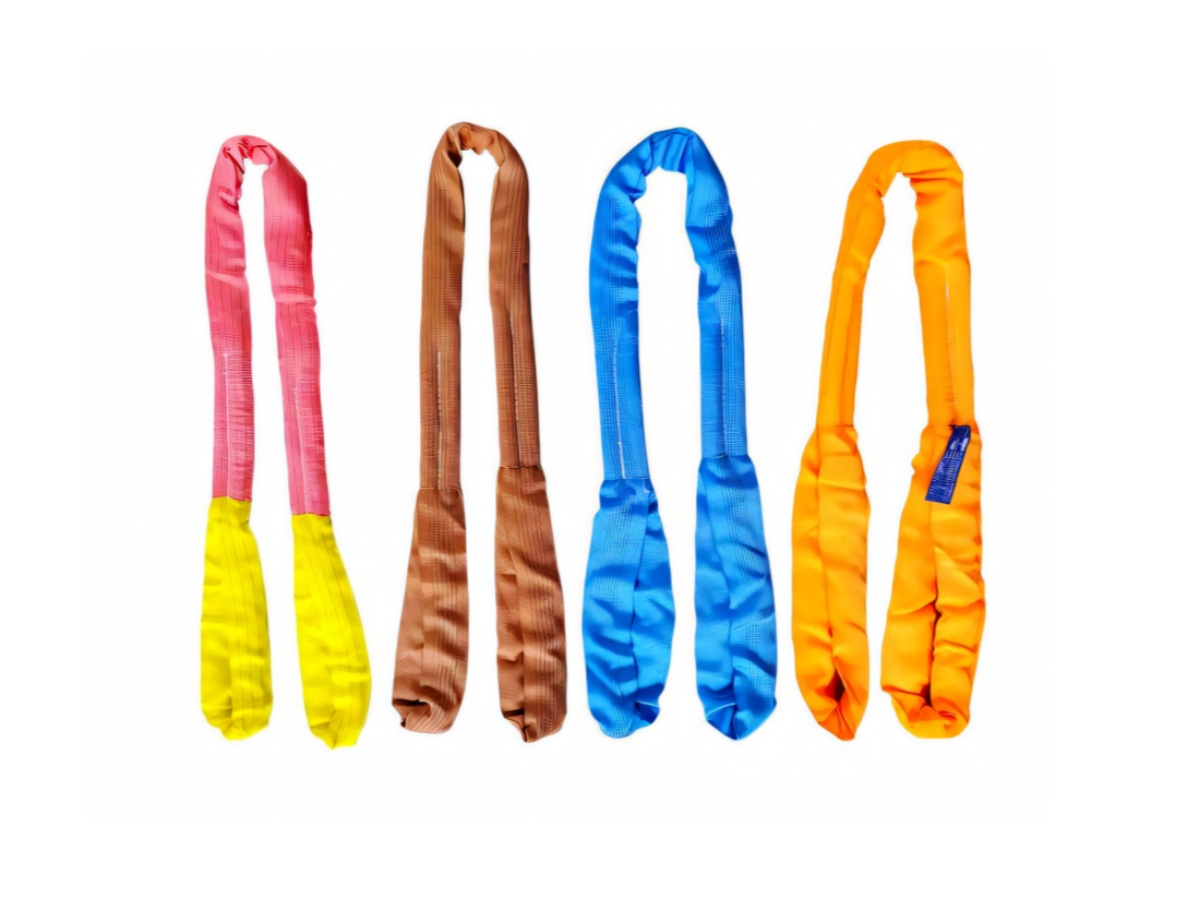
| Identification & Traceability | Color-coded per EN 1492-2, durable tags with batch tracing, private labeling available |
| Documentation & Marking | CE marked to Directive 2006/42/EC applies to the 7:1 series. Other configurations supplied without CE marking, with type-test reports. Batch MTC, test reports and DoC supplied with each shipment. |
| Packaging | Each sling folded and packed in a PE bag, then carton-boxed and palletized; wooden cases for heavy or multi-leg sets; custom packaging and OEM labeling on request |
FAQ
Frequently Asked Questions
Questions about samples, MOQ, or shipping? Ask us directly →
Eye-and-Eye slings have reinforced flat eyes at both ends for direct hook or shackle attachment. Endless slings form a continuous loop and are more versatile for rotation and multi-hitch use.
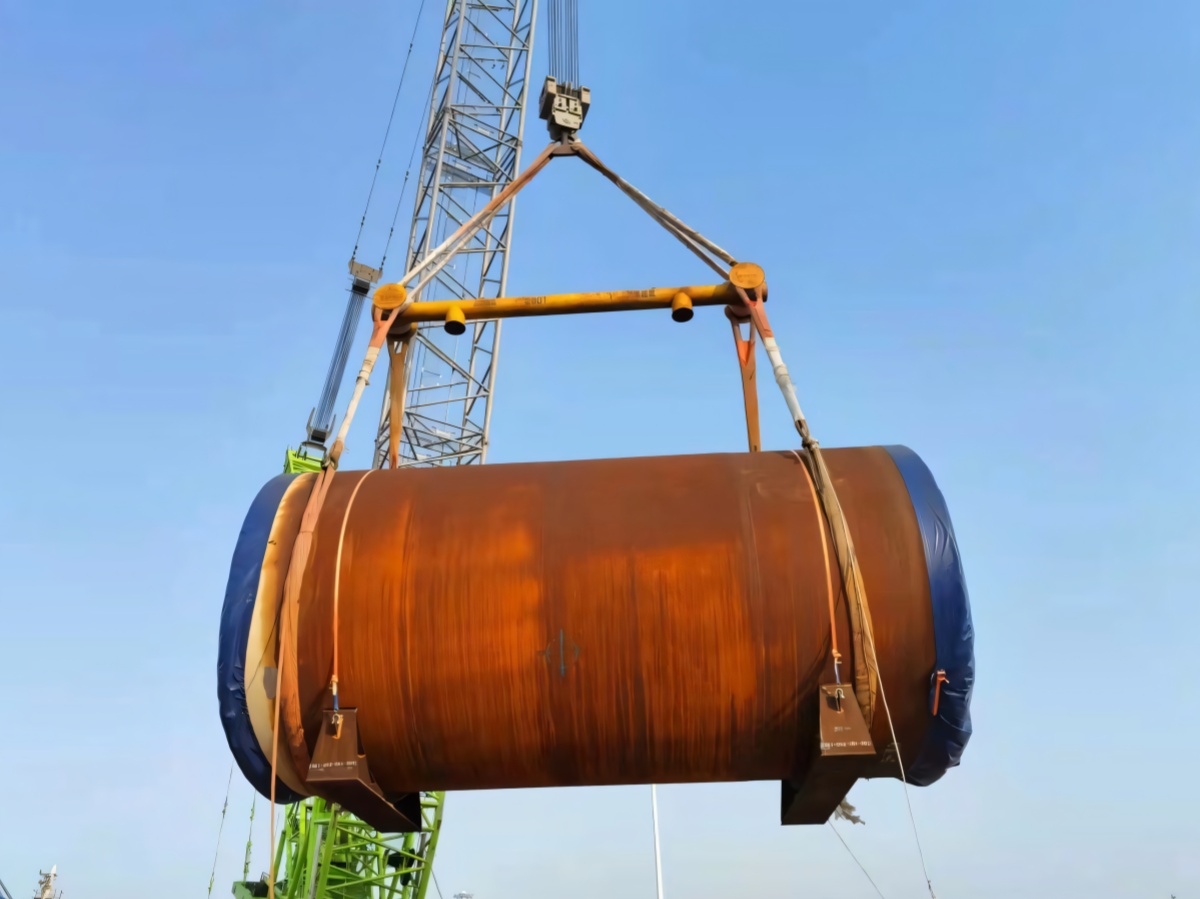
Eye-and-Eye round slings are used for lifting loads with hooks, shackles, or choker/basket hitches. The reinforced eyes provide secure attachment points while the soft round body protects finished surfaces.
Divide the load by the hitch factor to find the WLL you need — vertical = 1×, choker ≈ 0.8×, basket up to 2× with both legs parallel (derate as the legs splay). A 1,000 kg load in a choker hitch therefore needs a sling rated at least 1,250 kg, because the choke reduces the effective capacity to 80% of the vertical rating. Length should accommodate the lifting geometry and hook clearance. Contact us for a load-plan review.
EN 1492-2 limits the effective working length (EWL) to a deviation of no more than ±2 % of the nominal length. It is measured with the sling laid flat, pulled taut by hand tension, using a steel tape or rule graduated in 1 mm increments.
EN 1492-1 covers flat webbing slings — slings made from one or more layers of woven polyester webbing in a flat band. EN 1492-2 covers round slings — a continuous load-bearing core of parallel yarn enclosed in a seamless tubular sleeve. Both are synthetic slings, but round slings have a softer, more flexible body that conforms to irregular or delicate loads and protects finished surfaces, while flat webbing slings provide a stable, wide bearing surface ideal for balanced basket or choker hitches. Pick round slings for delicate or oddly shaped loads and flat webbing slings when you want a flat, wide contact area. Custom or project-engineered configurations are subject to separate technical review.
Yes. We offer protective sleeves in wear zones, custom color coding, printed tags, and private-label markings. Share your application and branding requirements for a tailored quote.
Inspect both eyes and the sling body for cuts, abrasion, broken stitching, or missing labels. Check that the WLL, standard, and batch information are legible. Withdraw damaged slings from service.
Protective sleeves can be added in wear zones or along the full length to resist abrasion and cutting. We also offer reinforced eyes and custom coatings for harsh environments.
For Eye-and-Eye round slings, pay special attention to the reinforced eyes — inspect for stitch separation, eye elongation, or core yarn protrusion at the eye-to-body junction. Withdraw immediately if you see cuts, abrasion, chemical damage, heat marks, missing labels, or any structural deformation.
SAFETY
Eye-and-Eye Round Slings - Safety & Usage Guidelines
01
Inspect Both Eyes
Inspect both reinforced eyes before each lift for stitch separation, elongation, or core-yarn protrusion at the eye-to-body junction — this is the highest-stress zone and the most common failure point.
02
Match the Eye to Hardware
Verify the eye opening matches the hook or shackle radius; forcing a hook into an undersized eye distorts the reinforcement and can drop the load.
03
Never Exceed WLL
Never exceed the WLL marked on the identification tag. Eye-and-eye slings are color-coded by WLL per EN 1492-2 for instant, paper-free capacity checks on site.
04
Apply Hitch Factors
Apply the correct hitch factor: 1.0 × WLL vertical, 0.8 × WLL choker, up to 2.0 × WLL basket — the 2.0 figure applies only when both legs run parallel. Recalculate the effective WLL for the hitch and angle actually used.
05
Protect the Cover
Protect the cover from sharp edges and abrasive loads with corner pads or a wear sleeve; the intact sleeve is what shields the load-bearing core yarn from cutting.
06
Never Tie Knots
Never tie knots or use makeshift shortenings; always connect through the eye with certified hardware (shackles, hooks, master links) correctly sized to the eye.
07
Respect Temperature Range
Keep within the polyester operating range of −40 °C to +100 °C. Never lift over molten-metal splatter or expose the sling to welding arcs or open flame.
08
Retire on Damage
Retire the sling immediately on any of these: cuts or abrasion exposing core yarn, chemical attack, heat marks, missing or illegible tags, or cover slippage over the core.
RELATED PRODUCTS
Explore More Solutions
HMPE Slings
HMPE slings built on UHMWPE fiber for weight-critical heavy lifts — offshore, wind energy and engineered lifting where sling weight, elongation and corrosion resistance are selection criteria.
View product →
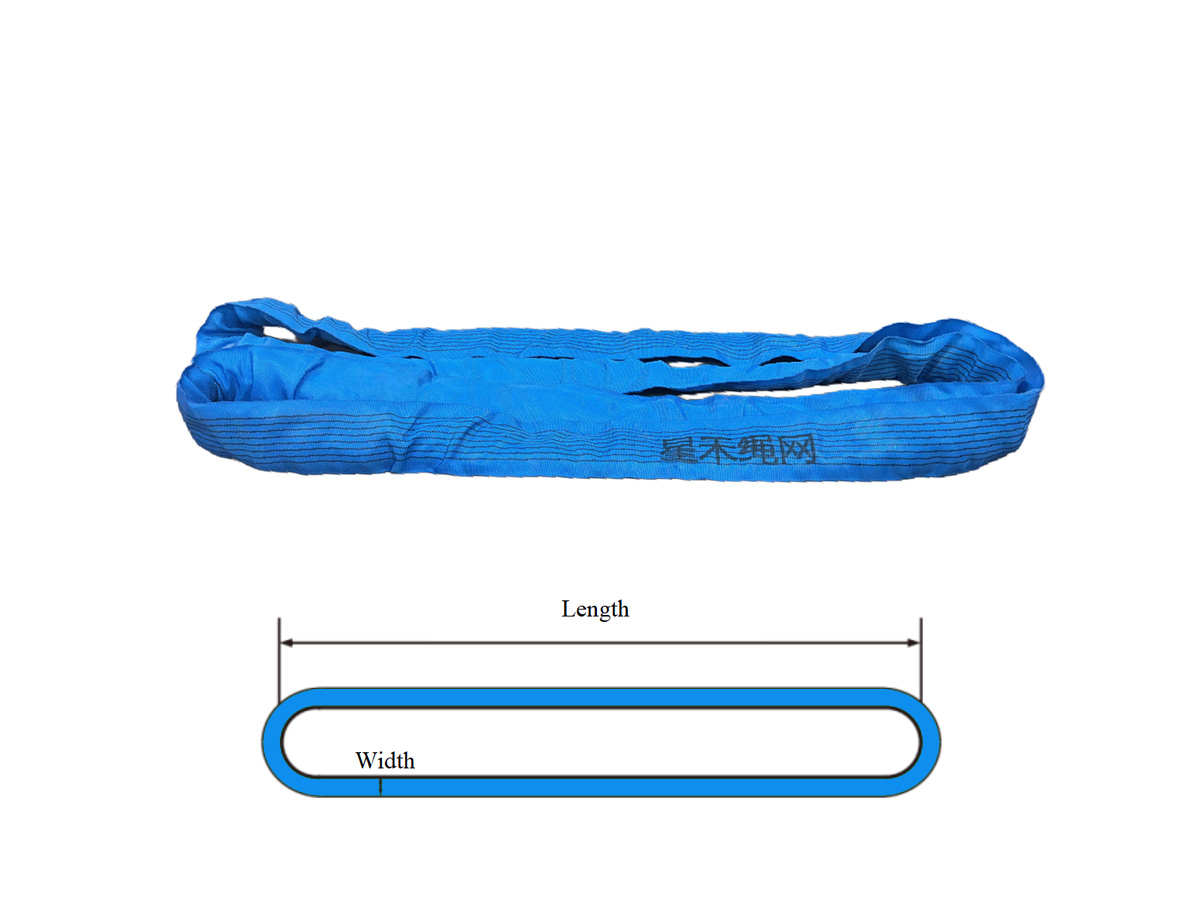
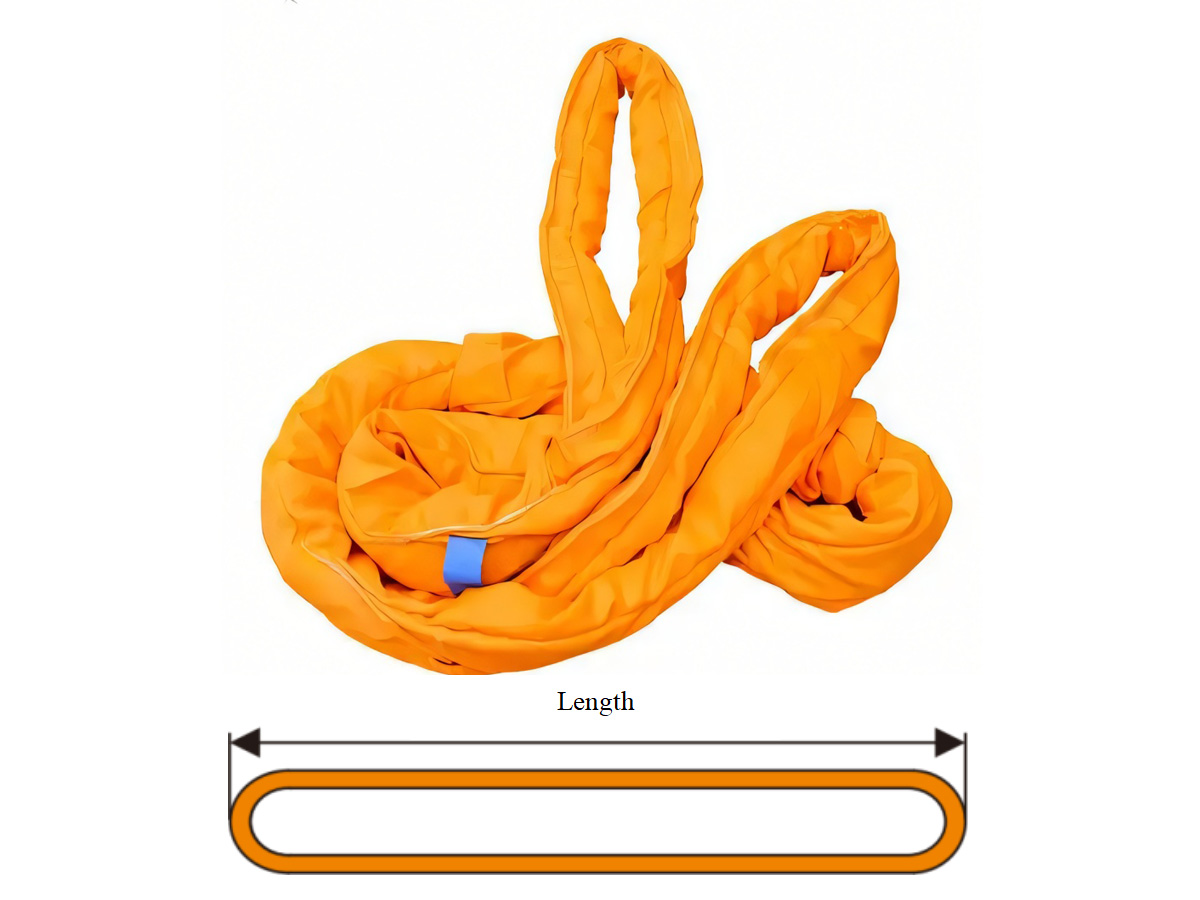
Endless Round Slings
Flexible endless round sling with a continuous-loop polyester body — wear can be rotated around the loop in repetitive basket and choker work.
View product →
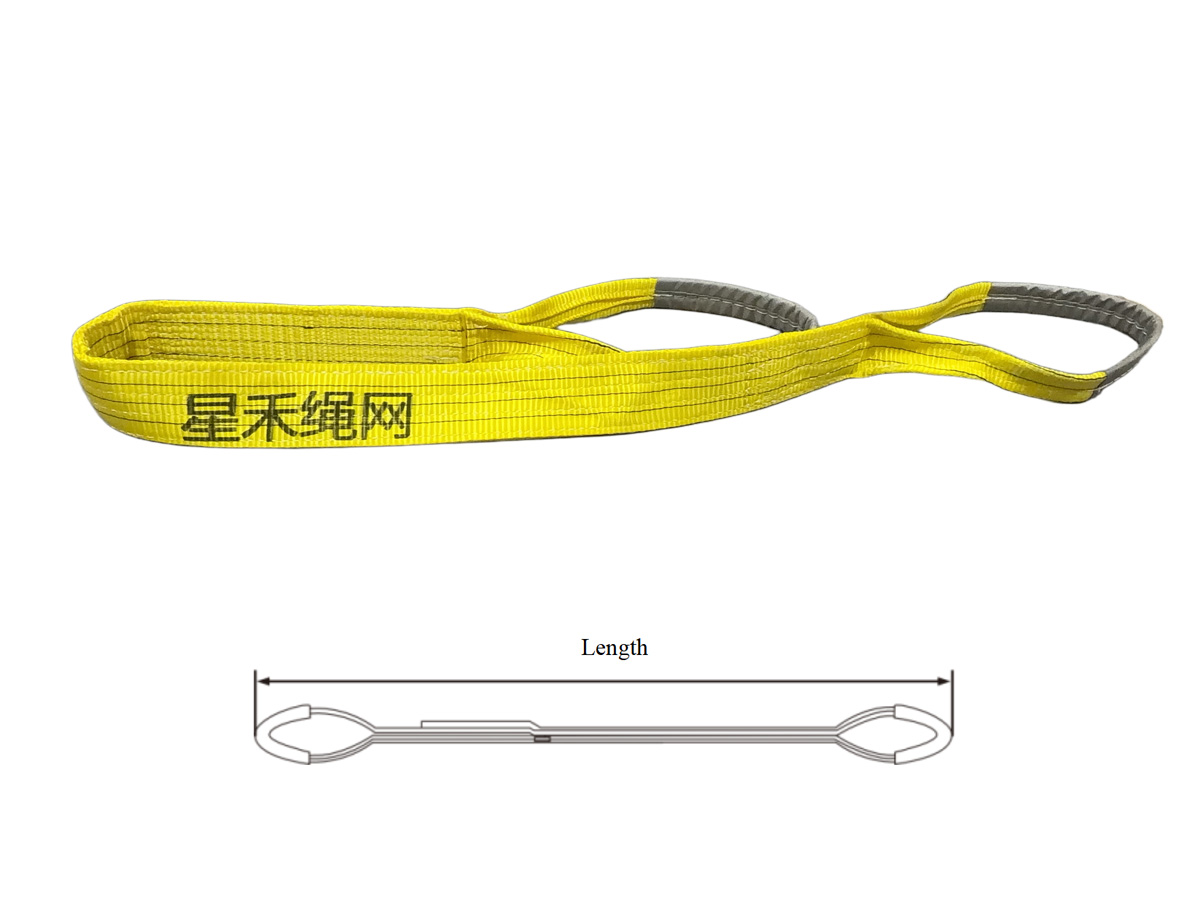
Eye-and-Eye Webbing Slings
Reinforced Eye-and-Eye webbing sling with high-tenacity polyester construction and color-coded WLL identification.
View product →
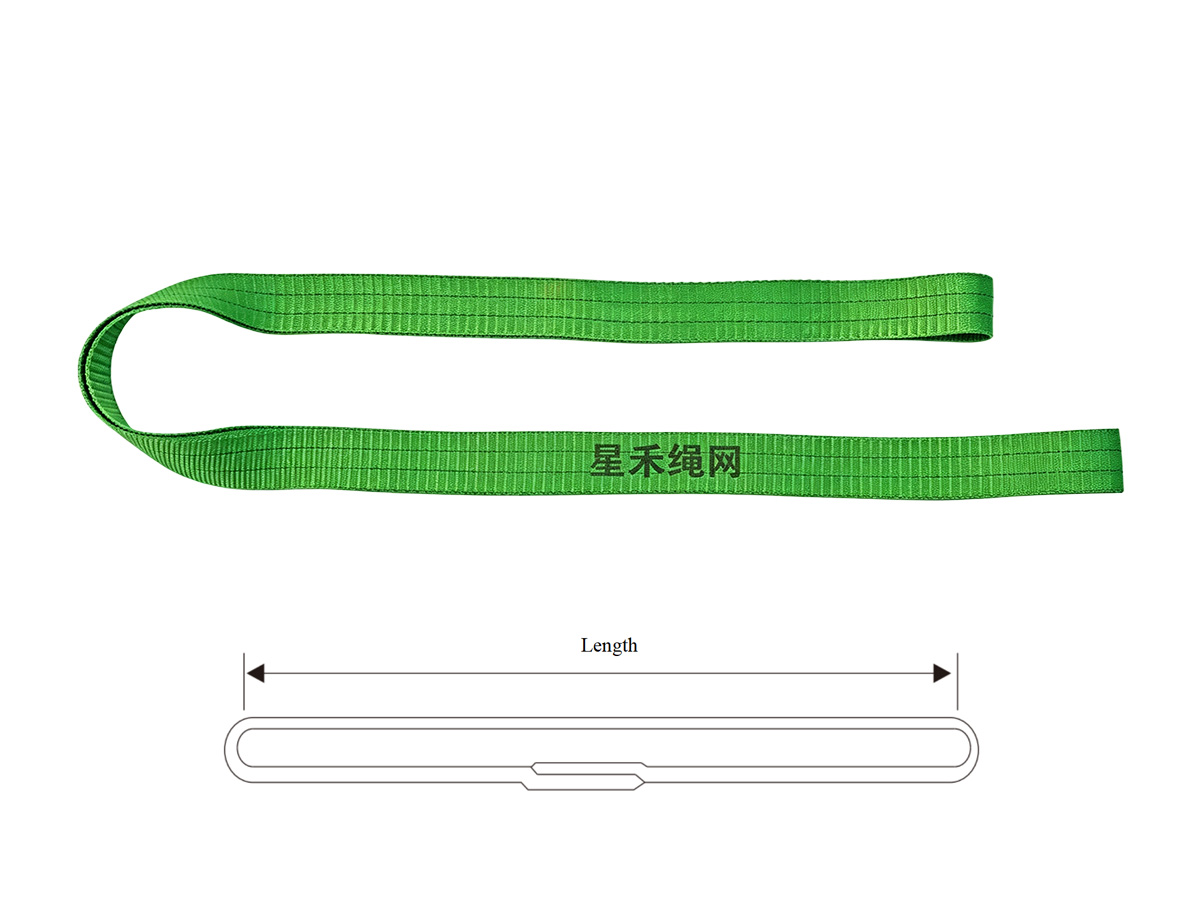
Endless Webbing Slings
Rotatable endless webbing sling for even wear distribution in repetitive basket and choker lifts.
View product →