
Vehicle Towing Straps for Controlled Towing
KEY FEATURES
Low-stretch polyester towing straps with forged steel hooks or reinforced eyes, built for controlled, low-speed towing of disabled or broken-down vehicles — not for kinetic recovery or lifting.
● Controlled, Low-Speed Towing
Polyester webbing with minimal elongation helps keep the towed vehicle steady during low-speed towing of cars, SUVs, vans, light trucks and trailers, and resists UV, abrasion and rot in storage.
● Traceable MBS Rating
Every strap is labeled with the minimum breaking strength (MBS) of the complete assembly — webbing, stitching, eyes and hooks — established by controlled pull testing, with type-test and batch records traceable to the serial number on the label.
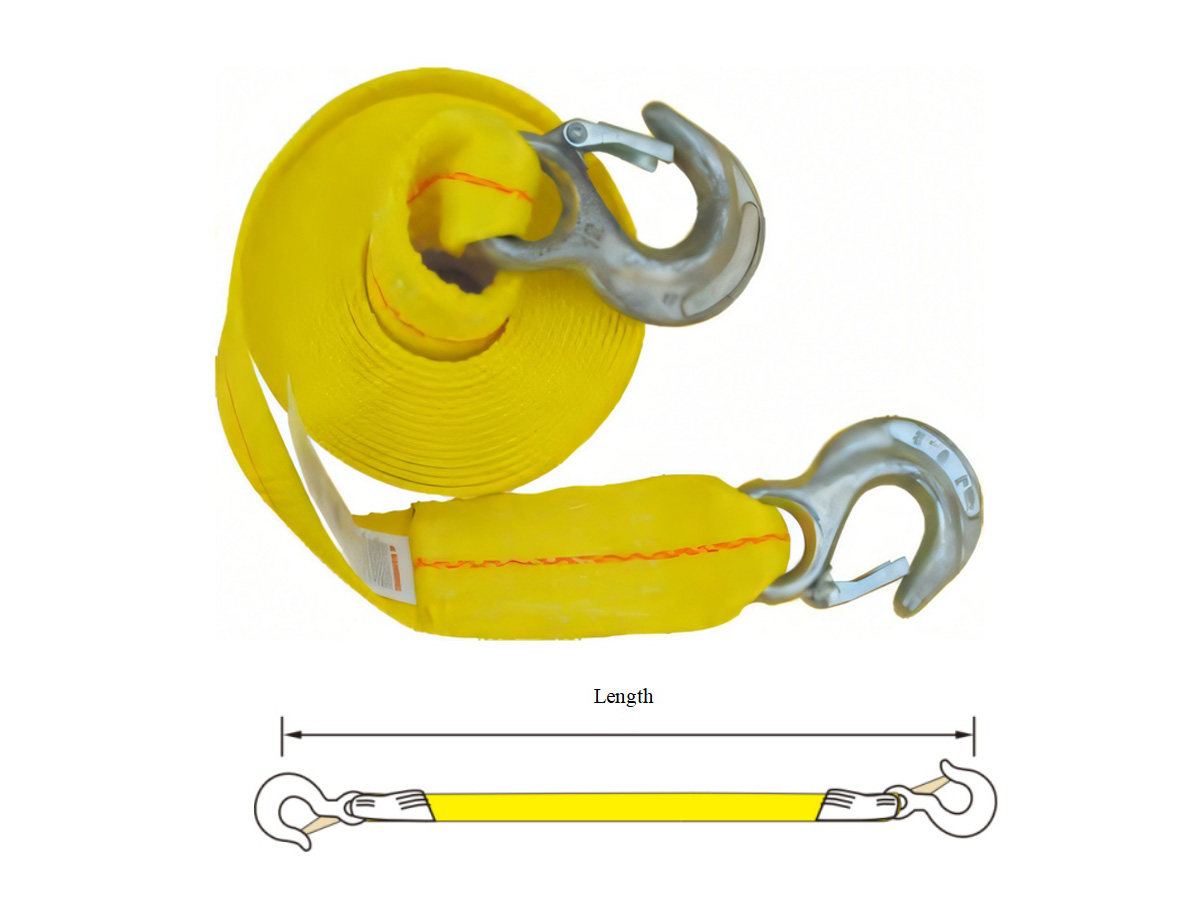
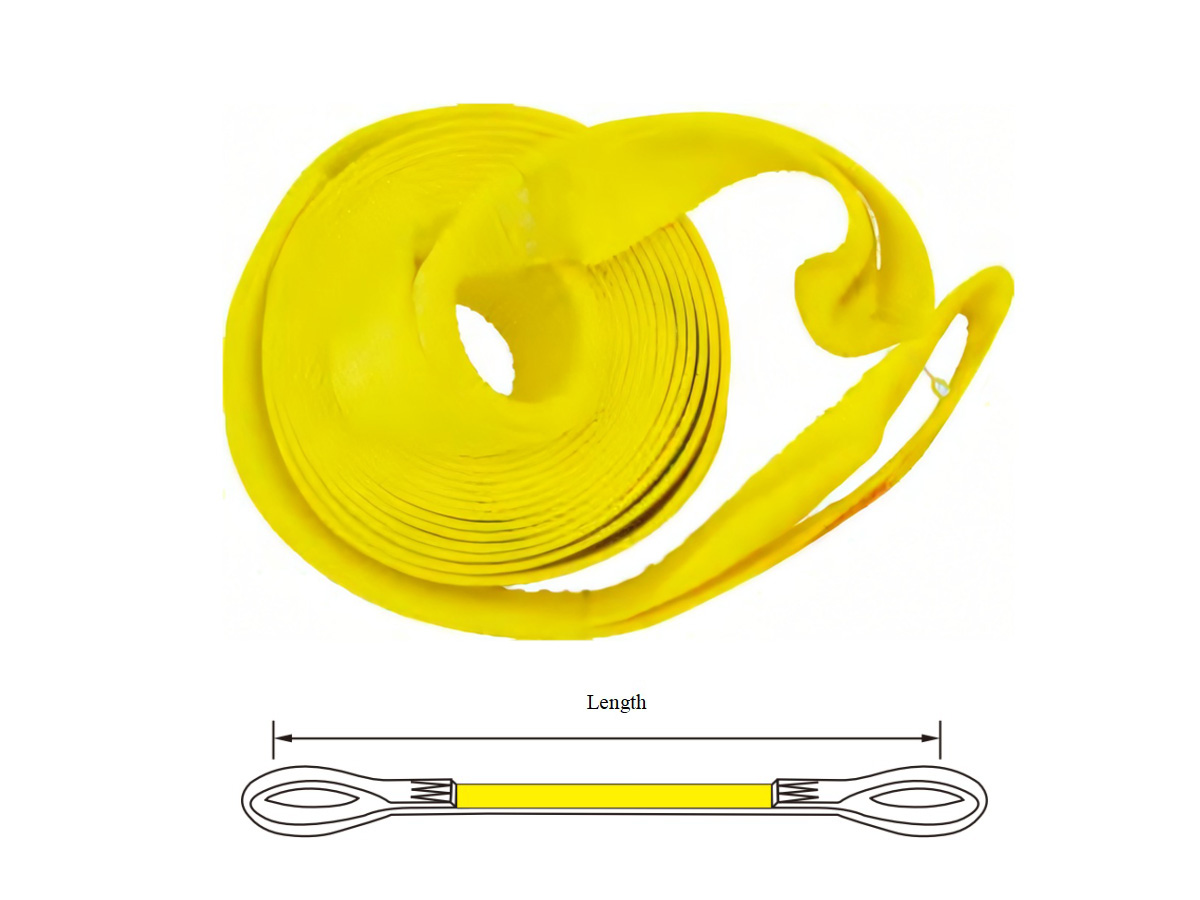
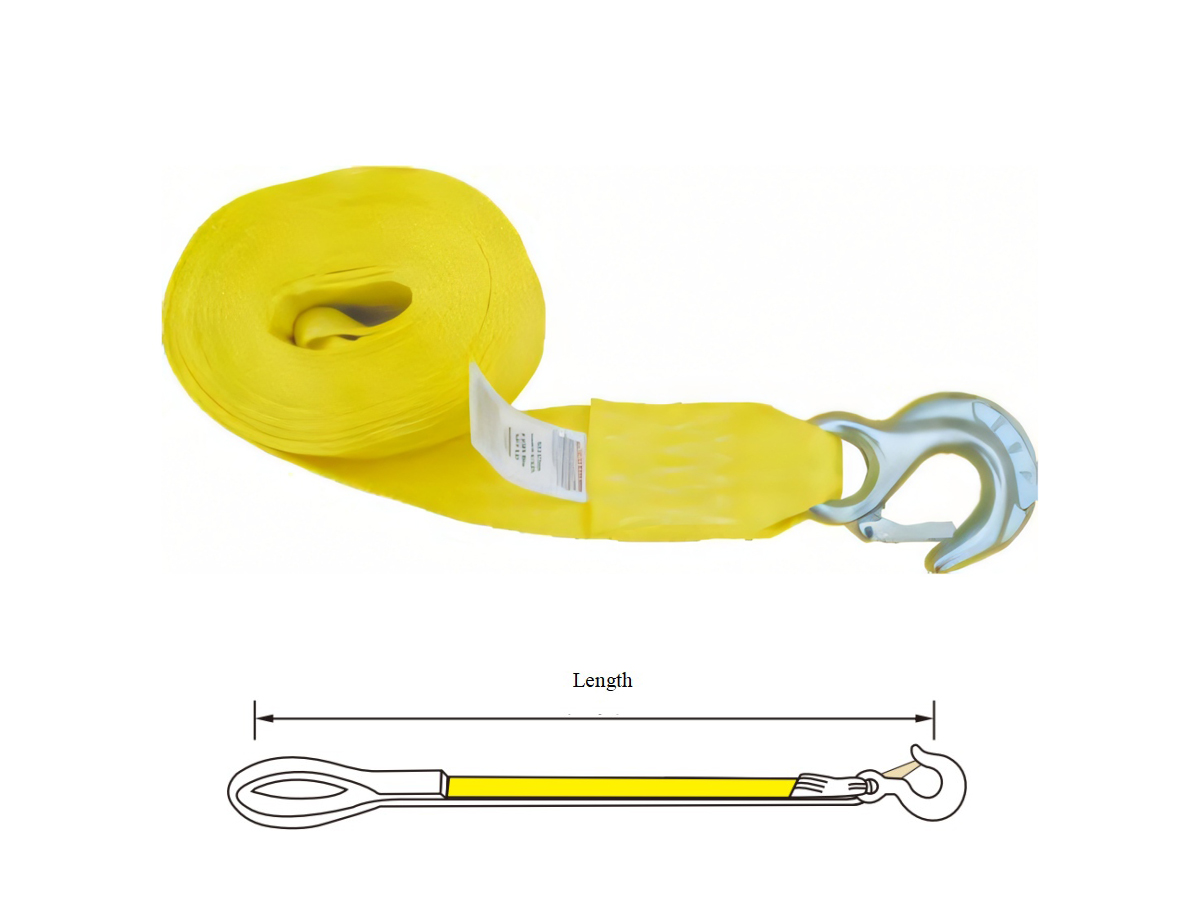
● Three End Configurations
Supplied with hooks both ends, as an endless strap with protective sleeves, or as a loop-and-hook build — the same MBS range, matched to the vehicle anchor points and the towing method.
● Reinforced Eyes & Sleeves
Double-layer reinforced sewn eyes, with abrasion sleeves on the endless build, protect the strap where it meets the hook and resist pull-out under tension.
● 1,200+ t/y · OEM / ODM · Standard sizes 3–7 days · Sample orders welcome
SELECTION GUIDE
Which Towing Setup Fits Your Vehicle?
| Your Situation | Best Choice | Why & What to Specify |
|---|---|---|
| Controlled road towing of a broken-down car or van | Low-stretch tow strap | Low-elongation polyester keeps the towed vehicle steady during low-speed towing. |
| Heavy SUV, pickup or light-truck towing | Higher-capacity strap matched to the towing task | Rating is sized to the towing task and local requirements — towed weight, anchor points and the applicable towing rules — not from vehicle weight alone. |
| ATV, UTV, boat or trailer towing | Lighter-rated strap with hooks | Lighter-rated models with drop-forged hook ends suit lighter vehicles and trailers, matched to the towed weight, anchor points and end configuration. |
| Need a strap for pulling a stuck vehicle free | Use a dedicated recovery / snatch strap — not this tow strap | A tow strap is low-stretch and built for steady towing, not kinetic recovery. For stuck-vehicle extraction, specify a stretch recovery strap separately. |
STANDARD SIZES
| Type | Minimum Breaking Strength(kg) | Approx Thickness(mm) | Approx Width(mm) | Overall Length(m) | Complete Weight(kg/set) |
|---|---|---|---|---|---|
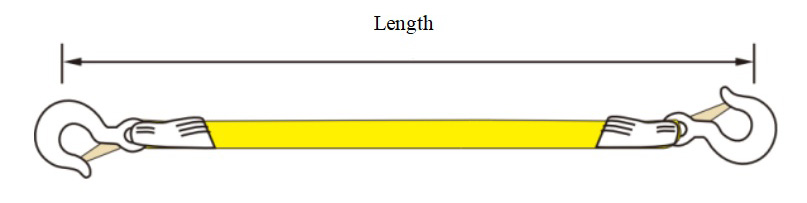 | 1,000 | 2 | 45 | 4.0 | 0.59 |
| 1,500 | 2 | 50 | 4.0 | 0.67 | |
| 2,000 | 3 | 50 | 4.0 | 0.74 | |
| 3,000 | 4 | 50 | 4.0 | 0.85 | |
| 4,000 | 5 | 60 | 4.0 | 0.95 | |
| 6,000 | 6 | 75 | 4.0 | 1.15 | |
| 8,000 | 8 | 90 | 4.0 | 1.37 |
| Type | Minimum Breaking Strength(kg) | Approx Thickness(mm) | Approx Width(mm) | Overall Length(m) | Complete Weight(kg/set) |
|---|---|---|---|---|---|
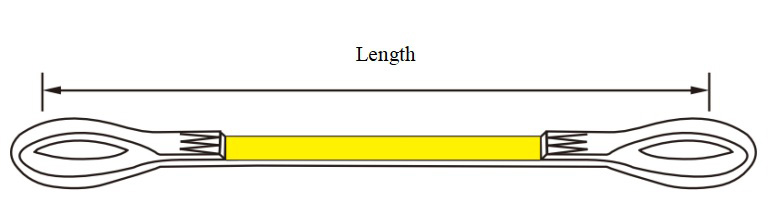 | 1,000 | 2 | 45 | 4.0 | 0.25 |
| 1,500 | 2 | 50 | 4.0 | 0.35 | |
| 2,000 | 3 | 50 | 4.0 | 0.39 | |
| 3,000 | 4 | 50 | 4.0 | 0.48 | |
| 4,000 | 5 | 60 | 4.0 | 0.57 | |
| 6,000 | 6 | 75 | 4.0 | 0.75 | |
| 8,000 | 8 | 90 | 4.0 | 0.93 |
| Type | Minimum Breaking Strength(kg) | Approx Thickness(mm) | Approx Width(mm) | Overall Length(m) | Complete Weight(kg/set) |
|---|---|---|---|---|---|
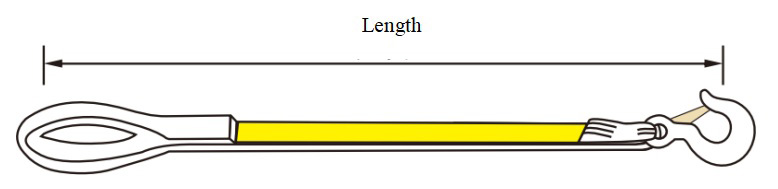 | 1,000 | 2 | 45 | 4.0 | 0.42 |
| 1,500 | 2 | 50 | 4.0 | 0.51 | |
| 2,000 | 3 | 50 | 4.0 | 0.55 | |
| 3,000 | 4 | 50 | 4.0 | 0.66 | |
| 4,000 | 5 | 60 | 4.0 | 0.76 | |
| 6,000 | 6 | 75 | 4.0 | 0.96 | |
| 8,000 | 8 | 90 | 4.0 | 1.18 |
MBS = minimum breaking strength — the lowest force at which the complete strap (webbing, stitching, eyes and hooks) fails in a controlled pull test; the weakest component governs. MBS is a failure rating, not a working limit.
CUSTOM SIZING & OPTIONS
| Parameter | Custom Range |
|---|---|
| MBS (kg) | 1,000 – 8,000 kg across the three end configurations; higher ratings engineered on request. Rated by minimum breaking strength, marked on the label. |
| Width | Matched to breaking load and vehicle type (45 – 90 mm); wider and reinforced options on request |
| Length | 4 m overall finished length; custom lengths available |
| Color | High-visibility options for roadside use |
| Design & Compliance Basis | No single harmonised product standard applies; rated by minimum breaking strength. |
| Documentation & Marking | Batch test reports supplied with each shipment. |
| Identification & Traceability | Durable tags with assembly MBS, Length, serial number, manufacture date, prominent "NOT FOR LIFTING" marking; traceability code and private labeling available |
| Packaging | Coiled or folded in polybags / cartons, then palletized; custom packaging and OEM labeling on request |
FAQ
Frequently Asked Questions
Questions about samples, MOQ, or shipping? Ask us directly →
A tow strap is a low-stretch strap for controlled, low-speed towing of a broken-down or disabled rolling vehicle. It is not a kinetic recovery strap and should not be used for snatch pulls.
A tow strap is low-stretch for steady towing; a recovery / snatch strap stretches to store kinetic energy for pulling a stuck vehicle free. They are not interchangeable — never use a tow strap for a snatch recovery. This page covers tow straps; a stretch recovery strap follows a different specification.
Tow straps are rated by minimum breaking strength (MBS). Select MBS per the vehicle manufacturer’s towing requirements, approved towing points and applicable local regulations — not from vehicle weight alone.
No. Tow straps are for towing only — never for lifting, hoisting, personnel support, or as cargo-lashing gear. They are marked NOT FOR LIFTING.
Polyester webbing with low elongation, which keeps the towed vehicle steady during low-speed towing and resists UV and abrasion in storage.
Requirements for conventional tow straps vary by market and application — no single harmonised product standard applies, so we do not claim compliance with one. We rate every strap by minimum breaking strength (MBS), backed by type-test reports and batch testing. Standard models run 1,000 – 8,000 kg MBS across three end configurations at 4 m overall length; higher ratings are available subject to engineering review.
Attach only to rated towing points or factory-fitted tow hooks bolted to the chassis — never to a tow ball, bumper, axle, suspension or steering linkage, which are not designed for towing loads. Maintain a separation distance suited to the towing method and local rules, mark the strap for visibility, tension slowly and keep to a low steady speed.
Inspect the full length of webbing and fittings for cuts, abrasion, burns, chemical damage or deformation. Reject any strap with damaged eyes, hooks or stitching. Never use the strap outside its specified application or the manufacturer’s stated limits, drag it over rough ground, or use a repaired strap.
Store clean and dry out of direct sunlight, away from fuel, solvents and exhaust heat — UV degrades webbing strength over time. Wash off mud, salt and grit after use, dry fully before coiling, and check hooks, eyes and stitching before each use.
Minimum breaking strength (MBS) is the force at which a tow strap fails in a controlled pull test — a failure rating, not a working limit. A working load limit (WLL) is the load rated for service use; it is derived by dividing the breaking strength by a safety factor. Tow straps have no single harmonised safety factor: published practice runs from about 2:1 for steady towing to 3:1 and above for recovery, with some manufacturers labeling 5:1. Our tow straps are labeled with MBS, so where your procedure calls for a WLL, derive it from the labeled MBS using the factor set by your site rules or regulator — and select the MBS itself against the vehicle manufacturer’s towing requirements, approved towing points and applicable local regulations.
SAFETY
Vehicle Towing Straps - Safety & Usage Guidelines
01
Towing Use Only
For vehicle towing only — never for lifting, hoisting, personnel support, recovery / snatch pulls, or cargo load securing. Straps are marked NOT FOR LIFTING on the label.
02
Match the Breaking Load
Size the strap per the vehicle manufacturer’s towing requirements and applicable local regulations, using the declared MBS with a margin suited to your towing conditions. Never judge the rating “by feel”.
03
Inspect Before Use
Inspect the full length of webbing, eyes, hooks and stitching for cuts, abrasion, heat marks or chemical damage before every use. Do not drag the strap over rough or abrasive surfaces; protect it from sharp edges and hot exhaust components.
04
No Repairs
Never use a strap that has been repaired, knotted or structurally damaged; reject any strap showing melting, charring or deformation.
05
Use Proper Towing Points
Attach only to manufacturer-approved, structurally sound towing points — never to steering, suspension, exhaust or brake components.
06
Keep Distance and Mark
Maintain a safe separation distance appropriate to the towing method, road conditions and applicable local regulations, and follow the vehicle manufacturer’s towing instructions. Mark the strap with a flag for visibility and tension slowly before moving.
07
Pull Smoothly
Keep to a safe towing speed, take wide turns, and avoid hard braking or jerking the strap.
08
Respect Temperature Limits
Typical service temperature for the polyester webbing is −40 °C to +100 °C; the practical limit for the complete assembly can be lower — stitching thread, hook finish and label are the first to constrain use. Do not use near welding arcs, molten splatter or hot exhaust components.
09
Store Correctly
Store clean, dry and away from direct sunlight, chemicals and heat. UV exposure degrades both webbing and stitching over time.
10
Retire on Damage
Retire immediately on cuts exposing core yarn, acid or chemical burns, friction heat melting, illegible tags or any structural deformation.
RELATED PRODUCTS
Explore More Solutions
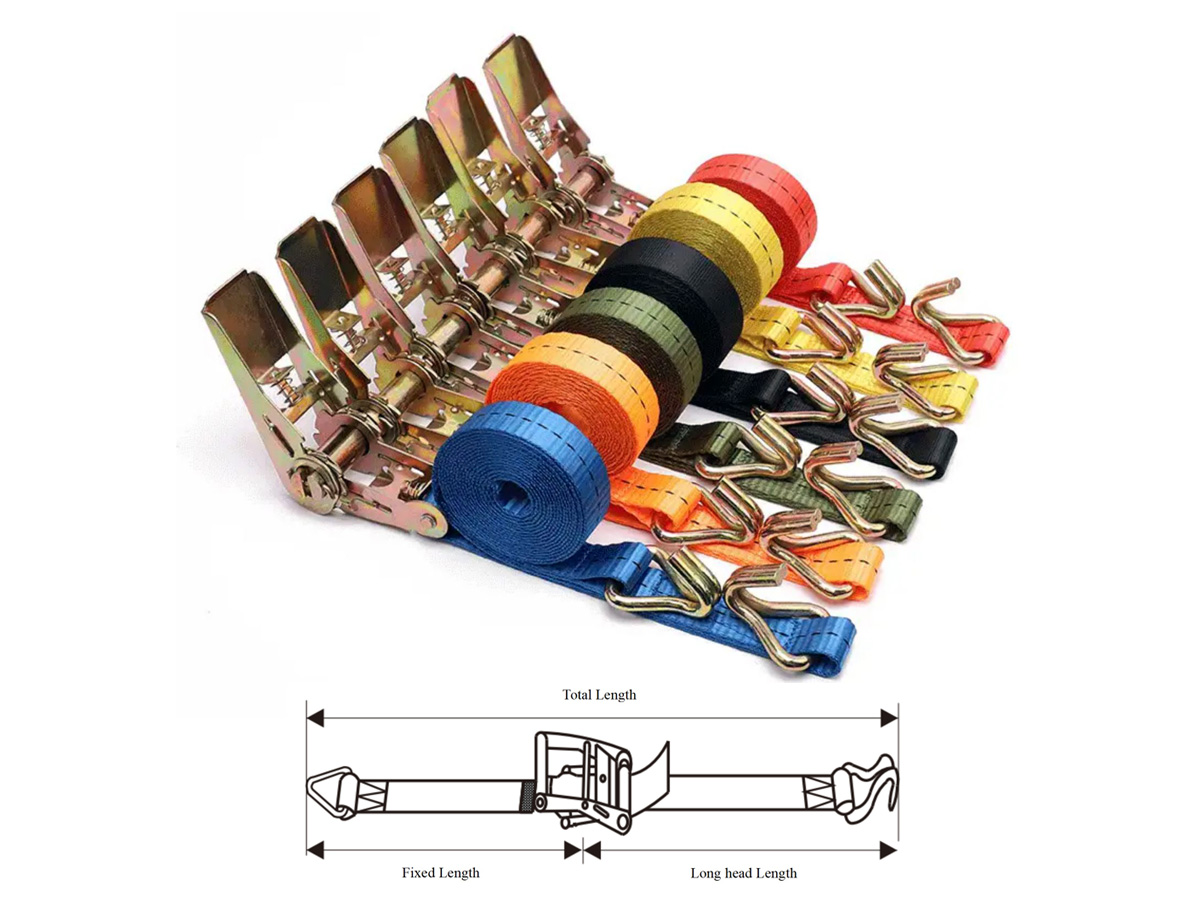
Ratchet Straps
Type-tested ratchet lashing assemblies — one lashing system for every transport mode. Cargo lashing and tie-down use only — NOT FOR LIFTING.
View product →
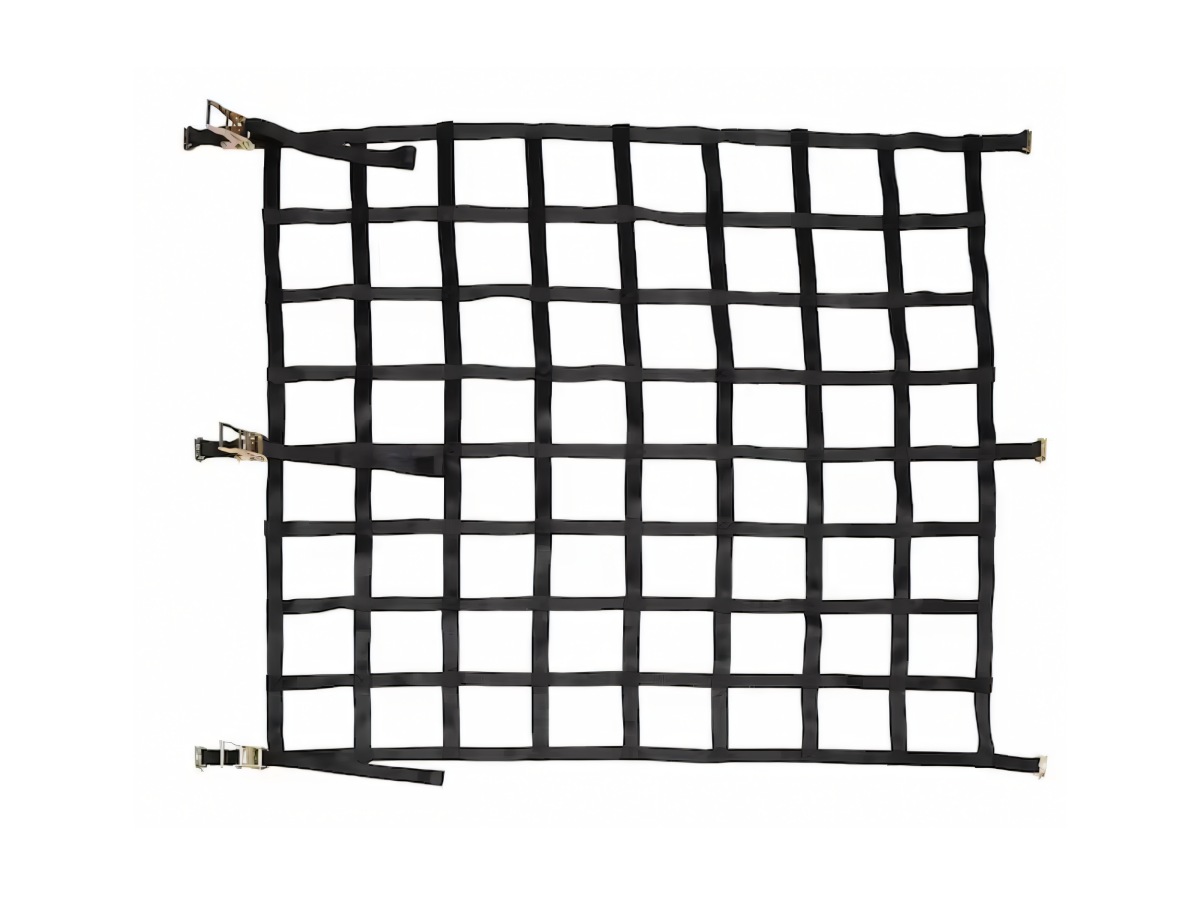
Cargo Nets
Quick-deploy UV-stabilized cargo nets for truck and container load containment — NOT FOR LIFTING.
View product →
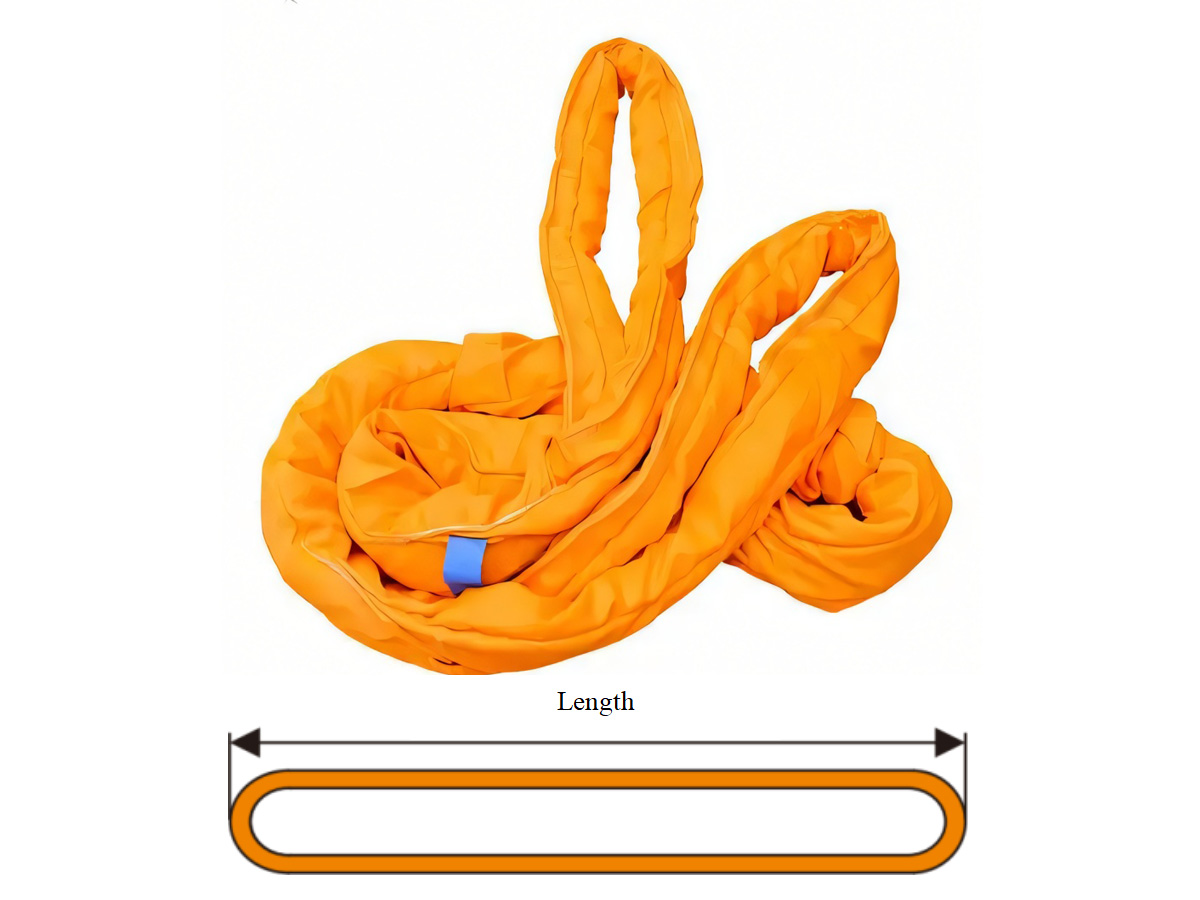
HMPE Slings
HMPE slings built on UHMWPE fiber for weight-critical heavy lifts — offshore, wind energy and engineered lifting where sling weight, elongation and corrosion resistance are selection criteria.
View product →
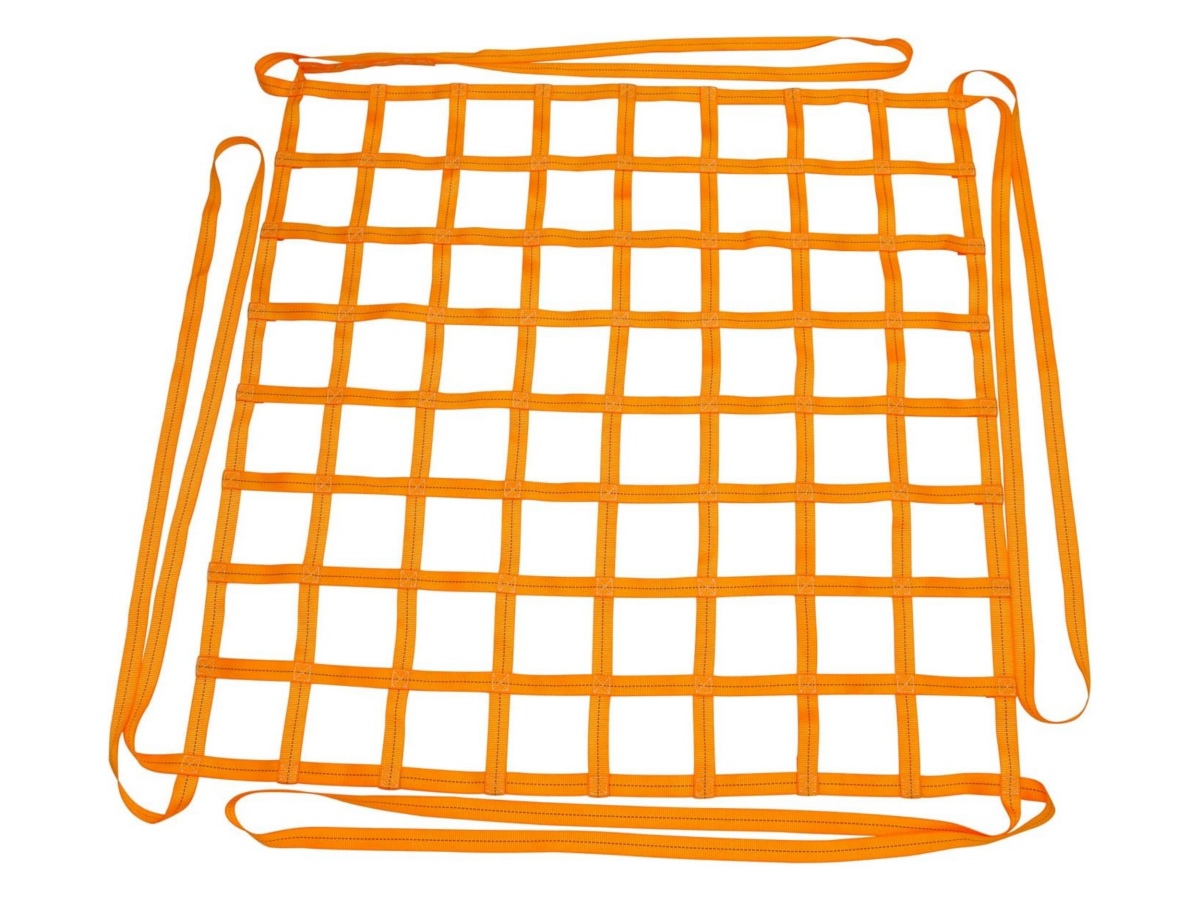
Webbing Lifting Nets
One-piece woven polyester lifting net for bulk, irregular and multi-item loads — mesh, size and lifting configuration made to your cargo.
View product →