
Webbing Lifting Nets for Heavy & Irregular Loads
KEY FEATURES
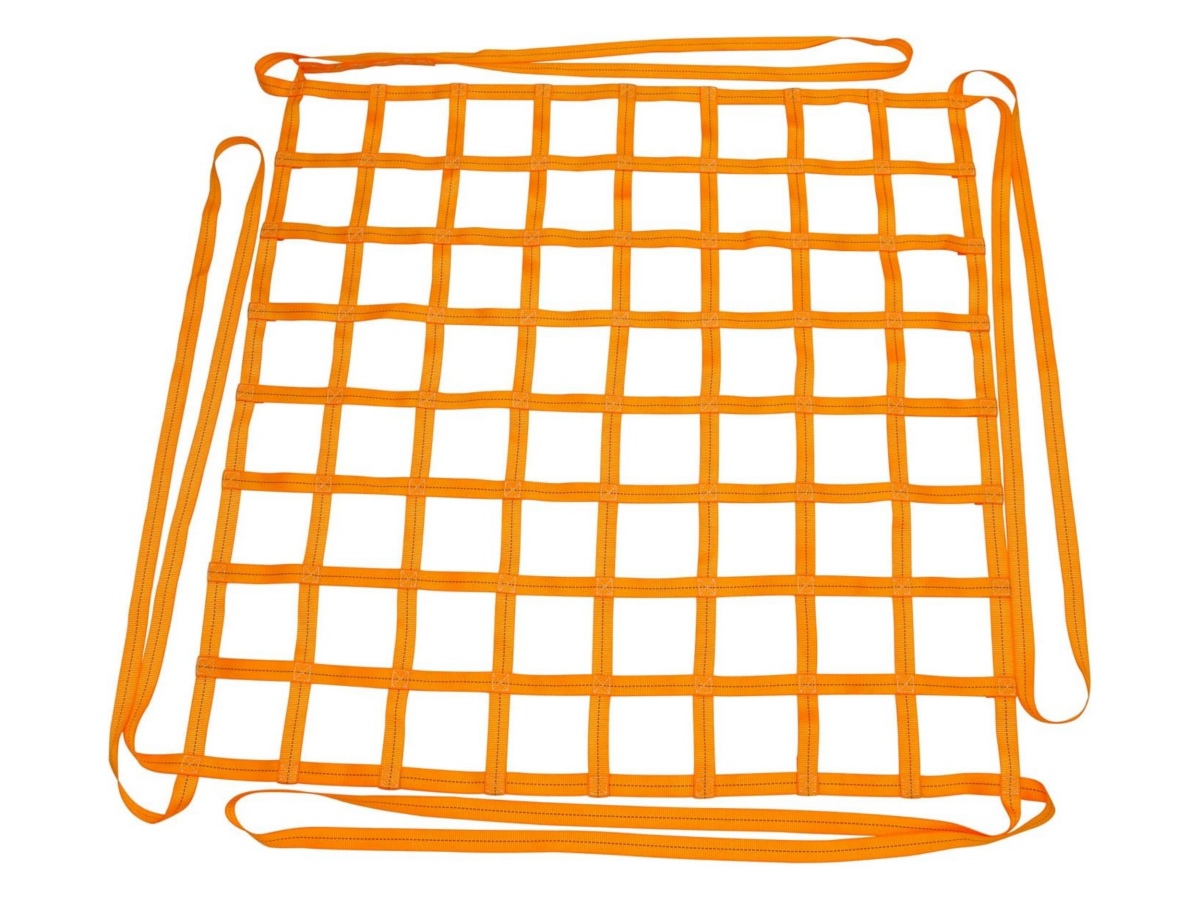
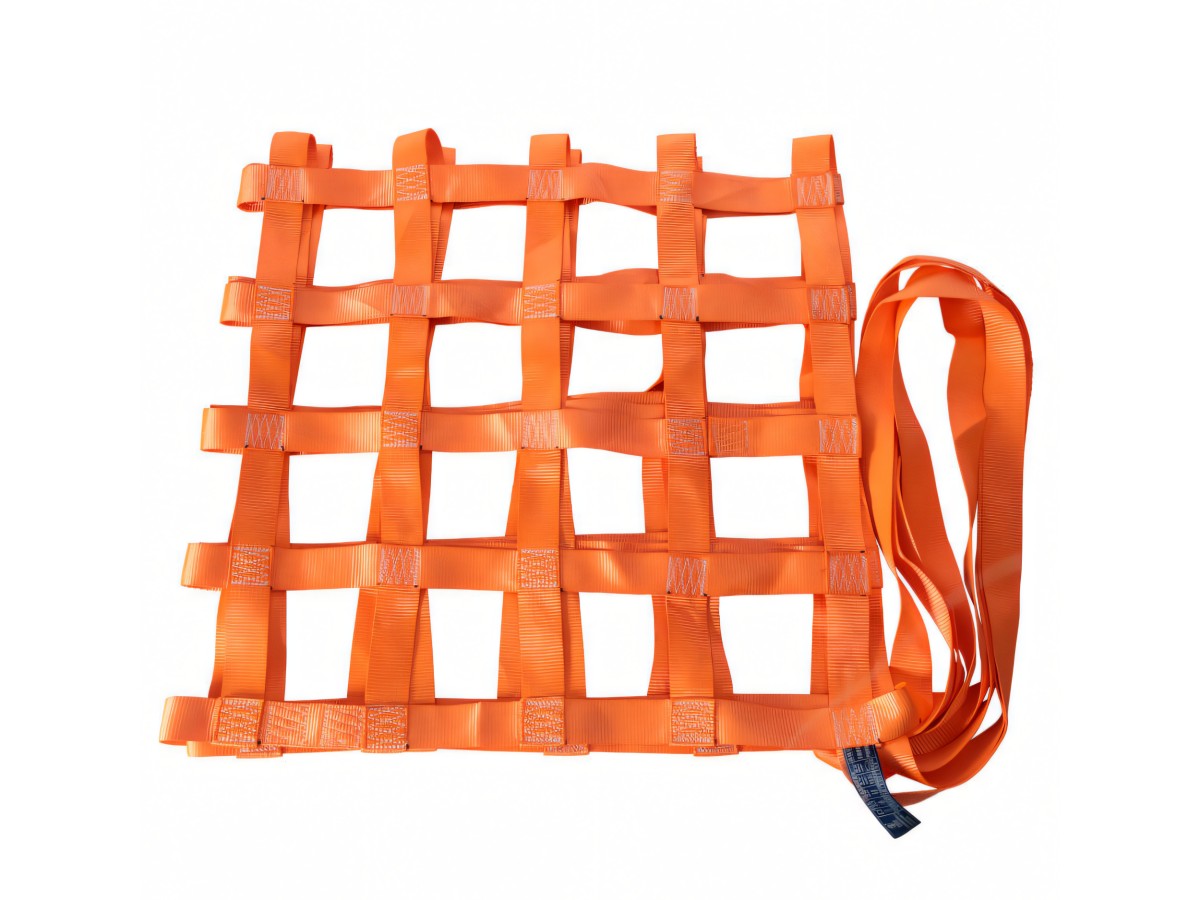
One-piece woven polyester lifting net for bulk, irregular and multi-item loads — mesh, size and lifting configuration made to your cargo.
● One-Piece Woven Construction
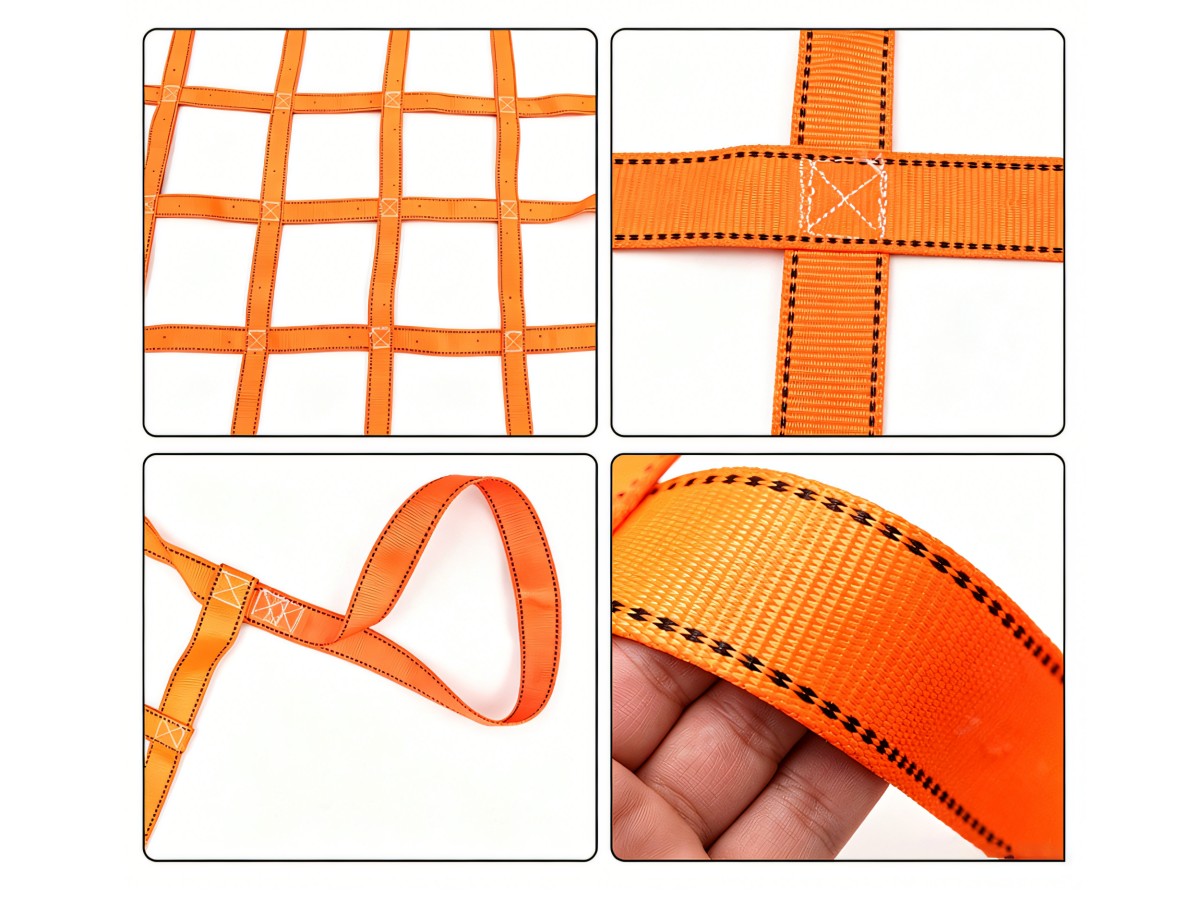
Woven in one piece with no sewn intersections in the load-bearing mesh, so stress is shared evenly across the mesh instead of concentrating at a seam — reducing the stress concentration associated with stitched load paths.
● Soft on Finished Surfaces
Polyester mesh is soft against the load — when correctly selected and used it helps minimize scratching, denting or marking of stone, steel plate and coated surfaces compared with chain or wire rope.
● High Strength-to-Weight Ratio
High-tenacity polyester carries the rated load at a fraction of the weight of steel mesh or chain — one rigger can spread and fold the net between lifts. Tightly woven yarn resists tearing, abrasion and ageing for repeated outdoor service.
● Conforms to Irregular & Bulk Loads
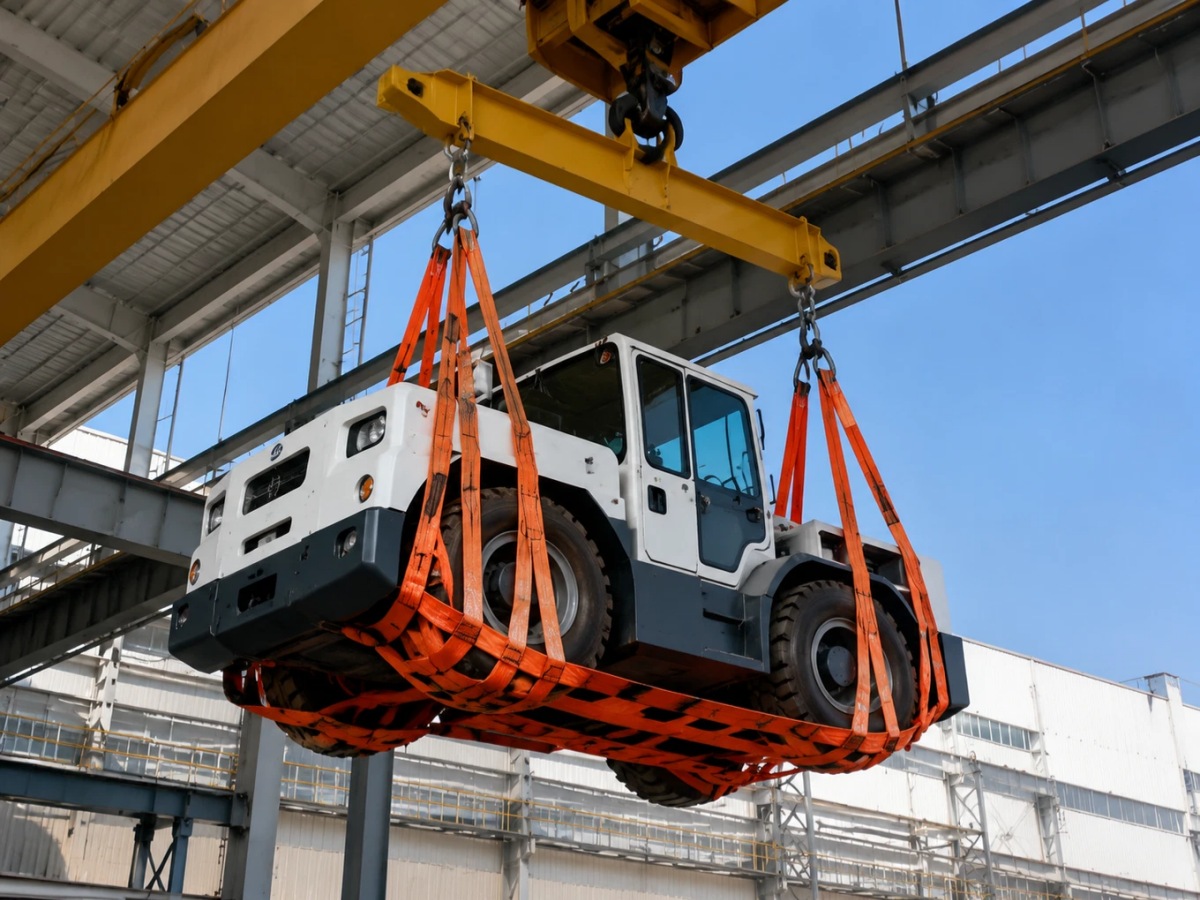
The flexible net wraps loose bulk, odd shapes and multiple items — stone, steel, scrap, machinery and vehicles — holding them as one stable unit instead of balancing them on a single sling.
● 1,200+ t/y · OEM / ODM · Standard sizes 3–7 days · Sample orders welcome
SELECTION GUIDE
Which Lifting Net Fits Your Job?
| Your Situation | Best Choice | Why & What to Specify |
|---|---|---|
| Finished vehicles & automotive parts — cars, vans, body-in-white | Soft-mesh vehicle net | Polyester mesh cradles bodywork without marking paint, glass or trim — for finished-vehicle handling and prototype yards. |
| Mining & quarry — stone, ore, heavy castings | Heavy-duty four-leg net, reinforced border rope | Abrasion-resistant, impact-tolerant mesh takes rock edges and repeated shock; sized to lump size and load weight. |
| Bulk goods & bagged cargo — sand, brick, pipe, timber | Lightweight high-load net | Spreads and folds quickly between lifts; speeds material turnover on site. |
| Ports, logistics & outdoor yards — steel, industrial goods | UV-stabilised polyester net | Protects coated surfaces and resists sunlight for day-in, day-out outdoor duty. |
| A single heavy unit with its own rated lifting points | Not a net — use round or webbing slings | Slings give a rated WLL per leg once the load has rated lifting points. |
CUSTOM SIZING & OPTIONS
| Parameter | Custom Range |
|---|---|
| Webbing Material | High-tenacity polyester webbing — single or double ply, width matched to configuration and rated load |
| Border Rope Material | Reinforced border rope, diameter selected to the rated load |
| WLL Range | Typically 1 – 10 t, engineered to your lift plan |
| Net Size | Made to measure — 2 × 2 m to 3 × 3 m typical, larger or smaller on request |
| Mesh Opening | Selected to your cargo and retention needs — fine to coarse mesh, opening matched to the smallest piece you must retain |
| Wear Protection | Reinforced mesh or protective sleeves at high-wear contact points — recommended for scrap, demolition and quarry loads |
| Identification & Traceability | Durable ID tag with WLL, serial number, manufacture date, net size, mesh opening and lifting-point count; traceability code and private labeling available |
| Design & Compliance Basis | No product-specific harmonised standard; rated with reference to EN 1492-1 test methods. |
| Documentation & Marking | CE marked to Directive 2006/42/EC. Each assembly tested; test certificate, batch material certificate and DoC supplied with each shipment. |
| Packaging | Folded and packed in woven / poly bags, then palletized; custom packaging and OEM labeling on request |
FAQ
Frequently Asked Questions
Questions about samples, MOQ, or shipping? Ask us directly →
Lifting nets are ideal for irregular, boxy, or bagged loads that cannot be safely lifted with a single sling, such as stacked boxes, bags, and odd-shaped industrial components.
WLL is based on mesh strength, border rope construction, number of attachment points, and intended load distribution. We calculate and certify this for each custom design.
Lifting nets are not flat woven slings, so they are not manufactured to EN 1492-1, and no single product standard directly covers lifting-net assemblies. We engineer each net to its configuration and validate it by load testing — breaking strength is batch-tested to a minimum of 6× the rated WLL. A product specification sheet and material certificate are provided with every net, and load test reports are available on request.
Please share the net dimensions, mesh size, cargo type and weight, number of lifting points, and any abrasion requirements. A photo or drawing of the load is helpful.
Yes. We use UV-stabilized polyester and reinforced border ropes for outdoor exposure. Specify your environment so we can recommend the right material and coating.
Check the mesh for cuts, abrasion, or broken joints, and inspect border ropes and attachment points for wear or damage. Confirm the WLL label is legible and remove damaged nets from service.
Match the opening to the smallest piece you need to retain: a fine mesh for chips, small offcuts and loose fines, a more open mesh for large lumps and bagged goods. Tell us your cargo and we will recommend the opening.
Let a wet net dry before folding it, then store it in a dry, well-ventilated place away from direct sunlight, heat and chemicals. Do not stack heavy objects on top. Inspect the mesh, border rope and every attachment point before each lift, and retire the net on cut strands, a broken border rope, deformed rings or a missing tag.
SAFETY
Webbing Lifting Nets - Safety & Usage Guidelines
01
Not for Personnel Lifting
CRITICAL: not intended for lifting or supporting personnel — this is a cargo lifting net, not a rescue, personnel or fall-arrest net.
02
Inspect the Net
Check mesh integrity, border ropes, and every attachment point before each lift — a failed border rope or worn ring can cause total net failure.
03
Confirm the WLL
Confirm the net's certified WLL covers the load; the rating already accounts for typical load shapes and distribution.
04
Capacity Is Per Net
Rated capacity applies to the complete lifting-net assembly and must not be multiplied by the number of lifting points. Actual capacity depends on the suspension configuration, load distribution and lifting angle.
05
Distribute the Load
Never concentrate a point load in one mesh cell; pad sharp corners to prevent mesh cuts.
06
Use All Points
Connect all attachment points to the beam or master link with correctly sized shackles; never lift from fewer points than the net is designed for.
07
Apply Angle Factors
Corner tension rises sharply as the included angle between sling legs increases — apply angle-factor derating to the slings above the net.
08
Check Mesh Joints
Inspect mesh knots or spliced joints for slippage, broken strands, or chemical and UV degradation — synthetic mesh loses strength under prolonged UV.
09
Control the Load
Use tag lines to control swing if the center of gravity is off-center; keep the load stable throughout the lift.
10
Respect Temperature Limits
Keep within the polyester operating range of −40 °C to +100 °C — capacity may derate at temperature extremes, contact us for elevated or sub-zero applications.
11
Store Correctly
Fold and store in a dry, well-ventilated area away from direct sunlight and chemicals.
12
Retire on Damage
Retire immediately on cut mesh strands, broken border rope, deformed rings, acid burns, friction heat damage, or missing tags.
RELATED PRODUCTS
Explore More Solutions
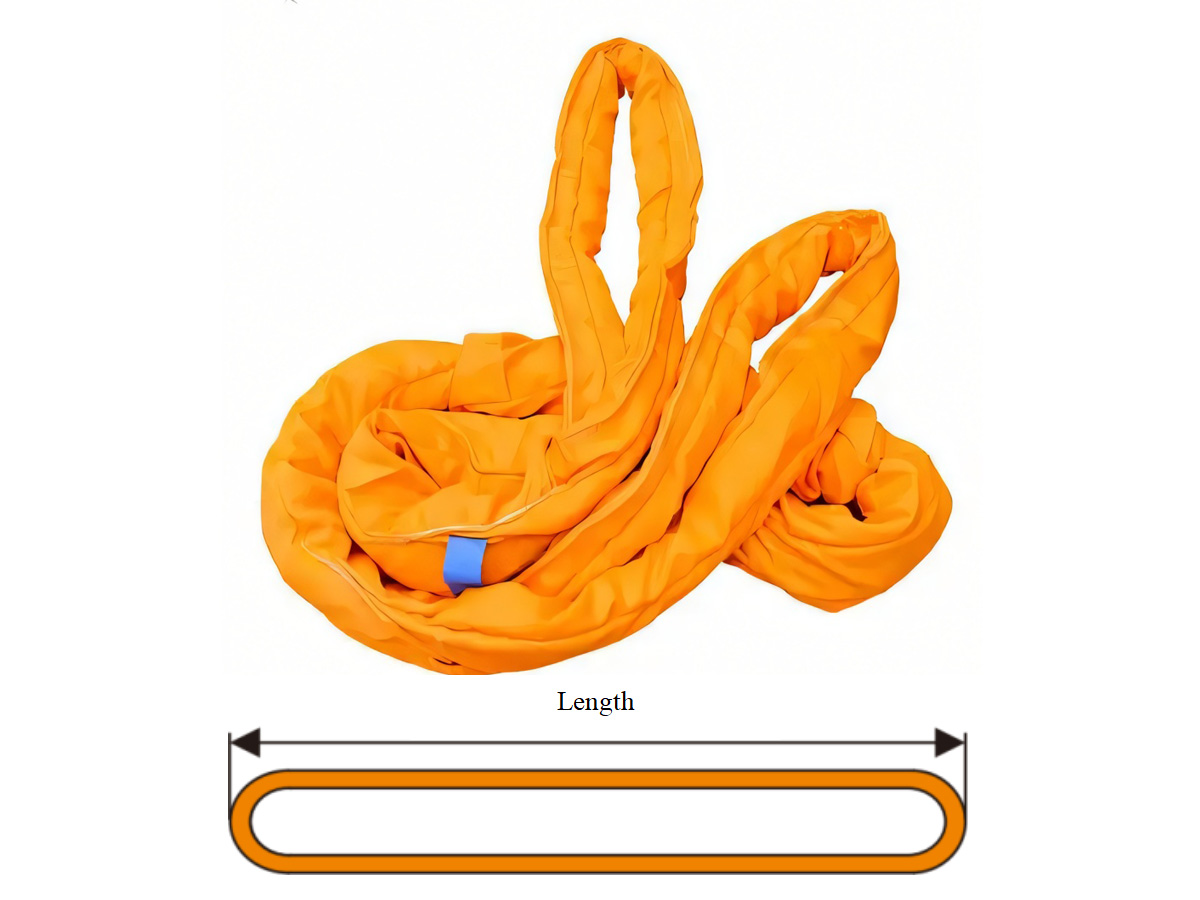
HMPE Slings
HMPE slings built on UHMWPE fiber for weight-critical heavy lifts — offshore, wind energy and engineered lifting where sling weight, elongation and corrosion resistance are selection criteria.
View product →
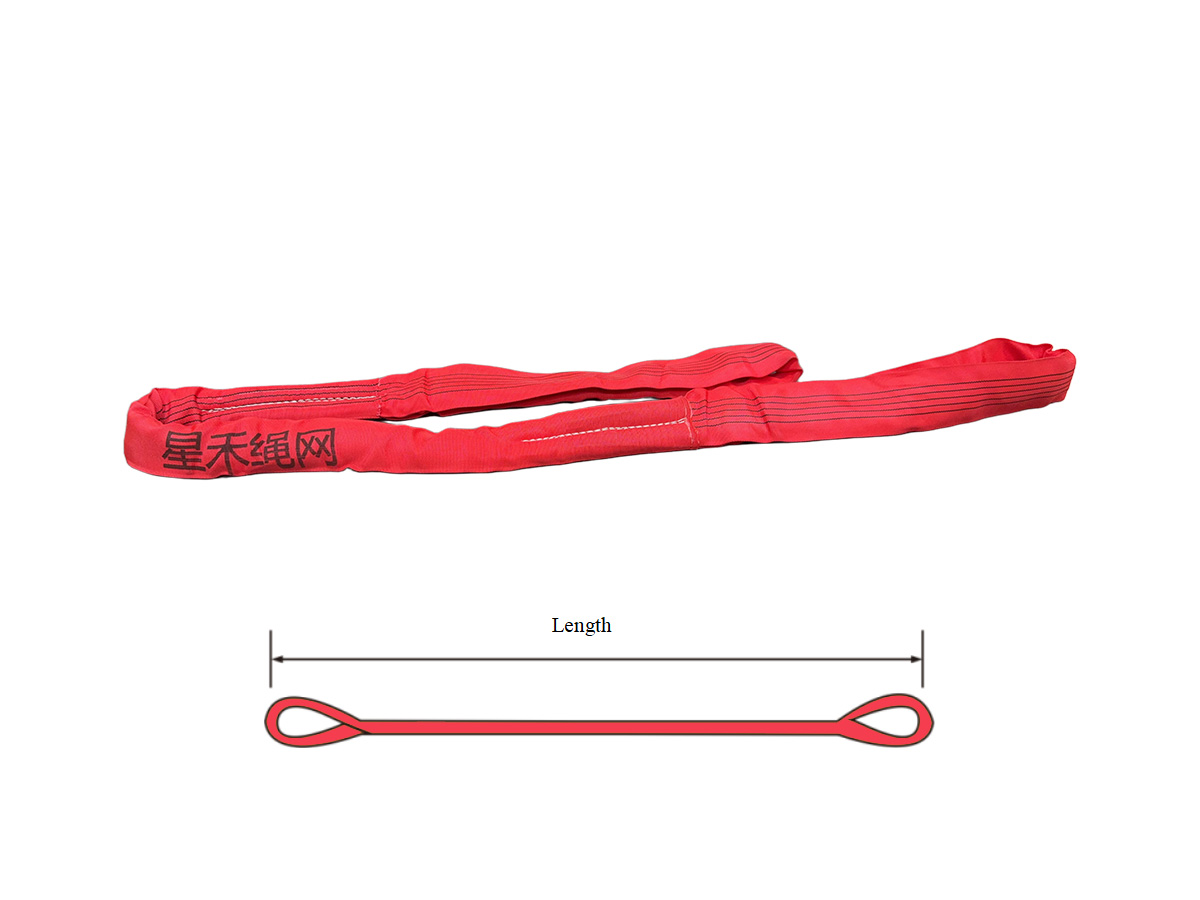
Eye-and-Eye Round Slings
Eye-and-Eye round sling with a soft polyester round body and reinforced flat eyes for direct connection to hooks, shackles and other approved lifting hardware.
View product →
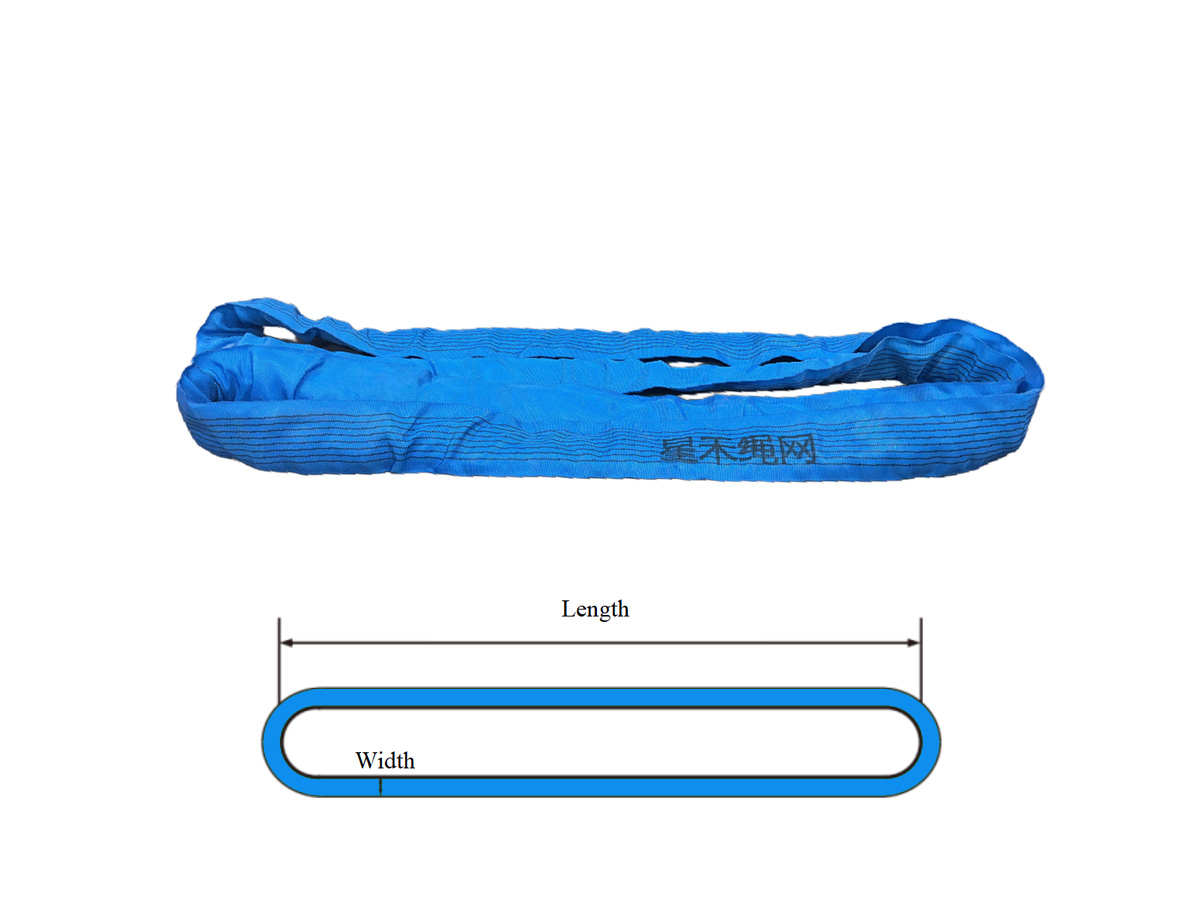
Endless Round Slings
Flexible endless round sling with a continuous-loop polyester body — wear can be rotated around the loop in repetitive basket and choker work.
View product →
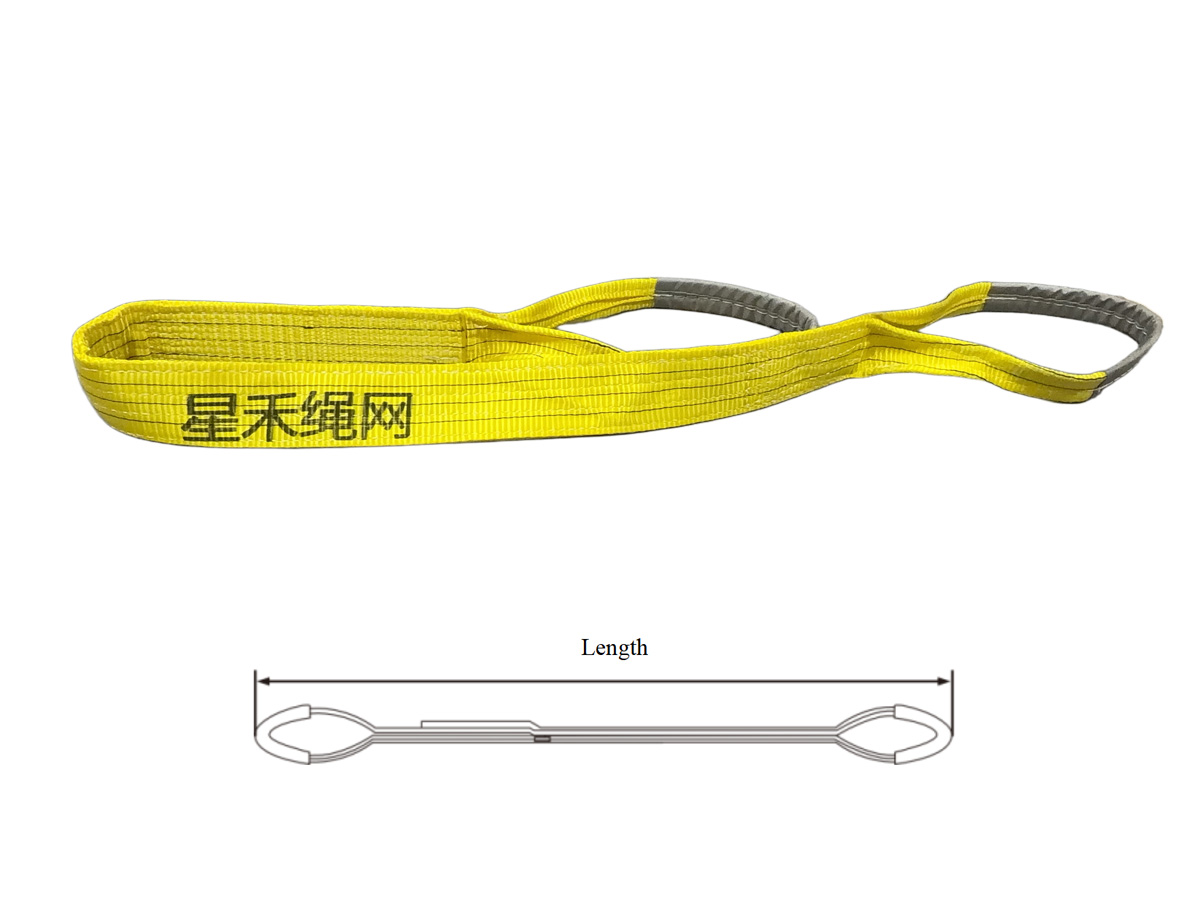
Eye-and-Eye Webbing Slings
Reinforced Eye-and-Eye webbing sling with high-tenacity polyester construction and color-coded WLL identification.
View product →