
Lifting Solutions
Endless Webbing Slings for Heavy Lifting
liftrue | Manufacturer & Supplier
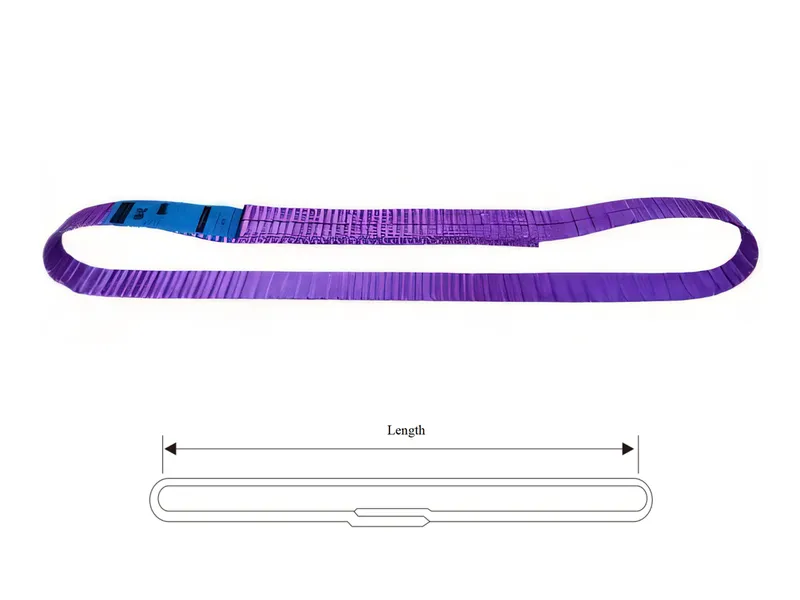
Rotatable endless webbing sling for even wear distribution in repetitive basket and choker lifts.
Key Features
- Single sling supports vertical, choke, and basket hitches
- Continuous loop design minimizes stress concentration points
- Custom lengths, widths, and reinforced protection zones available
- Soft webbing prevents damage to painted or polished surfaces
- Safety factors of 4:1, 5:1, 6:1, and 7:1 available on request
- Compliant with EN 1492-1 | EN 1492-2
Applications
Own Manufacturing Facility
ODM / OEM & Flexible MOQ
Fast Response & Delivery
ISO 9001 & CE certified
Trusted by 500+ Clients
FAQ
Endless Webbing Slings FAQs
Endless slings distribute wear across the entire loop and allow rotation between lifts. They are especially good for basket hitches and choker applications where even load distribution matters.
Yes. Pass the sling through itself to form a choker hitch. Capacity is reduced according to the choker factor, which we can confirm for your setup.
Yes. We can add reinforced protection sleeves or coatings at wear points to extend sling life in abrasive or repeated-lift applications.
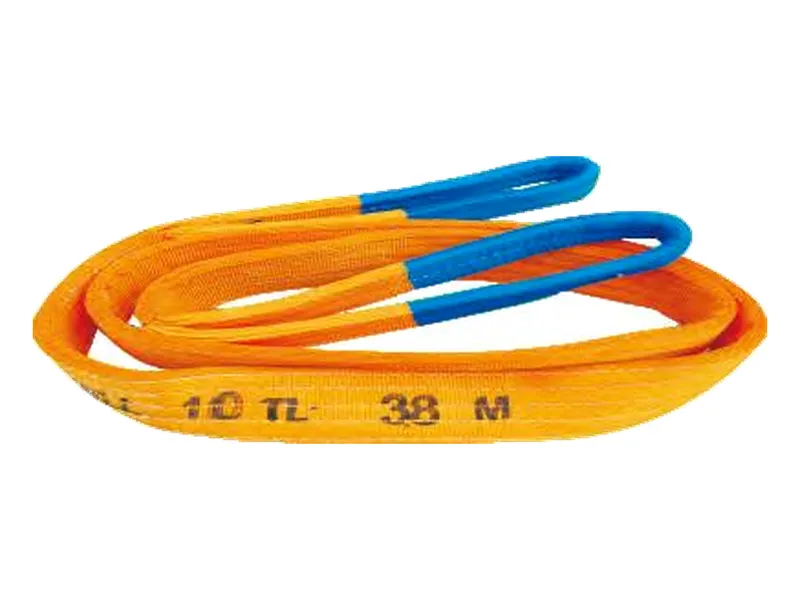
Endless webbing slings are offered from 1T to 12T WLL in widths of 25–300 mm. Safety factors of 4:1 to 7:1 are available, with custom lengths on request.
Production follows EN 1492-1 / EN 1492-2 with batch tensile testing. Each sling includes a label showing WLL, date, standard, and traceability code, with test reports available on request.
Vertical hitch uses 100% of WLL, basket hitch approximately 200%, and choker hitch roughly 80% depending on the choker angle. Always follow EN 1492-1 guidance for your specific setup.
Choose an endless sling when your lift involves basket or choker hitches around smooth, uniform loads (pipes, bars, containers) where rotation between cycles extends sling life. Choose eye & eye slings when you need direct attachment to hooks or shackles without wrapping the load, or when the load has sharp edges that would concentrate wear on a specific point.
Retire when in doubt: Slings are cheap. The load (and lives) they protect are not. Endless webbing slings have no eyes, so wear spreads around the entire loop — rotate the sling between lifts to distribute wear evenly and inspect the stitched overlap joint carefully for separation or thread pull-out. Withdraw immediately if you see cuts, abrasion, chemical damage, heat marks, missing labels, or any structural deformation.
Specifications
Technical Specifications
Endless Webbing Sling Specifications
| Rated load (Kg) | Approximate thickness (mm) | Approximate width 6:1 (mm) | Approximate width 7:1 (mm) | Min Length (m) | Max Length (m) | Length of ring-holes (mm) | Weight 6:1 (Kg/m) | Weight 7:1 (Kg/m) |
|---|---|---|---|---|---|---|---|---|
| 1000 | 7.5 | 25 | 30 | 1.1 | 100 | 300 | 0.20 | 0.22 |
| 2000 | 50 | 60 | 1.2 | 300 | 0.41 | 0.45 | ||
| 3000 | 75 | 90 | 1.3 | 350 | 0.60 | 0.71 | ||
| 4000 | 100 | 120 | 1.4 | 500 | 0.75 | 1.02 | ||
| 5000 | 125 | 150 | 2.0 | 550 | 1.02 | 1.21 | ||
| 6000 | 150 | 180 | 2.0 | 600 | 1.26 | 1.42 | ||
| 8000 | 200 | 240 | 2.0 | 700 | 1.69 | 1.89 | ||
| 10000 | 250 | 300 | 3.0 | 800 | 2.07 | 2.34 | ||
| 12000 | 300 | 300 | 3.0 | 900 | 2.37 | 2.98 |
Safety
Endless Webbing Sling Safety & Usage Guidelines
All liftrue products are manufactured under ISO 9001 quality management and are CE certified.
Related Products
Explore More Solutions
Eye & Eye Round Slings
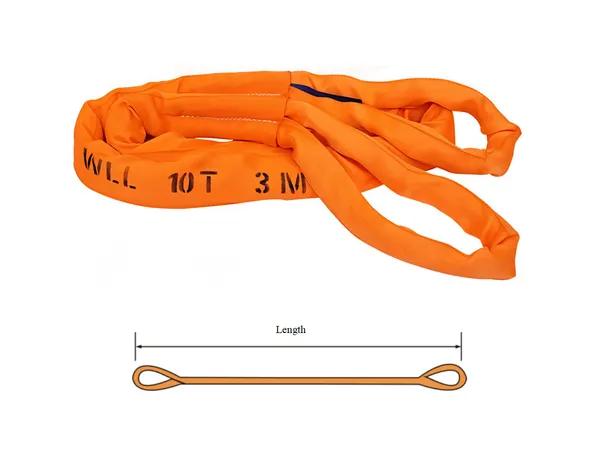
Reinforced flat-eye round sling with high-tenacity polyester construction for versatile lifting configurations.
View Details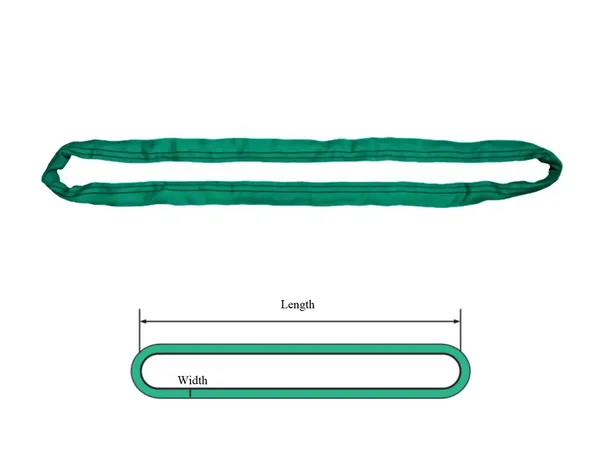
Endless Round Slings
Versatile endless round sling with continuous-loop polyester construction for even load distribution and long service life.
View Details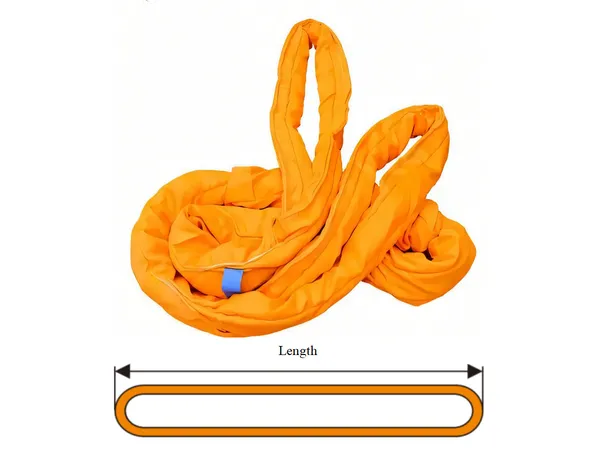
UHMWPE Slings
Ultra-lightweight UHMWPE round sling with superior fatigue and chemical resistance, weighing 1/6 of equivalent steel wire rope.
View Details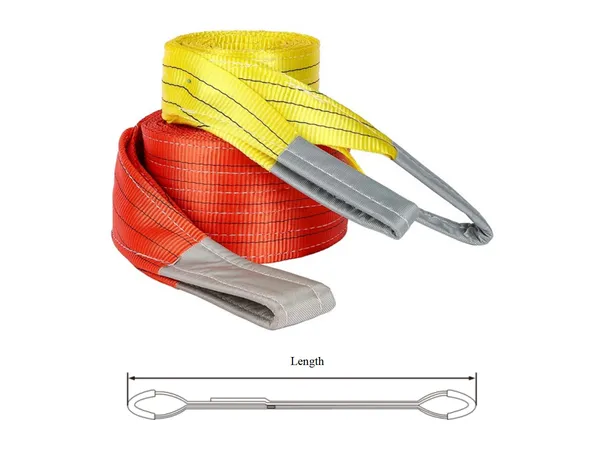
Eye & Eye Webbing Slings
Reinforced eye & eye flat webbing sling with high-tenacity polyester construction and color-coded WLL identification.
View DetailsRequest a Quote
Tell us about your project and we will respond within 24 hours.
Request a Free Sample
Evaluate our quality firsthand. Fill out the quick form below.